
Running a medical practice in New York City is not for the faint of heart.

Your physicians are busy. Your front desk is juggling phones, forms, insurance questions, late arrivals, early arrivals, and patients who insist they “definitely uploaded the document.”
Meanwhile, prospective patients are comparing your practice with several others before anyone in your office even knows they exist.
They are searching Google, reading reviews, checking locations, comparing office hours, looking at photos, and deciding whether your practice appears responsive, credible, and convenient.
That is why modern medical practice marketing cannot rely entirely on referrals, signage, or an occasionally updated website. NYC physicians’ offices need a coordinated strategy that builds visibility and trust before a prospective patient calls.
The good news is that your practice does not need to become a social media circus. You do not need dancing doctors, viral skits, or a front-desk employee reluctantly pointing at floating text.
You need a practical system.
Here are seven marketing ideas NYC physicians, medical administrators, practice managers, and office staff can use to attract attention, earn trust, and convert more local searches into appointments.

1. Treat Google Reviews Like a Patient-Acquisition Channel
Many medical offices treat reviews as something that happens after the “real” work is complete.
That is a mistake.

Google reviews can influence how prospective patients perceive a practice before visiting its website or speaking with its staff. Reviews appear directly alongside Business Profiles in Google Search and Maps, giving searchers immediate access to a practice’s rating, review volume, and patient comments. Google also states that reviews can help a business stand out and provide useful information to potential customers.
In a competitive market such as New York City, patients may compare several similarly located physicians. A practice with recent, detailed, and professionally managed feedback can appear more established and attentive than an office whose most recent review predates the subway’s latest service change
A consistent review strategy may include:
- Sending a review request after an appropriate patient interaction
- Making the review link easy to access
- Monitoring new reviews across every practice location
- Responding according to an approved privacy-conscious policy
- Reporting reviews that violate Google’s content rules
- Reviewing recurring feedback for operational insights
Review management is not simply about accumulating stars. It is about creating a visible pattern of patient trust.
For a deeper look at building that process, read our guide to developing a Customer Review Strategy
The middle-of-funnel opportunity
Prospective clients reading about medical practice marketing may not initially believe they need professional review management. Show them how reviews affect several business concerns at once:
- Patient confidence
- Brand perception
- Local visibility
- Appointment conversion
- Staff accountability
- Multi-location consistency
That moves the conversation from “We should probably get more reviews” to “We need a reliable system for managing this.”
2. Use Google Trends to Plan Timely Patient-Education Content
Medical practices often publish content based on whatever topic someone remembers during a staff meeting.
“Should we write something about hydration?”
Perhaps. But a stronger content strategy starts with evidence of what people are actively researching.
Google Trends lets users explore interest in topics and search terms by time, location, and popularity. A NYC practice can use it to compare topics, identify seasonal patterns, and spot rising interest within New York.

Depending on the specialty, relevant topics might include:
- Seasonal allergies in NYC
- Flu symptoms
- Sports physicals
- Annual wellness exams
- Heat-related illness
- Back-to-school health requirements
- Skin cancer screening
- Women’s preventive health
- Respiratory illness
- Travel vaccinations
The goal is not to chase every trending phrase. Your cardiology practice does not need an article about a celebrity haircut because it happens to be trending.
Instead, look for the overlap between:
- What New Yorkers are searching for
- What your physicians can discuss responsibly
- What services your practice genuinely provides
For example, an allergy practice might publish “When Does Allergy Season Start in NYC?” before search demand reaches its seasonal peak. A pediatric practice might prepare back-to-school content in advance of late-summer searches. An urgent care center could create pages addressing common seasonal symptoms and when patients should seek care.
This creates a useful top-of-funnel entry point. A person may first discover the practice through an educational search, then explore the practice’s physicians, locations, reviews, and appointment options.

Make every article work harder
Each patient-education article should include:
- A clear answer near the beginning
- A physician-reviewed explanation
- Appropriate medical disclaimers
- Links to relevant services
- A location reference where natural
- A next step, such as booking or calling
- Links to related educational resources
The article should help first and promote second. Nobody enjoys being aggressively sold to while trying to determine whether a rash deserves attention.
3. Optimize the Google Business Profile Before Buying More Ads
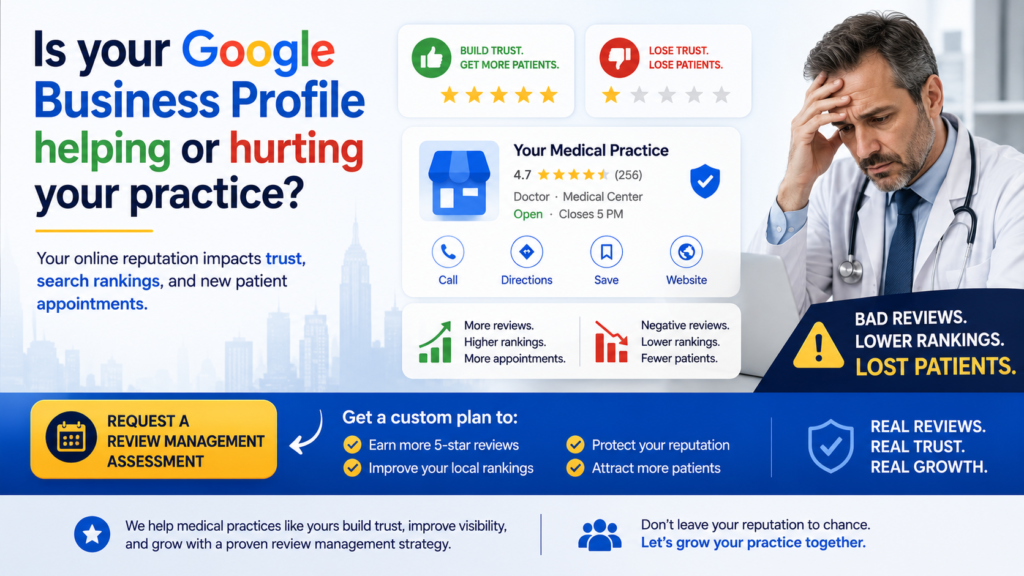
A medical practice can spend heavily on advertising and still lose prospective patients because its Google Business Profile contains outdated hours, missing services, weak photos, or unanswered reviews.
That is the digital equivalent of buying a Times Square billboard and forgetting to put the correct phone number on it.
Google recommends keeping Business Profile information complete and accurate so customers understand what a business does, where it is located, and when they can visit. Google describes local ranking in terms of relevance, distance, and prominence.

For each NYC location, review:
- Practice name
- Primary and secondary categories
- Address and map pin
- Phone number
- Office hours
- Holiday hours
- Appointment URL
- Services
- Practice description
- Physician and office photos
- Insurance or payment information, where appropriate
- Review activity
- Duplicate or outdated listings
Multi-location practices should evaluate every profile separately. A strong Manhattan listing does not automatically rescue a neglected Brooklyn or Queens location.
This is where [Local SEO — INSERT INTERNAL URL] becomes especially important. Your website, location pages, Business Profiles, local citations, services, and reviews should communicate consistent information.
A practical administrator checklist
Assign one person to verify profile details monthly and after any major operational change.
Do not wait for a frustrated patient to leave a one-star review explaining that your website said the office was open when the lights were off and everyone had gone home.
4. Build a Review Request Process That Does Not Feel Awkward
Many physicians and staff members avoid asking for reviews because they fear the request will sound pushy.
That is understandable. Nobody wants the end of a medical appointment to feel like the closing scene of a used-car commercial.
The solution is not to pressure patients. It is to make the feedback process simple, neutral, and consistent.
A review request might be sent by text or email after an appropriate interaction. The message should thank the patient, explain that feedback helps the practice, and provide a direct link.
For example:
Thank you for visiting our practice. We value patient feedback and invite you to share your experience using the link below.
The wording should not tell patients what rating to leave. It should not offer a reward for a positive review. It should not be sent only to patients the staff predicts will leave five stars.
For more examples, link to [How to Ask Customers for Reviews Without Feeling Awkward — INSERT INTERNAL URL].
Keep the process ethical
Google permits businesses to share a review link, but deceptive review practices can create legal, platform, and reputational risks. The Federal Trade Commission’s Consumer Reviews and Testimonials Rule addresses fake, false, and deceptive review practices and took effect on October 21, 2024.

The safest long-term approach is simple:
- Request authentic feedback
- Do not buy reviews
- Do not write reviews for patients
- Do not condition incentives on positive sentiment
- Do not suppress legitimate criticism through intimidation
- Do not use staff or undisclosed insiders to pose as patients
This is also a natural place to direct readers to Fake Reviews Are a Bad Idea .
Fake praise may look like a shortcut, but shortcuts have a habit of becoming scenic routes to expensive problems.
5. Respond to Reviews Without Turning the Reply Into a Medical Record
Responding to reviews shows prospective patients that a practice pays attention. However, healthcare organizations must approach public replies carefully.
A patient may reveal personal details in a review. That does not necessarily give the practice permission to confirm, expand upon, or discuss those details publicly.
The HIPAA Privacy Rule establishes standards protecting individually identifiable health information. HHS has also taken enforcement action involving a healthcare provider that disclosed patient information while responding to a negative online review.
A response should generally remain brief and avoid confirming that the reviewer is a patient.
A neutral response could say:
Thank you for sharing your feedback. Our practice takes concerns seriously. To protect privacy, we cannot discuss individual circumstances publicly. Please contact our office directly so the appropriate team member can review your concerns.
Practices should have review-response templates, but templates must not become robotic.
Compare these two replies:
Robotic:
“Thank you for your feedback. Please call us.”
Better:
“Thank you for taking the time to share your concerns. We aim to provide a respectful and efficient experience. Because we cannot discuss individual matters publicly, please contact our office and ask for the practice manager.”
The second response remains cautious but sounds like it was written by a human being rather than a waiting-room printer.
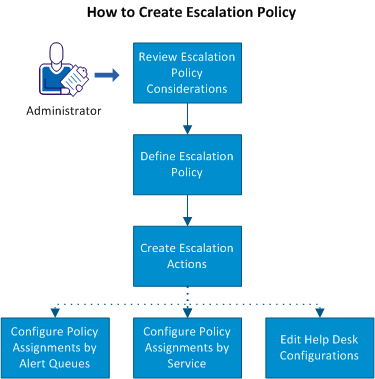
Create an escalation policy
Staff should know:
- Who responds to positive reviews
- Who handles negative reviews
- Which complaints require administrator review
- Which situations require legal or compliance guidance
- How quickly responses should be posted
- What information must never be included
For practices without the staff capacity to manage this consistently, a professional review management provider can monitor activity and prepare responses under an approved workflow.
6. Use Review Insights to Improve the Patient Experience
Reviews are not only marketing assets. They are also an informal source of operational intelligence.
A single complaint may be an isolated event. A recurring pattern deserves attention.
Track comments related to:
- Appointment scheduling
- Telephone hold times
- Front-desk courtesy
- Waiting-room delays
- Billing communication
- Office cleanliness
- Physician communication
- Follow-up instructions
- Accessibility
- Parking or transportation
- Prescription or referral coordination
For example, if numerous reviews praise a physician but criticize the scheduling process, the practice does not necessarily have a clinical reputation problem. It may have a workflow problem that is quietly affecting retention and referrals.
This distinction matters. Marketing cannot permanently hide an operational issue. Eventually, the reviews will write the strategy for you—usually in all caps.
A review management dashboard can help administrators categorize feedback, identify patterns by location, and share actionable themes with leadership.
It can also reveal what patients value most. Positive comments about attentive staff, clear explanations, short waits, or convenient scheduling can help the practice better understand its strengths.
For organizations seeking More Business Reviews , the first priority should be creating experiences that people genuinely want to recommend.
7. Connect Reviews, Local SEO, Content, and Conversion
The strongest medical practice marketing programs do not treat each channel as a separate project.
They connect the pieces.
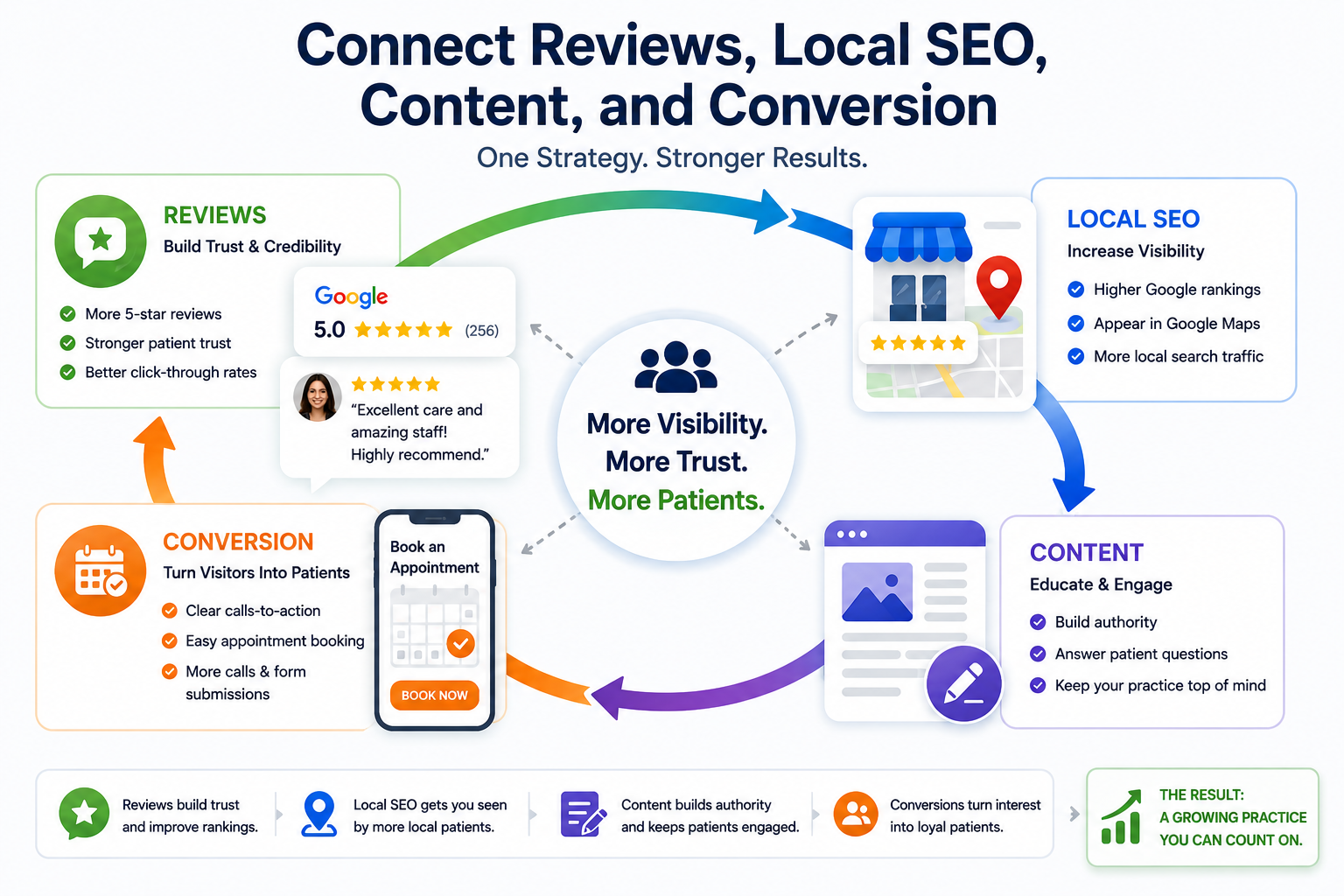
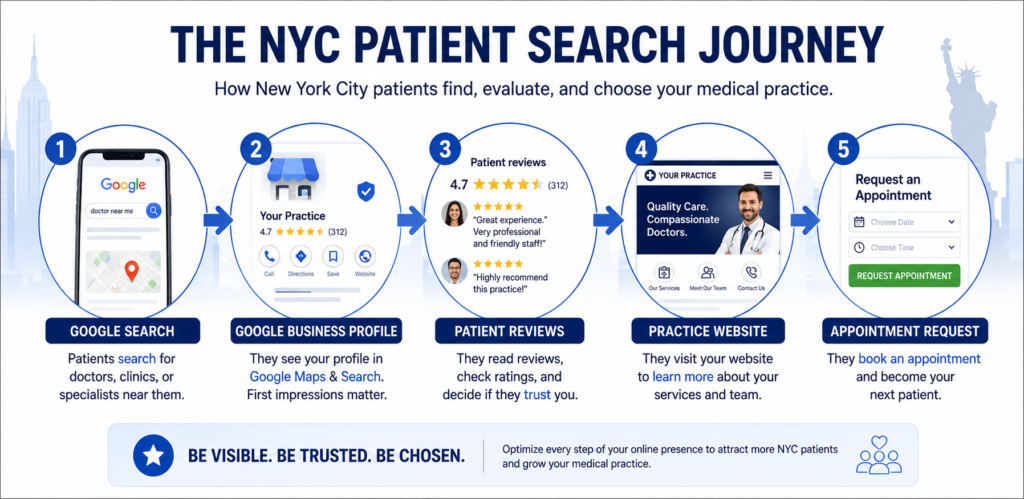
A prospective patient may:
- Search for a symptom or service
- Read a useful practice article
- Find the nearest office location
- Review the Google Business Profile
- Read patient feedback
- Visit a physician biography
- Request an appointment
Every step should reinforce credibility.
That means your content strategy, website, review process, Business Profiles, local pages, and appointment system should work together.
A useful top- and middle-of-funnel pathway might look like this:
Educational article:
“How NYC Allergy Season Affects Asthma Symptoms”
Internal service link:
“Allergy and asthma care in Manhattan”
Trust signal:
Recent Google reviews and professional responses
Conversion point:
Request an appointment
Follow-up:
Ethical feedback request after the patient interaction
That is a system—not a collection of random marketing tasks.
When outsourcing makes sense


Review management may be handled internally when a practice has:
- Clear ownership
- Reliable staff availability
- Approved response policies
- Multi-location monitoring
- Compliance oversight
- Reporting capabilities
Outsourcing may make sense when reviews go unanswered, staff members are unsure how to respond, multiple locations need coordination, or the practice lacks time to request and analyze feedback consistently.
Readers evaluating outside support can visit Google Review Management Pricing to understand possible service levels and costs.
Smaller physician offices can also explore Google Review Management Service for Small Businesses for options designed around lean teams and limited administrative capacity.

What NYC Medical Practices Should Do First
A practice does not need to implement everything in one afternoon.
Start with a simple review:
- Search for the practice and each physician on Google.
- Check every location’s Business Profile.
- Read the newest positive and negative reviews.
- Note whether the practice responds consistently.
- Test the review request process.
- Review website location and service pages.
- Identify one seasonal topic using Google Trends.
- Assign responsibility for each marketing activity.
This exercise often exposes the biggest gaps quickly.
The practice may discover that its hours are wrong, several reviews are unanswered, a former physician still appears on a location page, or nobody knows who has access to the Business Profile.
That is not unusual. Medical practices are busy running medical practices.
The important step is replacing neglect with ownership.
Frequently Asked Questions
Why are Google reviews important for NYC medical practices?
Google reviews are visible when prospective patients find practices in Search and Maps. They can help searchers compare nearby options, evaluate patient experiences, and decide whether to contact a practice. In a dense market such as NYC, recent and professionally managed reviews can support trust and differentiation.
Can medical offices ask patients for Google reviews?
Medical offices can invite patients to provide authentic feedback, but the process should be neutral and privacy-conscious. Practices should avoid buying reviews, requesting only positive reviews, or using incentives tied to favorable ratings. Internal compliance or legal guidance may be appropriate when designing the process.
How can a medical office ask for reviews without sounding pushy?
Keep the request brief, polite, and optional. Thank the person for visiting, explain that feedback is valuable, and provide a direct review link. Avoid asking for a specific star rating or pressuring the person to respond while still in the office.
Should physicians respond to negative Google reviews?
Practices may respond, but public replies should avoid confirming someone’s patient status or discussing treatment, appointments, diagnoses, billing specifics, or other potentially protected information. A safer response acknowledges the concern and invites the reviewer to continue the conversation privately.
Can Google reviews improve Local SEO?
Google states that review count and review scores factor into local search ranking and that positive reviews and helpful replies can help a business stand out. Reviews are only one part of local visibility, which also depends on factors such as relevance, distance, prominence, profile completeness, and website signals.
How often should a medical practice monitor reviews?
A busy or multi-location practice should monitor reviews frequently enough to address concerns promptly and maintain consistent responses. Daily monitoring may be useful for larger groups, while smaller practices may use scheduled weekly reviews or automated alerts.
Are fake Google reviews illegal?
The FTC’s Consumer Reviews and Testimonials Rule prohibits several deceptive review practices, including the sale or purchase of fake reviews. Fake reviews may also violate platform policies and seriously damage a practice’s credibility.
What should a Google review management service include?
Services may include review monitoring, request workflows, response preparation, escalation procedures, location-level reporting, sentiment analysis, Business Profile support, and recurring strategy reviews. Healthcare practices should also ask how the provider handles privacy and compliance-sensitive situations.
How much does Google review management cost?
Pricing varies based on the number of locations, review volume, monitoring frequency, reporting requirements, response support, integrations, and additional Local SEO services. Practices should compare deliverables rather than choosing only by the lowest monthly price.
Can nursing homes use the same review strategies?
Many principles apply, but nursing homes face distinct operational, regulatory, family-communication, and reputation challenges. Organizations serving that audience can read [Brooklyn Nursing Home Reviews — INSERT INTERNAL URL] for a more relevant discussion.

Conclusion: Make Trust Part of Your Marketing System
Effective medical practice marketing in New York City is not about being the loudest office online. It is about being visible, useful, credible, and easy to choose.
Google Trends can help physicians’ offices understand what local patients are researching. Educational content can bring new readers into the funnel. Local SEO can help connect those readers with the correct location. Google review management can provide the trust signals that encourage prospective patients to take the next step.
The practices that benefit most are not necessarily those with the largest marketing budgets. They are the ones that consistently manage the details: accurate profiles, useful content, authentic feedback, thoughtful responses, and clear appointment pathways.
Your physicians already have enough to monitor.
Your online reputation should not require a stethoscope to determine whether it still has a pulse.
Latest Articles
- Google Review Removal Service That Protects Your Reputation and Builds Trust
- Google Review Management Agency That Helps Businesses Build Trust and Get More Customers
- How to Get New Patients in New York With Google Reviews
- How Accepted Insurance Plans Can Strengthen Medical Local SEO
- Brooklyn Nursing Home Marketing in 2026: How to Turn Google Searches Into More Admissions