
Your next patient in New York may decide whether to call your practice before ever speaking to your staff.

Today, patients search, compare, and read reviews before choosing care. A 2025 survey found 84% of patients check online reviews before choosing a new healthcare provider. In 2026, 75% said they wouldn’t book with a provider rated below 4 stars, while 55% had avoided or canceled an appointment because of online reviews.
For New York practices, the message is simple: your Google reputation can influence who becomes your next patient.
A Patient Can Choose Your Competitor Before Your Office Even Knows They Were Looking
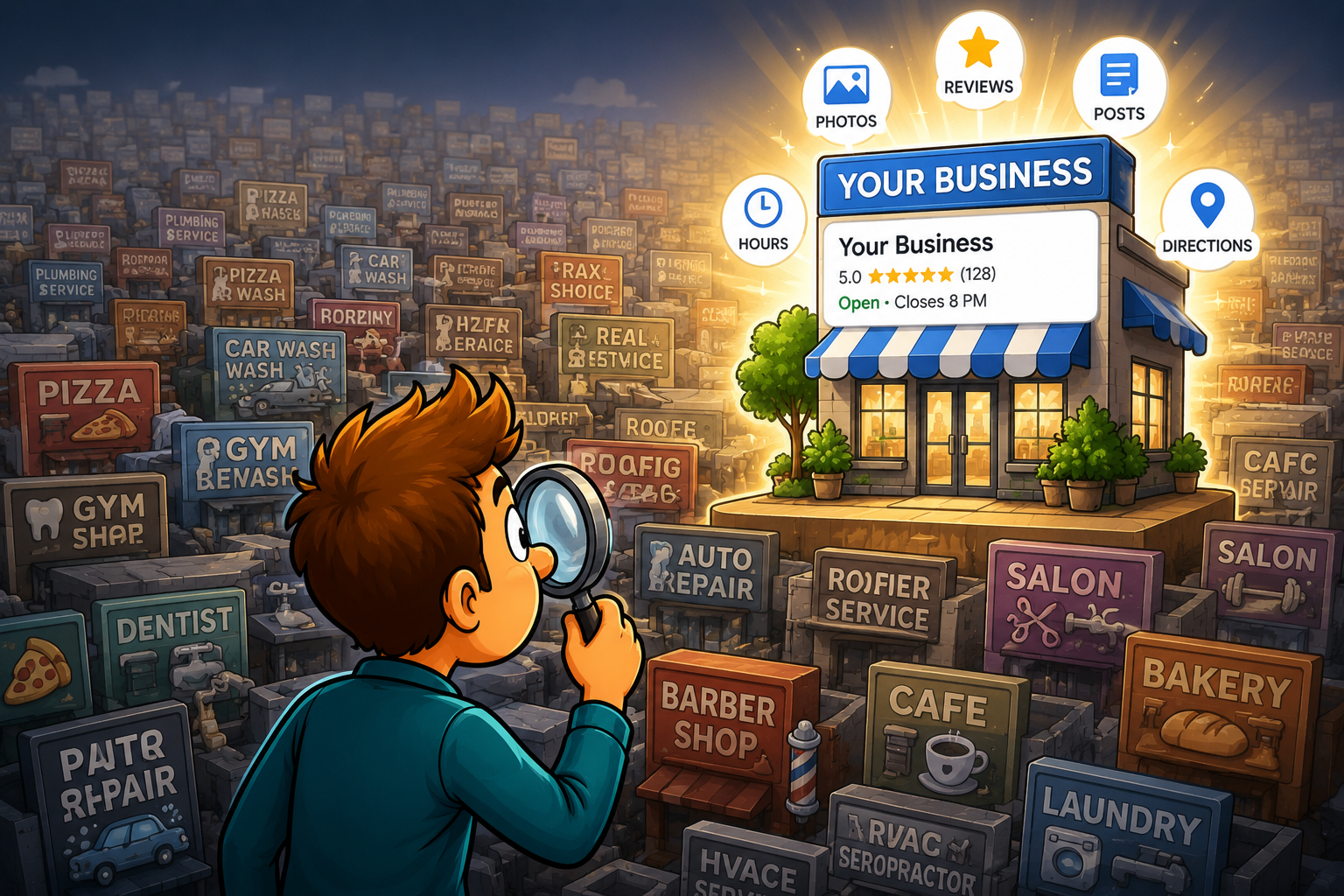
When a prospective patient searches for care in New York, they can instantly compare your rating, review count, recent patient feedback, photos, and competitors. If another practice appears more trusted online, your opportunity may disappear before the phone ever rings.
Why Your New York Practice Isn’t Getting Enough New Patients
You have experienced physicians. Your staff is ready. You accept new patients. You may accept Medicare, Medicaid, and major health insurance plans.
But there is still a problem:
Your appointment schedule has openings.
The phone isn’t ringing enough. New-patient appointments aren’t coming in at the rate you need. Physicians have unused capacity, and your practice isn’t seeing the growth you expected.
That is where a targeted Brooklyn Nursing Home Marketing strategy can help. By strengthening your online visibility, Google reviews, Local SEO, and referral relationships with Brooklyn nursing homes, your practice can reach more patients who need ongoing medical care.

For a medical practice, those empty appointment slots aren’t just frustrating. They represent missed opportunities to provide care and generate revenue.
The problem may not be the quality of your physicians.
It may be that patients aren’t finding—or choosing—your practice when they search online.
A prospective patient looking for care in New York might search:
- “primary care doctor near me accepting new patients”
- “Medicare doctor near me”
- “doctor accepting Medicaid near me”
- “Medicare primary care physician NYC”
- “Medicaid doctor New York”
- “best doctor near me”
- “specialist accepting new patients”
- “doctor accepting my insurance near me”
Once they search, the competition begins.
Your practice may appear alongside several other providers offering similar services and accepting similar insurance.
So what makes the patient click on your practice?
Your location matters. Your specialty matters. Insurance participation can matter enormously. Availability matters.
But before making that call, many patients also want to know:
“Can I trust this doctor?”
That is where your Google reputation enters the decision.
If another practice has a stronger rating, substantially more reviews, recent patient feedback, and a Google Business Profile that looks active and established, it can immediately command attention.
You might provide outstanding medical care.
But patients cannot choose a practice they never notice.
Patients Are Searching for Doctors on Google Before Calling
Think about what happens when someone in New York suddenly needs a new doctor.
Maybe their physician retired. They recently moved. Their insurance changed. They need a specialist. They have Medicare or Medicaid and need to find a participating provider. Or they simply aren’t satisfied with their current practice.
Where does the search begin?
Increasingly, that search happens online.
A prospective patient may type:
- “doctor accepting new patients near me”
- “Medicare doctors near me”
- “Medicaid doctors in NYC”
- “primary care doctor accepting Medicare in New York”
- “doctor accepting Medicaid near me”
- “best primary care physician near me”
- “specialist accepting new patients NYC”
And within seconds, that patient has choices.
Your Practice Is Being Compared Before Anyone Calls
The patient doesn’t necessarily start by calling every office.
They can look at Google and quickly compare:
⭐ Your rating
💬 Your number of reviews
📍 Your location
🏥 Your specialty
🕒 Your hours
🌐 Your website
📸 Your photos
🗣️ What other patients are saying
Then they can move directly to the next practice.
This means your front desk may never know that patient existed.
No missed call. No voicemail. No opportunity to explain how good your physicians are.
The patient simply saw another provider who appeared more established or trustworthy online and investigated that practice instead.
Being a Great Doctor Isn’t Enough If Patients Don’t Notice You
This is the uncomfortable reality for medical practices trying to get more patients in New York:
Clinical quality and online visibility are two different things.
You may have an outstanding physician with decades of experience.
You may accept Medicare, Medicaid, or insurance plans patients are actively searching for.
You may have appointments available this week.
But if competing practices command more attention when patients search Google, those advantages may never get considered.
That’s why attracting new patients isn’t only about being available.
You have to be findable.
Then you have to be credible.
And once patients find you, your online reputation needs to give them a reason to take the next step.
Search → Compare → Trust → Call → Appointment
Google reviews can have an important influence in the middle of that journey.
And that’s where the numbers next to your name start to matter.

Would You Choose the Doctor With 52 Reviews or 1,800?
Put yourself in the patient’s shoes for a moment.
You search Google for a doctor in New York and see three practices offering the care you need:
| Practice | Google Reviews | Rating |
|---|---|---|
| Practice A | 52 reviews | ⭐ 3.5 |
| Practice B | 100 reviews | ⭐ 4.2 |
| Practice C | 1,800 reviews | ⭐ 4.5 |
Which practice gets your attention first?
The practice with 1,800 reviews and a 4.5-star rating immediately stands out.
Not because the review count proves it provides better medical care. It doesn’t.
But from a patient’s perspective, that volume of feedback can send a powerful message:
A lot of patients have been here—and many were willing to share their experience.
Your Review Count Is Visible Before Your Credentials Are Read
This is what healthcare administrators sometimes overlook.
Before a prospective patient reads the physician’s full biography, explores credentials, or calls the office, they may already have seen the practice’s star rating and review count.
If your practice has 52 reviews while a nearby competitor has hundreds or thousands, that difference is visible immediately.
Now add a stronger rating and recent positive feedback.
The competing practice may simply look like the more established choice.
This Is Social Proof in Healthcare
Patients still need to consider the things that actually determine whether a provider is right for them—specialty, experience, location, availability, insurance participation, and whether the practice accepts their Medicare or Medicaid coverage, when applicable.
But once several practices meet those basic requirements, reviews can become an important differentiator.
The patient starts asking:
Why are so many people reviewing this doctor?
What are patients saying about the staff?
Are people happy with their experience?
Would I feel comfortable making an appointment here?
That is why building a strong Google reputation isn’t about chasing a vanity number.
It’s about giving prospective patients another reason to stop, investigate your practice, and consider making the call.

Google Reviews Can Help Your Practice Stand Out in Local Search
Having hundreds of positive patient reviews isn’t only about looking impressive.
Reviews can also contribute to how prominently your practice appears in local Google results.
Google explains that local rankings are primarily based on three factors: relevance, distance, and prominence. Google also states that more reviews and positive ratings can help your business’s local ranking.
For a medical practice competing in New York City, that matters.
When someone searches:
- “doctor near me”
- “primary care doctor NYC”
- “Medicare doctor near me”
- “Medicaid doctor near me”
- “specialist accepting new patients”
- “best doctor near me”
Google has to decide which relevant practices to show and in what order.
Reviews are one piece of that larger local search equation.
More Reviews Do Not Automatically Mean the #1 Position
This distinction is important.
1,800 Google reviews do not guarantee that your practice will rank above a competitor with 100 reviews.
Google also considers how relevant your practice is to the search, how far it is from the person searching, your Business Profile information, and other prominence signals.
But Google specifically identifies review count and review score as factors in local search ranking.
That means building a strong, authentic review profile can support something every healthcare practice needs:
More opportunities to be discovered when prospective patients are actively searching for care.
And once your practice appears, those same reviews can help you stand out from the other providers on the screen.
That’s the real advantage.
Google reviews have two potential jobs:
| Stage | What reviews can do |
|---|---|
| 1. Get found | Help support the practice’s visibility in local Google results |
| 2. Earn the click | Create visible social proof when patients compare nearby practices |
A larger review profile does not automatically mean better medical care. However, when patients see several practices offering the same service within a reasonable distance, the combination of a strong rating and substantial review volume can make one listing naturally command more attention.
Your practice needs to be found—and once it is found, patients need a compelling reason to choose it.
First You Need Visibility. Then You Need the Click.
Three nearby medical practices may offer the same service, but their Google review profiles create very different levels of visible social proof.
| practice | reviews |
|---|---|
| Practice A — 3.5★ | 52 |
| Practice B — 4.2★ | 100 |
| Practice C — 4.5★ | 1,800 |
Accepting Medicare or Medicaid Isn’t Enough If Patients Can’t Find You
Your practice may be accepting new patients.
You may participate in Medicare, Medicaid, or other insurance plans.
You may even have appointments available this week.
But none of that helps attract a new patient if the people searching for care never discover your practice—or overlook it when comparing providers.
Consider what a patient might search:
- “Medicare doctor near me accepting new patients”
- “Medicaid doctor near me”
- “primary care doctor accepting Medicare NYC”
- “Medicaid primary care doctor New York”
- “doctor accepting new patients in NYC”
- “specialist accepting Medicare near me”
These aren’t casual searches.
They often come from people trying to solve an immediate healthcare need.

Insurance May Get You Considered. Trust Can Help Get You Chosen.
Finding a provider who participates in a patient’s insurance can be an important first step.
But imagine that patient identifies three potentially suitable practices.
One has 37 Google reviews.
Another has 112.
Your practice has 900+ reviews, a strong rating, and recent feedback from patients.
Which profile is likely to command attention?
The patient still needs to verify that the physician is appropriate for their needs, accepts their specific coverage, and is available. But your online reputation can give them another reason to investigate your practice first.
That’s why simply accepting Medicare, Medicaid, or commercial insurance isn’t a complete patient-acquisition strategy.
Patients still need to find you, trust you, and take action.
Empty Appointment Slots Don’t Generate Revenue
For physicians and healthcare administrators, this is where online visibility becomes a business issue.
An unused appointment represents capacity that cannot generate revenue.
One empty slot may not seem significant.
But repeated across multiple providers, days, weeks, and months, unused capacity can add up.
Your physicians are there.
Your staff is there.
Your facility is operating.
Your overhead continues.
What you’re missing is the patient in the appointment slot.
A stronger Google presence cannot guarantee a full schedule. But if it helps more qualified prospective patients discover your practice, evaluate your reputation, and consider contacting you, it can create more opportunities to turn existing capacity into appointments.
And that leads to the next question:
If you already have satisfied patients, why aren’t more of them helping build the online reputation that your next patient will see?
Stop Leaving Your Google Reviews to Chance
Your practice may already have the most valuable ingredient for building a powerful Google reputation:
Satisfied patients.
The problem is that most happy patients don’t automatically think, “I should go leave my doctor a Google review.”
They finish their appointment and get on with their day.
Meanwhile, the occasional unhappy patient may be highly motivated to share their experience.
If your practice only waits for reviews to happen naturally, your Google reputation may never accurately reflect the number of patients you successfully serve.
You Don’t Need More Happy Patients. You Need a Better Review Process.
Imagine your practice sees hundreds of patients every month but receives only five new Google reviews.
Now imagine creating a consistent process that gives eligible patients an easy opportunity to provide honest feedback after their experience.
You aren’t manufacturing reviews.
You aren’t buying reviews.
You aren’t offering incentives for five stars.
You’re simply making it easier for real patients to share real experiences.
Over time, that consistency can make a significant difference.
50 reviews can become 100.
100 can become 250.
250 can become 500.
And a practice with substantial patient volume may eventually build a much larger review profile.
Make Review Requests Part of the Patient Journey
The key is having a system.
Instead of hoping someone at the front desk remembers to ask, establish an appropriate and compliant process for requesting feedback.
Depending on your practice and privacy requirements, that could include approved methods such as a Google review link or QR code provided at an appropriate point in the patient journey.
Google allows businesses to request genuine reviews, but prohibits incentives and review manipulation. Healthcare practices also need to consider patient privacy and applicable healthcare requirements when designing their communication workflows.
The objective should always be:
Make it simple for patients to provide honest feedback—without influencing what they say.

Consistency Is Where the Advantage Compounds
A review system isn’t about getting 50 reviews tomorrow.
It’s about creating a process that continues working month after month.
Think about two competing New York practices.
One asks for reviews occasionally and receives a handful throughout the year.
The other consistently gives patients an opportunity to share their experiences.
After one month, the difference may seem small.
After six months, it becomes more noticeable.
After several years, the difference can become difficult for competitors to ignore.
And every new review doesn’t simply increase a number.
It adds another patient experience to the online reputation that your next prospective patient may use when deciding whom to call.
That is how patient satisfaction can become a long-term visibility and reputation asset.

What Are Empty Appointments Really Costing Your Practice?
For a healthcare administrator, an empty appointment slot isn’t simply an opening on the calendar.
It’s unused capacity.
Your physician is scheduled. Your employees are working. The office is open. Your technology, rent, utilities, insurance, and other operating expenses continue whether that appointment is filled or not.
Now multiply those openings across an entire practice.
If several physicians each have unfilled appointments every week, how much potential patient volume is your organization missing over a month?
Over six months?
Over a year?
You May Not Have a Capacity Problem. You May Have a Visibility Problem.
This is an important distinction.
If your physicians are already booked weeks or months in advance, attracting more patients may not be your immediate priority.
But if your practice has the capacity to see more patients and isn’t getting enough new-patient appointments, you need to determine where the breakdown is happening.
Are people searching for the services you provide?
Can they find your practice?
Does your Google Business Profile stand out?
How does your review count compare with nearby competitors?
Is your rating competitive?
Are your reviews recent?
Do prospective patients have enough confidence to call?
And if you accept Medicare, Medicaid, or specific commercial insurance plans, can prospective patients easily determine whether your practice may be an option for them?
These questions matter because an available appointment has little business value until the right patient knows it exists.
Turn Existing Capacity Into More Appointment Opportunities
You don’t necessarily need another physician, another location, or a larger office to grow patient volume.
Sometimes the immediate opportunity is getting more qualified prospective patients to discover the capacity you already have.
That’s where Google visibility and reputation can support growth.
A strong Google review profile can help your practice stand out when patients compare local providers. Combined with an optimized Google Business Profile, local SEO, accurate insurance information, a strong website, and an effective scheduling process, it can create more opportunities for prospective patients to take the next step.
The objective isn’t simply:
Get more reviews.
It’s:
Get found → Build trust → Generate interest → Create appointment opportunities → Fill more appropriate openings.
For a New York practice with physicians ready to see more patients, even a modest improvement in qualified appointment volume can matter.
Because the real value of your Google reputation isn’t the number displayed next to those stars.
It’s what happens when the right patient sees those stars and decides your practice is worth calling.

More Google Reviews Can Create a Patient Growth Flywheel
One new Google review may not transform your practice.
But consistent review growth over time can change how your practice looks when prospective patients compare you with other providers.
Think of it as a patient growth flywheel:
Better Patient Experience → More Genuine Reviews → Stronger Online Reputation → More Visibility & Trust → More Patient Interest → More Appointment Opportunities
Then the cycle can repeat.
Every New Patient Can Become Part of Your Future Reputation
A new patient isn’t valuable only because of today’s appointment.
If that patient has a positive experience and independently chooses to share honest feedback, their review can remain visible to future patients researching your practice.
Now multiply that across months or years of patient care.
This is how a practice can move from having a small, outdated review profile to building a substantial collection of recent patient experiences.
And unlike an advertisement that disappears when you stop paying for it, genuine Google reviews can continue contributing to your visible reputation after they are posted.
Your Reviews Can Help Your Practice Become the Familiar Choice
Imagine someone searching:
“primary care doctor accepting new patients NYC”
They repeatedly see your practice while researching local options.
Then they notice:
4.5 stars. Hundreds of reviews. Recent patient feedback. Professional responses. An active Google Business Profile.
Your name starts becoming familiar.
Now imagine they search again a few days later for a Medicare doctor near them or a provider who may accept their Medicaid plan, and your practice appears again where relevant.
That repeated visibility combined with strong social proof can make your practice easier to notice and remember.
You stop looking like simply another option.
You start looking like an established practice that many patients already know.

Build a Reputation Your Competitors Can’t Replicate Overnight
A competitor can redesign a website.
They can launch advertising tomorrow.
They can create social media accounts.
But they cannot legitimately create years of authentic patient experiences overnight.
A substantial review profile has to be earned.
That is why starting a consistent, compliant review process now can have long-term value.
The sooner your practice begins giving eligible patients an easy opportunity to leave honest feedback, the sooner that reputation can begin accumulating.
Your next 1,000 reviews won’t arrive at once.
They are built one genuine patient experience at a time.
And while your competitors are waiting for reviews to happen by chance, your practice can be building a system designed to make patient feedback a consistent part of your long-term online reputation.

How New York Medical Practices Can Get More Google Reviews
Getting more Google reviews doesn’t require pressuring patients or constantly reminding your staff to ask.
It requires a simple, repeatable system.
The goal is to make leaving honest feedback easy for patients while keeping the process appropriate for a healthcare environment.
1. Create a Consistent Review Request Process
Don’t rely on someone at the front desk remembering to ask.
Determine when and how your practice will invite eligible patients to provide feedback, then make that process consistent.
The easier the process is to follow, the less likely it is to disappear when your office gets busy.
2. Make Leaving a Review Simple
Patients shouldn’t have to search for your practice, find the correct Google listing, and figure out where to leave feedback.
Google allows businesses to create a direct review link or QR code that takes customers to the review process.
Reducing unnecessary steps can make it easier for patients who already want to share their experience.
3. Ask for Honest Reviews — Not Five-Star Reviews
The objective isn’t to manufacture a perfect rating.
It’s to build an authentic representation of your patient experience.
Don’t offer discounts, gifts, or other incentives in exchange for positive Google reviews. Don’t selectively manipulate the process to generate only favorable feedback.
Instead, give eligible patients an opportunity to share an honest review in their own words.
That protects the credibility of your reputation.
ur patients a simple way to build it with you.
4. Respond Professionally and Protect Patient Privacy
Review management doesn’t stop when a patient posts.
Your responses become part of what future patients see when evaluating your practice.
But healthcare requires additional caution.
A patient may publicly identify themselves or discuss their treatment, but that does not automatically mean the practice should confirm details about the person’s patient status, diagnosis, appointment, or care.
Keep responses professional and develop a review-response policy appropriate for your organization’s privacy and compliance obligations.
5. Measure Review Growth Every Month
What gets measured is easier to manage.
Track metrics such as:
- Total Google reviews
- New reviews received
- Overall rating
- Review growth over time
- Recent review activity
- Response rate
- Competitor review counts and ratings
Then compare those numbers month over month.
If your practice has 75 reviews today, set a realistic goal for building a substantially stronger authentic review profile over time.
The Goal Is Consistency, Not a Quick Spike
You don’t need hundreds of reviews overnight.
In fact, trying to force rapid or artificial review growth can create unnecessary risk.
What you want is something much more valuable:
A steady stream of genuine patient feedback that reflects the real experiences happening inside your practice.
Do that consistently, and your Google reputation can become stronger month after month.
For a physician or healthcare administrator trying to get more new patients in New York, that creates an asset your next prospective patient can see before they ever call your office.
Don’t wait for your reputation to build itself. Create a system that gives yo
How Do You Know If Your Google Review Strategy Is Working?
Getting more Google reviews is not the final goal.
Getting more qualified patients to discover, trust, and contact your practice is.
That means physicians and healthcare administrators should look beyond the number of stars on the screen.
Ask what is happening to your practice as your Google reputation grows.
Are more prospective patients discovering you?
Are more people visiting your website?
Are you receiving more calls?
Are patients requesting directions?
Are more new patients scheduling appointments?
Are previously empty appointment slots beginning to fill?
Those are the outcomes that matter.
Track the Numbers That Connect Reviews to Patient Growth
Your practice should regularly monitor:
- New Google reviews per month
- Overall Google rating
- Total review count
- Google Business Profile interactions
- Website visits from your Google presence
- New-patient phone calls
- Online appointment requests
- New-patient appointments
- Appointment capacity and unfilled openings
- How new patients heard about your practice
If your practice accepts Medicare, Medicaid, or specific commercial insurance plans, also pay attention to what new patients are actually searching for and asking about.
You may discover that certain services, insurance-related searches, specialties, or locations are producing more patient interest than others.
Ask Every New Patient One Simple Question
There is also an extremely simple way to learn more:
“How did you hear about us?”
Track the answers.
If patients increasingly say:
“I found you on Google.”
“I saw your reviews.”
“You had great ratings.”
“I compared a few doctors and chose you.”
then your online reputation may be playing a meaningful role in patient acquisition.
That information is valuable.
Because now Google reviews are no longer simply a marketing metric on a dashboard.
They are connected to actual patient behavior.
Don’t Measure Success by Reviews Alone
A practice with 2,000 reviews and empty schedules still has a problem.
A practice with growing reviews, stronger Google visibility, increasing inquiries, and more appropriate new-patient appointments is moving in the right direction.
That is the distinction healthcare administrators need to make.
Reviews are the asset. Patient growth is the objective.
Your Google review strategy should ultimately support a much larger goal:
Helping more of the right patients find your practice, trust what they see, and take the next step toward becoming a patient.
Your Next Patient in New York May Already Be Searching
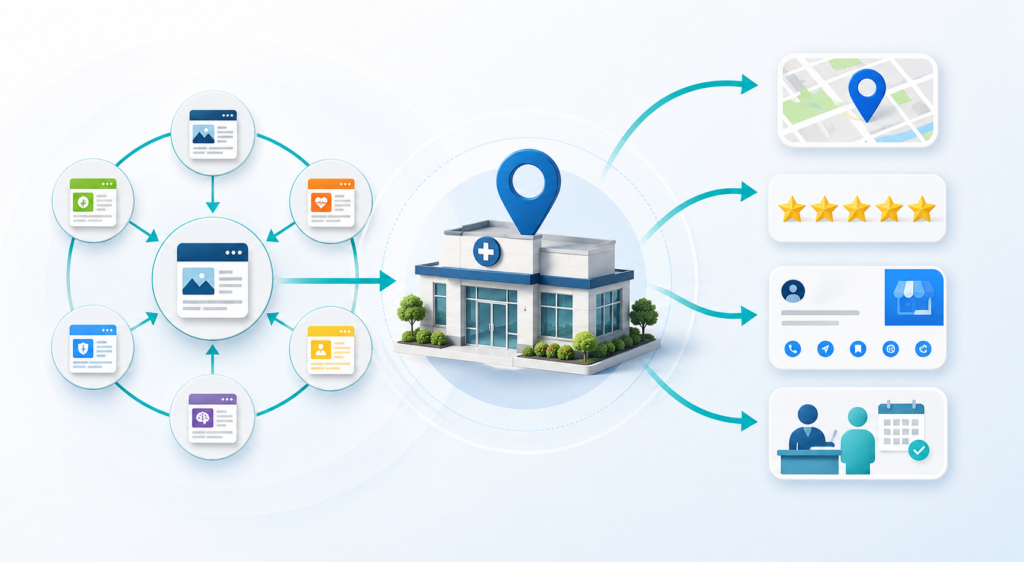
Right now, someone in New York may be looking for exactly the care your practice provides.
They may be searching for a primary care physician accepting new patients, a specialist nearby, a doctor who participates in Medicare or Medicaid, or simply a highly rated provider they can trust.
The question is:
What will they see when they find you?
Will they see a practice with 47 reviews and feedback from months ago?
Or will they see hundreds of genuine patient reviews, a strong rating, recent feedback, professional responses, and an active Google Business Profile?
Because your competition isn’t limited to the practice across the street anymore.
Your competition is every relevant provider appearing beside you when that patient searches Google.

The Best Medical Practice Doesn’t Automatically Win the Click
You can have outstanding physicians.
You can provide exceptional care.
You can accept the patient’s insurance.
You can have appointments available tomorrow.
But the prospective patient doesn’t know any of that until they investigate your practice.
Your Google presence has to earn that investigation.
A strong collection of authentic reviews can help communicate something difficult to communicate through advertising alone:
Real people have chosen this practice before me.
That social proof can give prospective patients another reason to learn more about you.
Make Your Patient Experience Visible
Your physicians and staff may already be creating positive patient experiences every day.
Don’t allow those experiences to remain invisible.
Create a consistent, compliant process that gives patients an easy opportunity to share honest feedback.
Build your review profile.
Strengthen your Google Business Profile.
Improve your local SEO.
Keep your practice information accurate.
Make insurance and appointment information easy to understand.
And measure whether those efforts are generating more qualified patient inquiries.
Because when someone searches for a doctor accepting new patients in New York, you don’t simply want your practice to appear.
You want to be the practice they stop and look at.
And when they compare you with the other physicians on the screen, you want your reputation to give them a compelling reason to take the next step.
Be found. Build trust. Earn the call. Fill the appointment.
Frequently Asked Questions About Getting New Patients With Google Reviews
Do Google reviews help medical practices get new patients?
Yes, Google reviews can help a medical practice build trust and stand out when prospective patients compare local providers. Reviews can also contribute to local search prominence. However, reviews alone do not guarantee new patients or a top Google ranking.
Can Google reviews help my medical practice rank higher?
They can contribute. Google states that review count and positive ratings can help local ranking, alongside factors such as relevance, distance, and prominence. A complete Google Business Profile, accurate information, local SEO, and a strong website should work together with your review strategy.
How can I get more patients for my medical practice in New York?
Start by improving how your practice appears when prospective patients search online. Optimize your Google Business Profile, build genuine patient reviews, strengthen local SEO, clearly explain your services and insurance participation, and make calling or requesting an appointment easy.
Can Google reviews help patients find doctors who accept Medicare or Medicaid?
Reviews do not determine whether a physician accepts Medicare or Medicaid. However, they can help patients evaluate a practice after discovering a potentially suitable provider. Practices should keep insurance information accurate and encourage patients to verify coverage directly before scheduling.
How many Google reviews should a doctor have?
There is no universal number that guarantees success. Instead, compare your practice with relevant competitors in your specialty and geographic area. A physician with 100 reviews may look established in one market while competing against practices with 1,000 or more reviews in another.
The better goal is consistent, authentic review growth over time.
Is a 4.5-star Google rating good for a medical practice?
A 4.5-star rating can create a strong first impression, particularly when supported by a substantial number of recent, genuine reviews. Patients may consider the rating, review count, review content, specialty, insurance, location, availability, and other factors before choosing a physician.
Can I ask patients to leave Google reviews?
Yes. Google allows businesses to ask customers for genuine reviews and provides review links and QR codes for this purpose. Practices should not offer incentives in exchange for reviews or attempt to manipulate feedback. Healthcare organizations should also ensure their review-request and response processes account for patient privacy and applicable compliance requirements.
Should physicians respond to Google reviews?
A thoughtful response can demonstrate that the practice pays attention to feedback. Healthcare providers, however, need to be particularly careful about privacy. A public review from an individual does not necessarily give a practice permission to disclose or confirm protected information in its response.
How often should a medical practice receive new Google reviews?
There is no required number per week or month. The goal should be a natural and consistent flow of genuine patient feedback rather than sudden, artificial spikes.
A practice serving a high volume of patients may reasonably receive more reviews than a smaller practice. What matters is having a repeatable process that gives eligible patients an appropriate opportunity to share honest feedback.
Can more Google reviews guarantee a full appointment schedule?
No. Reviews can strengthen visibility, reputation, and patient trust, but they cannot guarantee appointments or revenue.
Patient growth also depends on factors such as specialty, location, demand, physician availability, Medicare or Medicaid participation when applicable, commercial insurance networks, scheduling experience, local competition, website quality, and overall patient experience.
Google reviews should therefore be viewed as one important part of a broader patient-acquisition strategy.
The objective isn’t simply to have the most reviews. It’s to build a reputation that helps the right patients find your practice, trust what they see, and feel confident taking the next step.
Get More New Patients in New York by Building a Reputation They Can See
If your New York medical practice has open appointments, the problem may not be the quality of your care.
The problem may be that not enough prospective patients are finding and choosing you.
Every day, people search Google for physicians, specialists, Medicare doctors, Medicaid providers, and practices accepting new patients in New York. When your practice appears, your reviews can become one of the most visible signals patients use to decide whether to take a closer look.
That’s why Google reviews shouldn’t be left to chance.
Create a consistent system for generating genuine patient feedback. Strengthen your Google Business Profile. Improve your local visibility. Monitor your reputation. Make it easy for prospective patients to understand your services, insurance participation, and how to schedule.
Because your goal isn’t simply more Google reviews.
It’s more opportunities for the right patients to:
Find you. Trust you. Call you. And become patients.
Your next patient may already be searching.
Make sure your practice is one they notice.

- How to Get New Patients in New York With Google ReviewsYour next patient in New York may decide whether to call your practice before ever speaking to your staff. Today, patients search, compare, and read reviews before choosing care. A 2025 survey found 84% of patients check online reviews before choosing a new healthcare provider.…
- How Accepted Insurance Plans Can Strengthen Medical Local SEOWhen patients search for a doctor, they are not only looking for the right specialty or the closest medical office. Many also need to know whether the practice accepts their insurance. A patient might search Google for: If your website does not clearly list the…
- Brooklyn Nursing Home Marketing in 2026: How to Turn Google Searches Into More AdmissionsIf you’re responsible for marketing or admissions at a nursing home, you already know how to generate business the traditional way. You know the importance of hospital relationships. You know your discharge planners, case managers, physicians, community partners, and referral sources. You know what happens…
- Google Reviews and Search Console: Drive More Traffic to Your Queens Medical PracticeGoogle Reviews and Search Console: Drive More Traffic to Your Queens Medical Practice A patient in Queens searches Google for a family doctor, chiropractor, dentist, physical therapist, podiatrist, urgent care center, or medical specialist. Within seconds, that patient may see several practices competing for attention.…
- How to Get More Reviews for Your Clinical PracticePatient reviews have become an important part of how people choose a clinical practice. Before calling your office, a prospective patient may look at your Google rating, review count, recent feedback and how your team responds. A practice with a strong online reputation can appear…