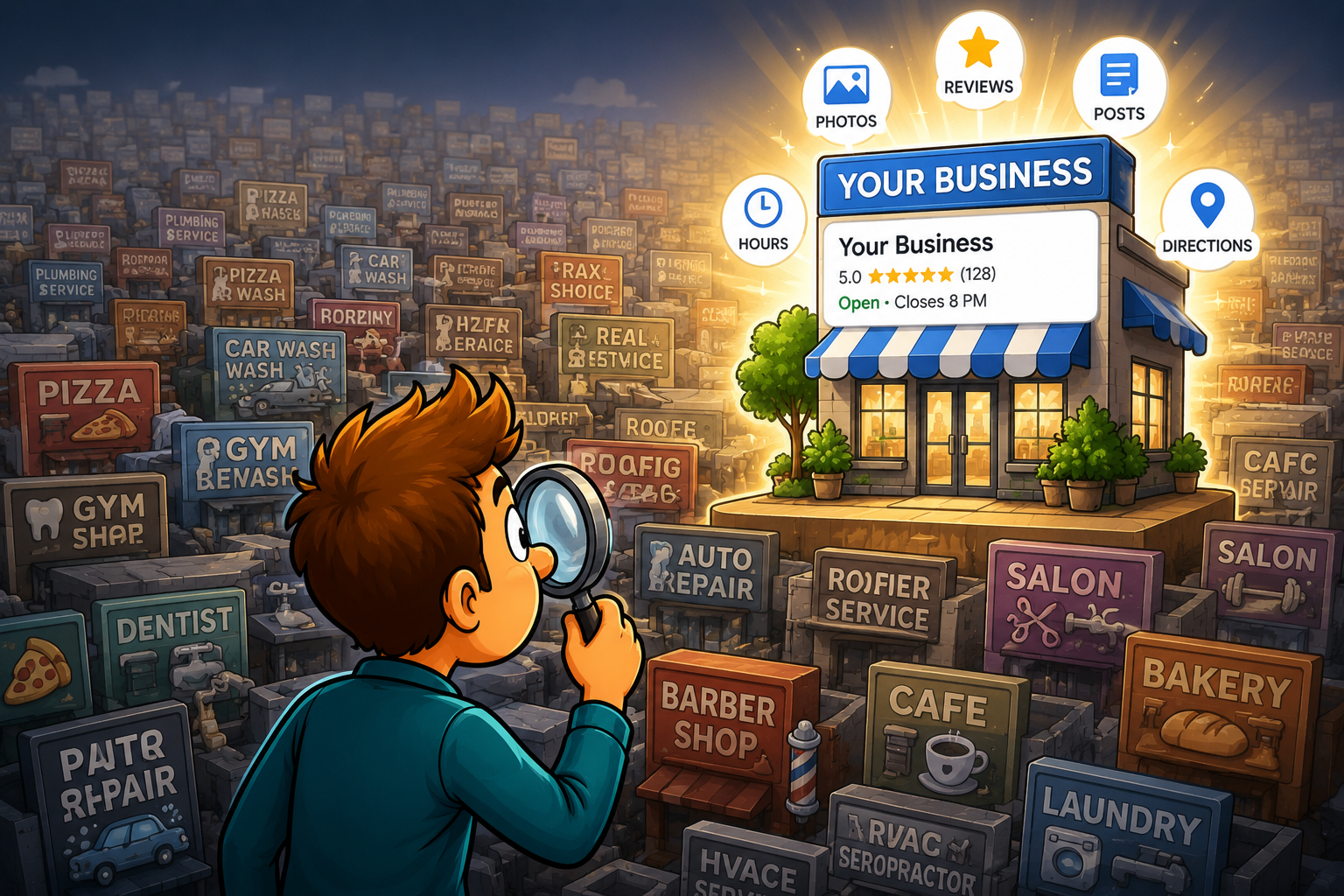
If you run a small business, mastering Local SEO can dramatically increase your visibility online. Whether you own a restaurant, law firm, plumbing company, dental office, or retail shop, local search optimization helps nearby customers discover your business when they search on Google.
Today, more than ever, consumers rely on local searches to find products and services near them. Searches like:
- “best coffee shop near me”
- “plumber in Hoboken”
- “dentist open now”
- “pizza delivery nearby”
all depend heavily on strong local search optimization.
Businesses that invest in Local SEO consistently earn:
- more website traffic
- more phone calls
- more foot traffic
- more qualified leads
- higher Google Maps rankings
This guide explains exactly how Local SEO works and how to build a powerful local search presence in 2026.
What Is Local SEO?
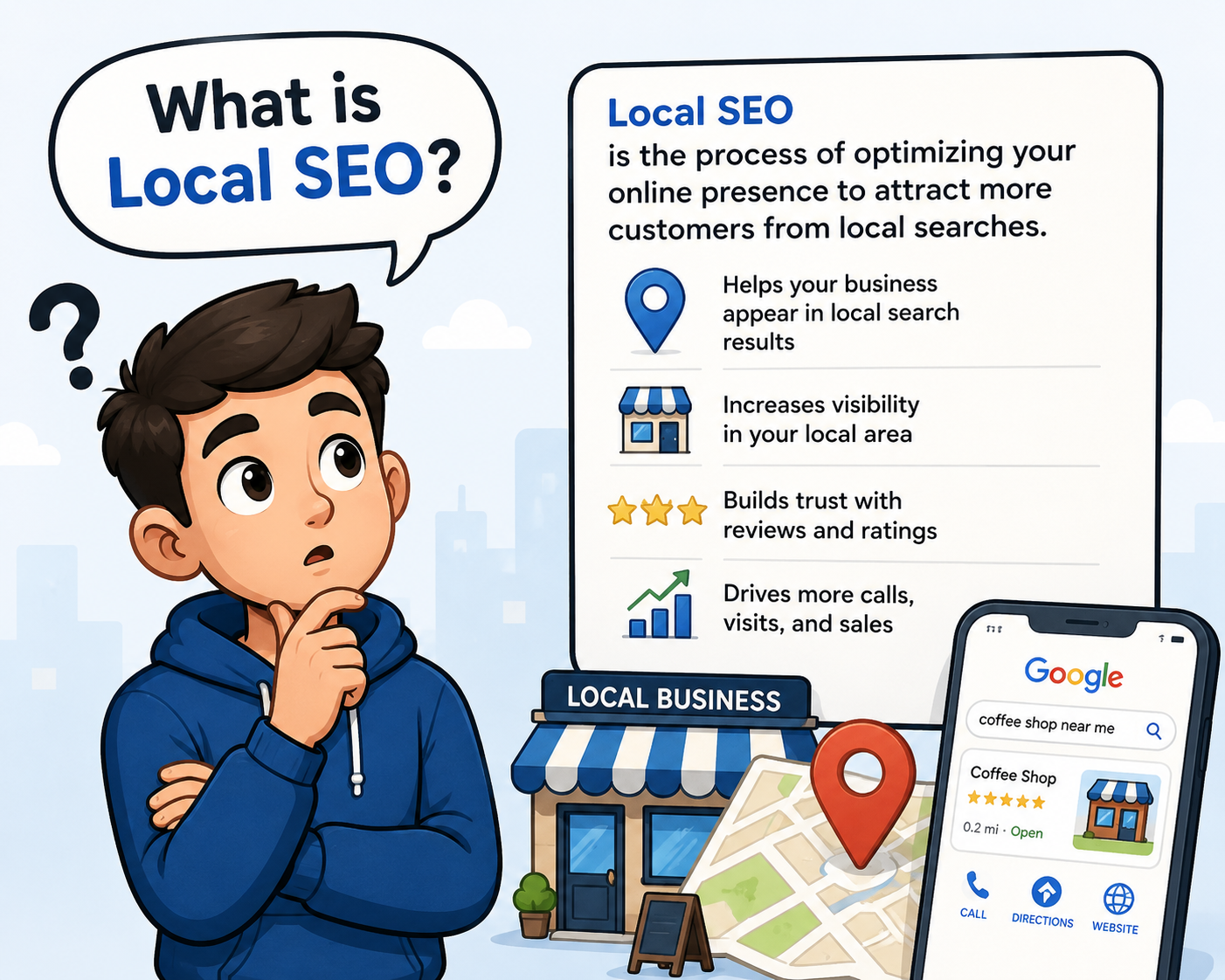
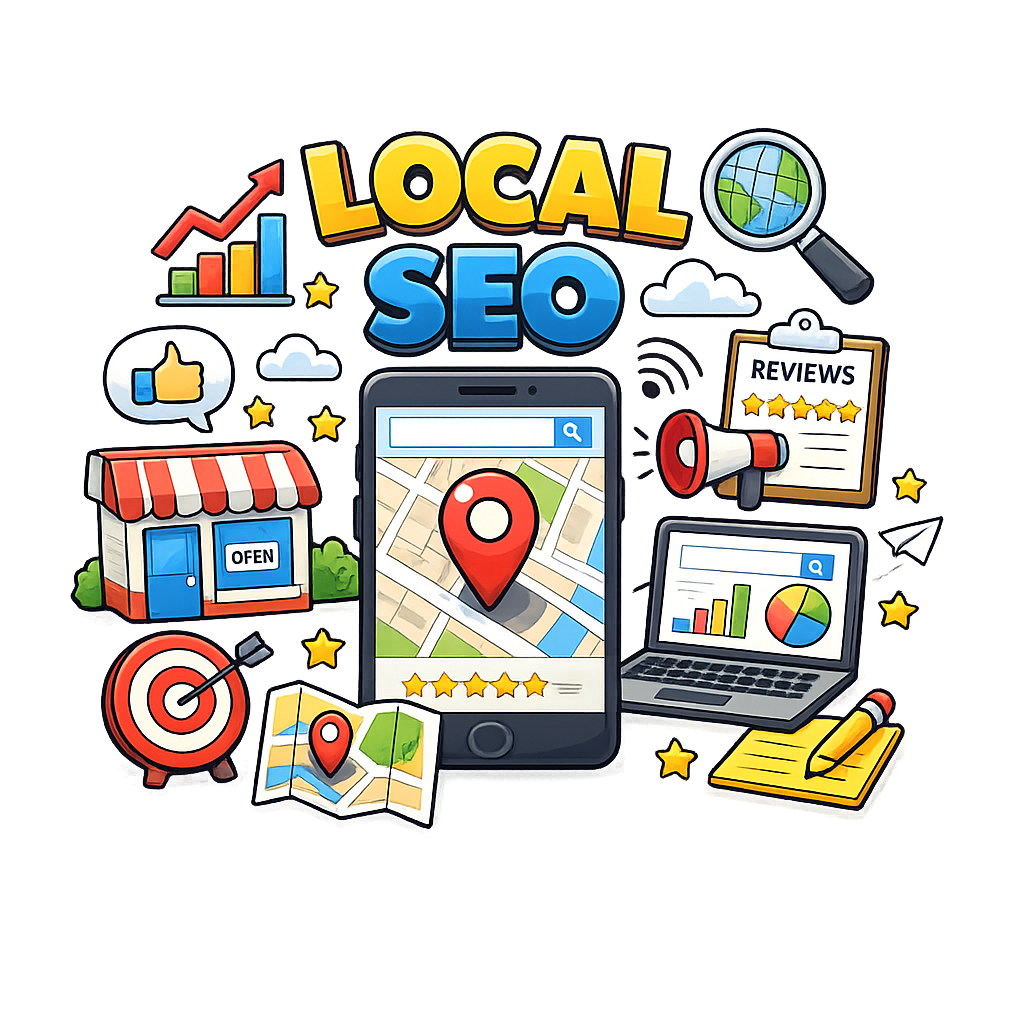
Local SEO is the process of optimizing your online presence to improve visibility in local search results.
Unlike traditional SEO, which targets broad national or global rankings, Local SEO focuses on searches tied to specific geographic areas.
- Examples include:
- “real estate agent near me”
- “roof repair in Jersey City”
- “best sushi restaurant in Hoboken”
Google uses local ranking signals to determine which businesses appear in:
- Google Maps
- the Local Pack
- localized organic results
The goal of Local SEO is simple:
Help your business appear when nearby customers are searching for your services.
Why Local SEO Matters More Than Ever
Local search behavior continues to grow rapidly.
Studies show that:
- most consumers use Google to find local businesses
- mobile searches dominate local intent
- “near me” searches continue increasing every year
- customers often visit businesses within 24 hours of a local search
Strong Local SEO creates a competitive advantage because local customers are often ready to buy immediately.
For example:
- someone searching “emergency plumber near me” likely needs service now
- someone searching “best brunch Hoboken” is probably deciding where to eat today
This high purchase intent makes Local SEO one of the most profitable digital marketing strategies available.

How Google Local Rankings Work
Google uses three primary factors to determine local rankings:

1. Relevance
How closely your business matches the search query.
Google analyzes:
- business categories
- website content
- keywords
- services
- reviews
The more relevant your profile and website are to the search, the better your chances of ranking.
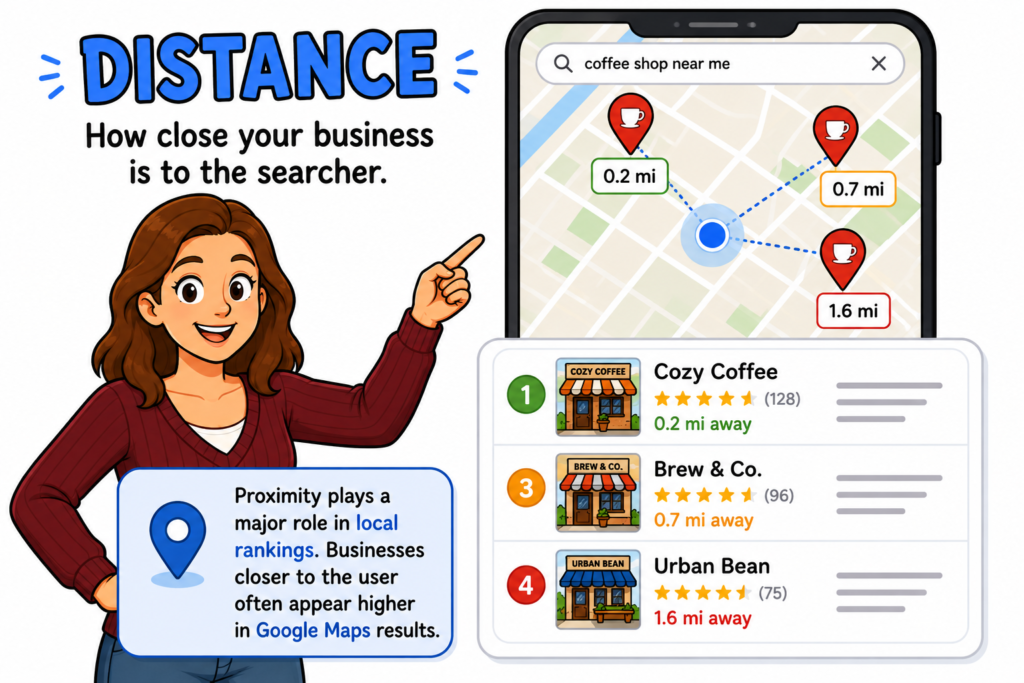
2. Distance
How close your business is to the searcher.
Proximity plays a major role in local rankings. Businesses closer to the user often appear higher in Google Maps results.
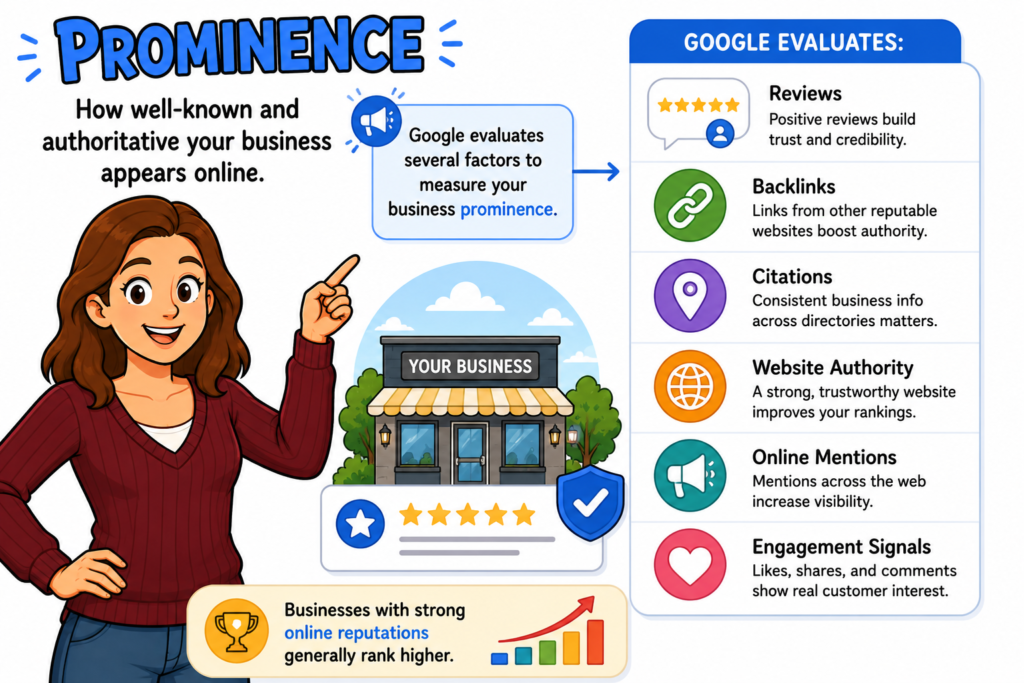
3. Prominence
How well-known and authoritative your business appears online.
Google evaluates:
- reviews
- backlinks
- citations
- website authority
- online mentions
- engagement signals
Businesses with strong online reputations generally rank higher.
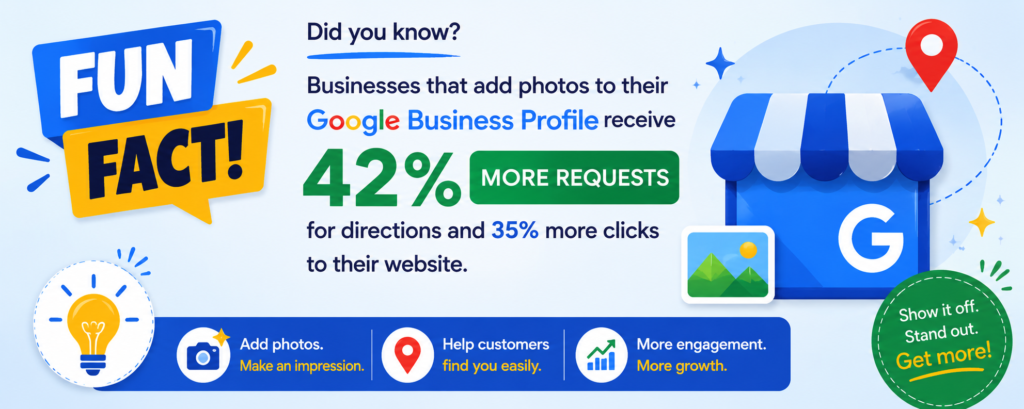
Understanding Google Business Profile
Your Google Business Profile (GBP) is the foundation of Local SEO.
A fully optimized GBP can significantly improve:
- click-through rates
- Google Maps visibility
- local rankings
- customer trust
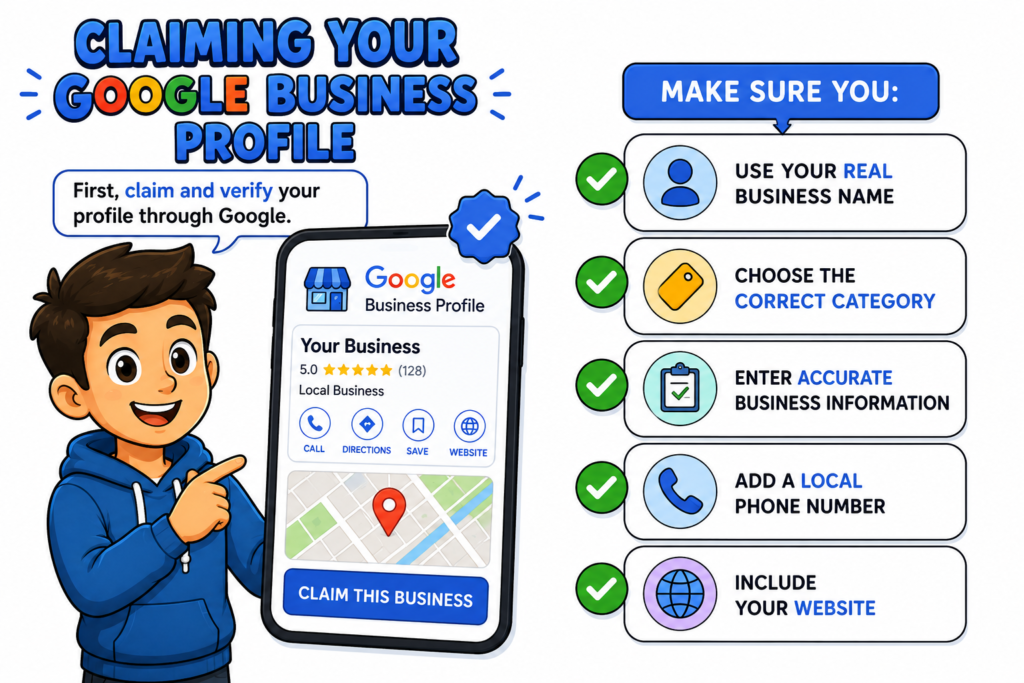
Claiming Your Google Business Profile
First, claim and verify your profile through Google.
Make sure you:
- use your real business name
- choose the correct category
- enter accurate business information
- add a local phone number
- include your website
Verification helps Google trust your business.
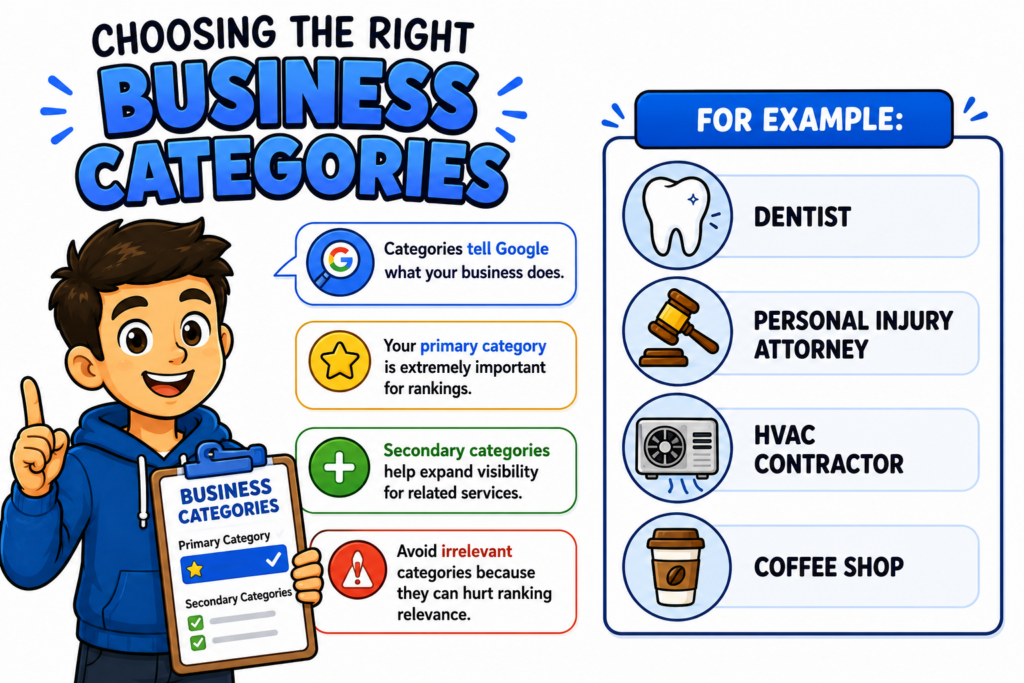
Choosing the Right Business Categories
Categories tell Google what your business does.
Your primary category is extremely important for rankings.
For example:
- Dentist
- Personal Injury Attorney
- HVAC Contractor
- Coffee Shop
Secondary categories help expand visibility for related services.
Avoid irrelevant categories because they can hurt ranking relevance.
Optimizing Business Information
Consistency matters.
Your:
- phone number
- business name
- address
Optimizing Business Information
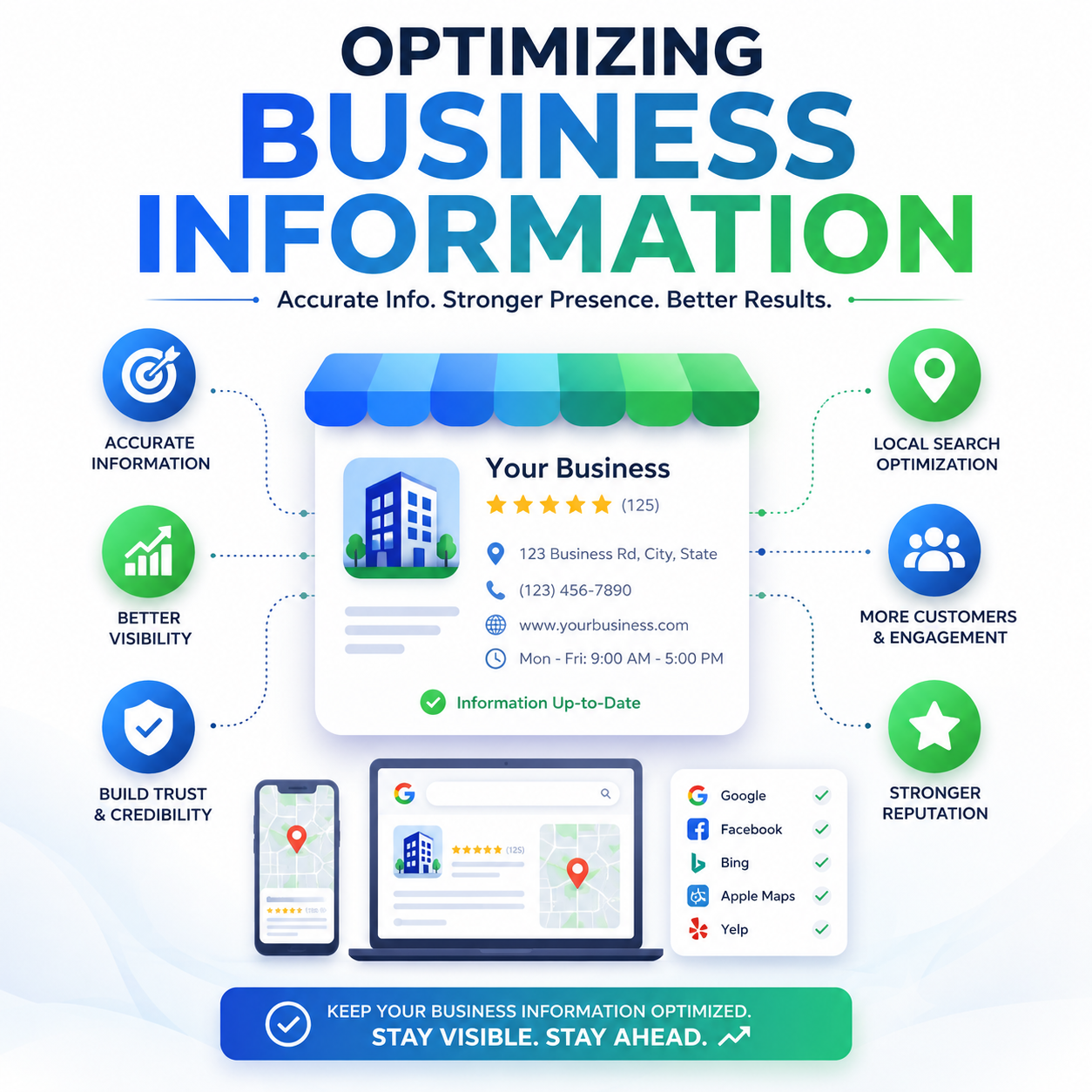
Consistency matters when it comes to local SEO. Your business name, address, and phone number should be accurate and identical everywhere they appear online, including your Google Business Profile, website, directories, social media pages, and review platforms.
Business name matches your real-world branding
– Address is complete and formatted consistently
– Phone number is correct and easy to call
– Website URL points to the right page
– Business hours are updated, especially during holidays
Even small differences, such as using “Street” in one place and “St.” in another, can create confusion for search engines and customers. Keeping your business information consistent helps Google trust your listing and improves your chances of ranking higher in local search results.
must match across:
- your website
- Google profile
- directories
- social media
This is called NAP consistency.
Inconsistent information can confuse Google and weaken rankings.
How to Optimize Your Website for Local SEO
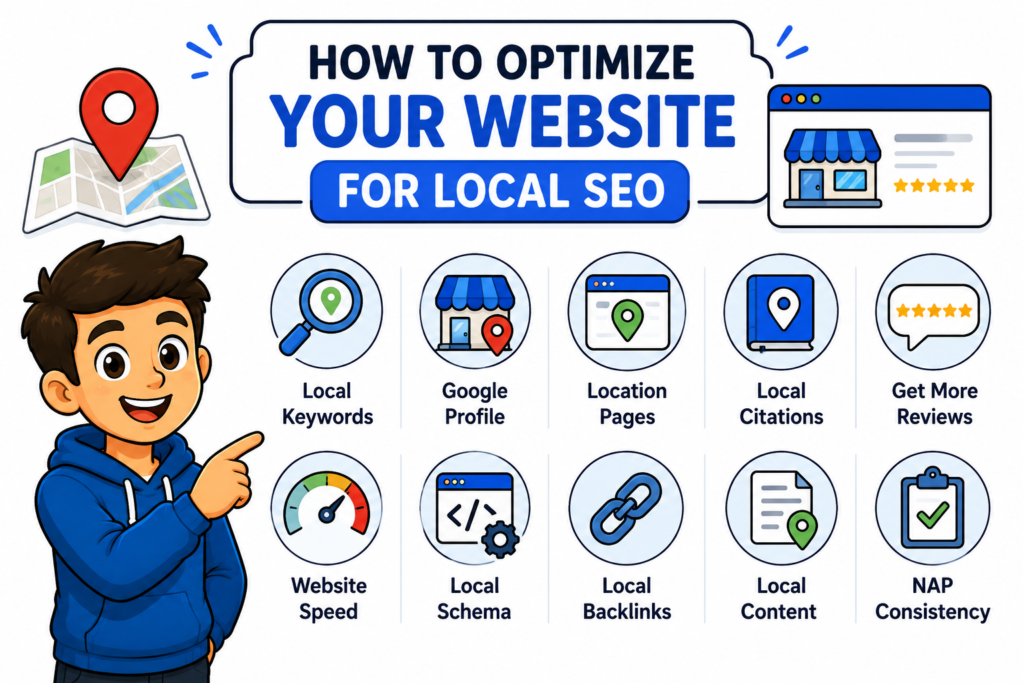
Your website remains a major local ranking factor.
Even with a strong GBP, poor website optimization limits visibility.
Local Keyword Research
Find keywords people use in your area.
Examples:
- “NJ roofing contractor”
- “family dentist Hoboken”
- “best pizza Jersey City”

Use location-based keywords naturally across your service pages, page titles, headings, URLs, and meta descriptions. Include the city, neighborhood, and primary service where it makes sense, but avoid keyword stuffing. Clear, relevant optimization helps Google understand what you offer and improves visibility for nearby customers ready to contact your business.
Creating Location Pages
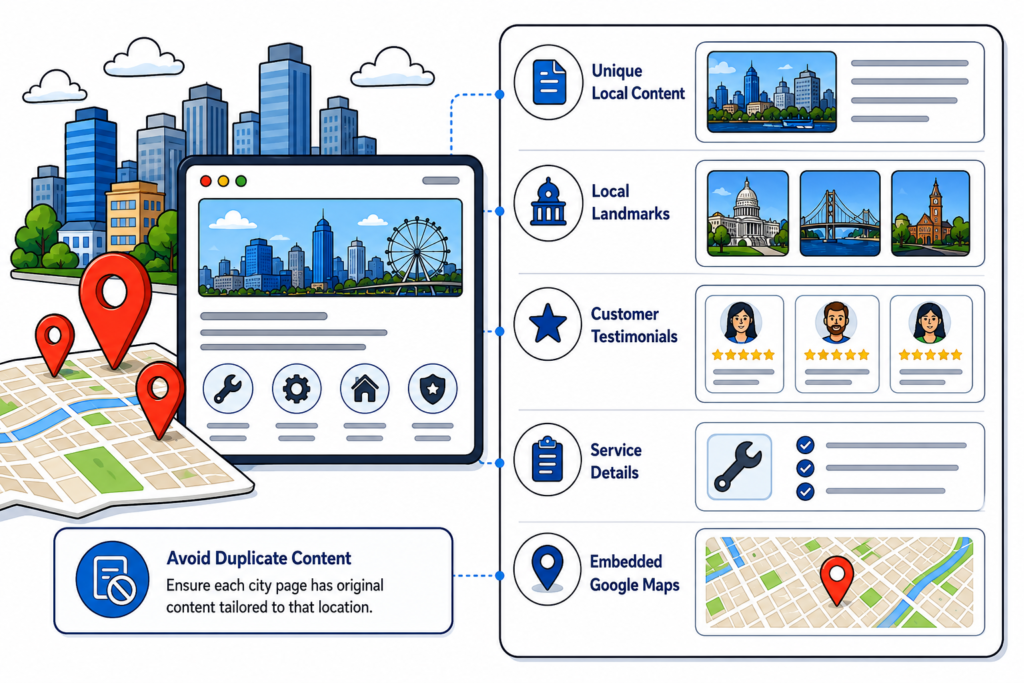
If you serve multiple cities, create dedicated location pages.
Each page should include:
- unique local content
- local landmarks
- customer testimonials
- service details
- embedded Google Maps
Avoid duplicate content between city pages.
Local SEO Content Strategy
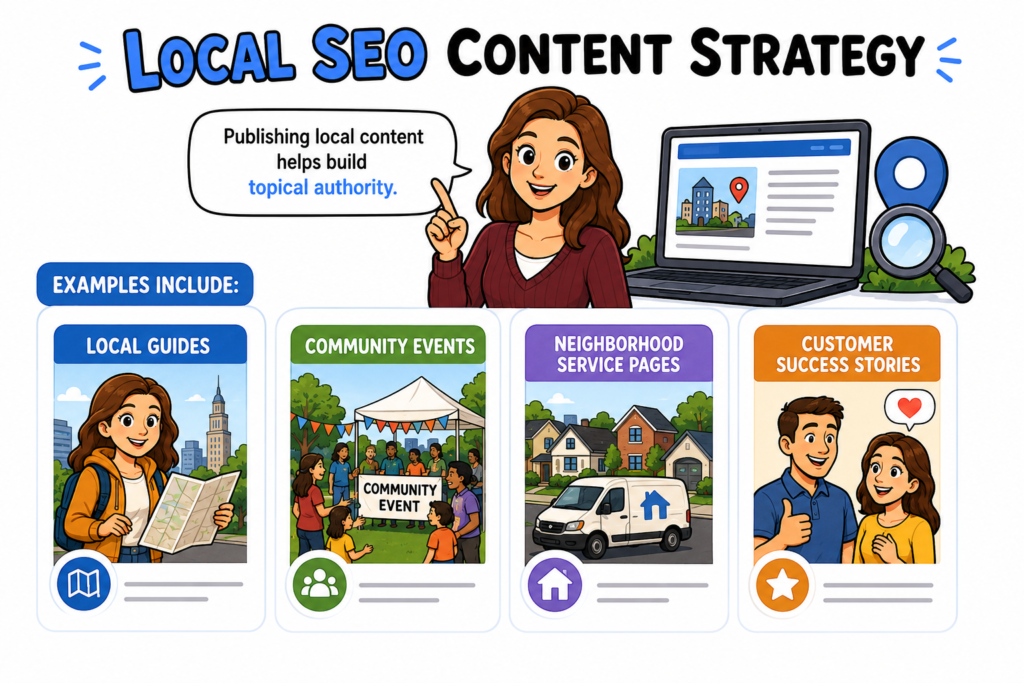
Publishing local content helps build topical authority.
Examples include:
- Local guides
- community events
- neighborhood service pages
- customer success stories
A strong content strategy improves:
- trust
- rankings
- backlinks
- engagement
Google Reviews and Reputation Management
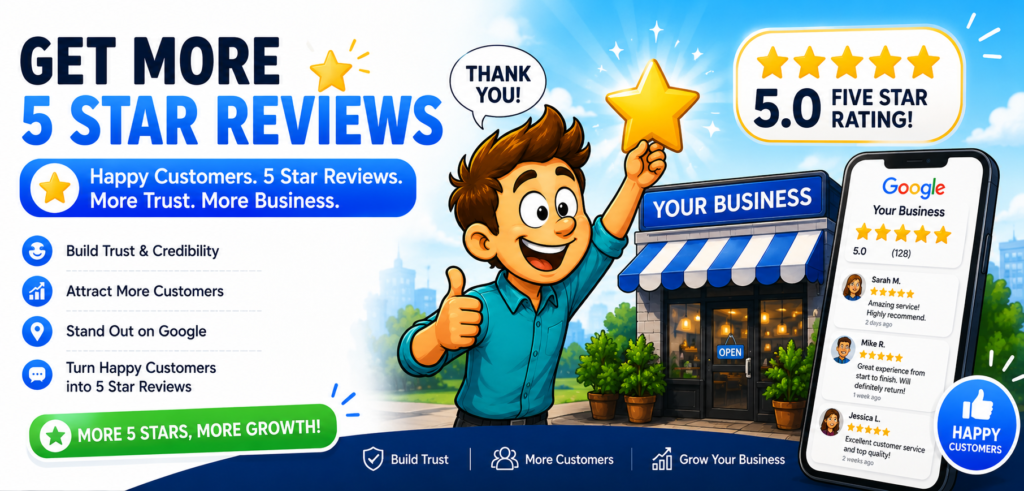
Reviews are one of the most powerful Local SEO ranking factors.
Businesses with:
- more reviews
- better ratings
- consistent engagement
often rank higher in local search results.
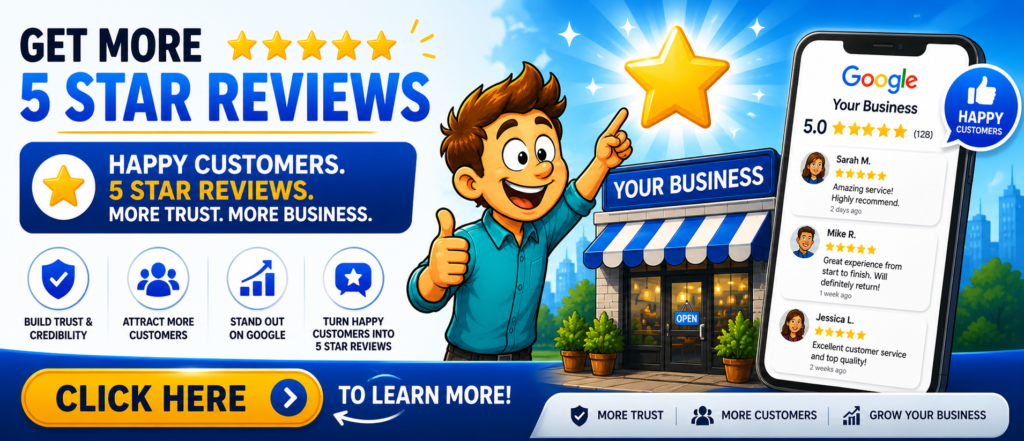
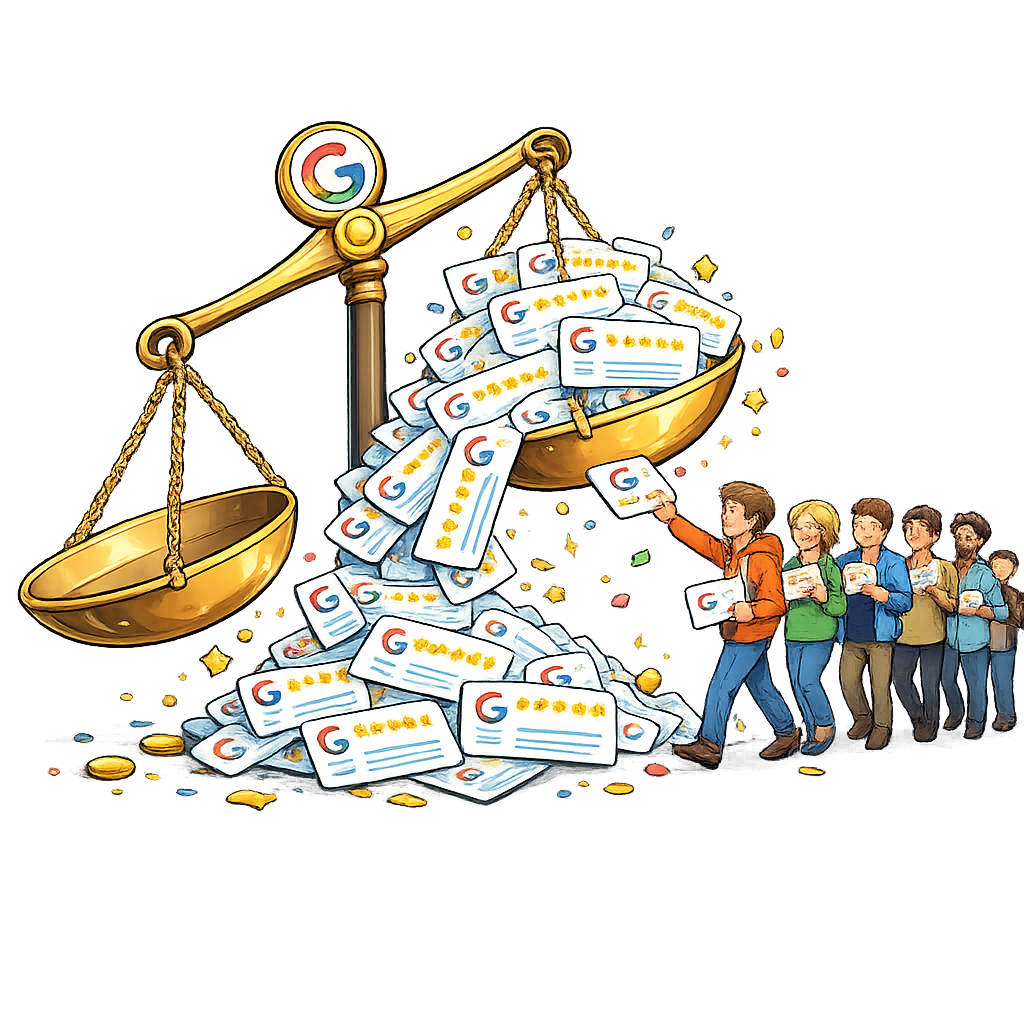
Reviews are one of the most powerful Local SEO ranking factors. Businesses with more reviews, better ratings, and consistent engagement often rank higher in local search results. Using a Google Review Management Service helps you request feedback, respond quickly, and build trust that supports stronger local visibility.
How to Get More Reviews
Encourage happy customers to leave reviews by:
- sending follow-up emails
- using QR codes
- asking in person
- adding review links to invoices
Never buy fake reviews.
Google actively removes fraudulent reviews and may suspend listings.

Responding to Customer Reviews
Responding to reviews shows engagement and professionalism.
Best practices:
- thank positive reviewers
- address negative feedback calmly
- include relevant keywords naturally
- respond consistently
Customer interaction improves trust signals.
Local Citations and Directory Listings
Citations are mentions of your business online.
Examples include:
- Yelp
- Bing Places
- Apple Maps
- Yellow Pages
Consistent citations strengthen local trust signals.
Focus on:
- accuracy
- consistency
- high-quality directories
Avoid spammy citation services.

Link Building for Local SEO
Backlinks remain critical for Local SEO success.
Good local backlinks include:
- local newspapers
- community organizations
- chambers of commerce
- sponsorships
- local blogs
High-quality local links improve authority and rankings.

Mobile Optimization for Local SEO
Most local searches happen on mobile devices.
Your website should:
- load quickly
- display properly on phones
- use readable text
- feature clickable phone numbers
- have simple navigation
Google uses mobile-first indexing, making mobile optimization essential.
Technical SEO for Local Businesses
Technical optimization improves crawlability and indexing.
Important elements include:
- HTTPS security
- schema markup
- fast loading speeds
- XML sitemaps
- clean URLs
- proper indexing
Use LocalBusiness schema markup to help Google understand your business details.
Learn more about schema markup at:
Schema.org
Local SEO Ranking Factors in 2026
Key ranking signals include:
| Ranking Factor | Importance |
|---|---|
| Google Business Profile optimization | Very High |
| Reviews and ratings | Very High |
| Website authority | High |
| Local backlinks | High |
| Behavioral signals | Medium |
| Citation consistency | Medium |
| Mobile usability | High |
| On-page optimization | High |
Google continuously evolves local algorithms, so staying updated is important.

Common Local SEO Mistakes to Avoid
Many businesses unknowingly damage their rankings.
Avoid:
- keyword stuffing
- fake reviews
- duplicate listings
- inconsistent NAP information
- thin content
- ignoring mobile optimization
- neglecting review responses
Small mistakes can significantly impact local visibility.

Advanced Local SEO Strategies
Once fundamentals are strong, advanced tactics can help outperform competitors.
Strategies include:
- local schema implementation
- topical authority content clusters
- image geotagging
- advanced internal linking
- service-area optimization
- entity-based SEO
- FAQ schema targeting
Building topical depth around Local SEO-related subjects improves authority.

Local SEO Checklist
Use this checklist to strengthen your local presence:
✅ Claim Google Business Profile
✅ Verify business information
✅ Optimize categories
✅ Add services and products
✅ Upload photos regularly
✅ Collect customer reviews
✅ Respond to reviews
✅ Build local citations
✅ Optimize mobile usability
✅ Create location pages
✅ Add schema markup
✅ Publish local content
✅ Earn local backlinks
✅ Monitor rankings regularly

FAQs About Local SEO
How long does Local SEO take to work?
Most businesses begin seeing improvements within 3–6 months, depending on competition and optimization quality.
Does Google Business Profile help rankings?
Yes. A fully optimized Google Business Profile is one of the most important Local SEO ranking factors.
Can I do Local SEO without a website?
You can rank with only a Google Business Profile, but having a website greatly improves visibility and authority.
How important are reviews for Local SEO?
Reviews strongly influence rankings, trust, and click-through rates.
What is the Local Pack?
The Local Pack is the map section showing local businesses in Google search results.
How often should I update my Google Business Profile?
Update it regularly with:
- new photos
- posts
- services
- offers
- business changes
Consistent activity helps engagement.
Conclusion
Local SEO remains one of the most powerful ways for small businesses to attract nearby customers online.
By focusing on:
- Google Business Profile optimization
- reviews
- website quality
- local content
- backlinks
- technical SEO
you can significantly improve visibility in local search results.

Businesses that invest consistently in Local SEO often outperform competitors who rely only on traditional advertising.
The sooner you optimize your local presence, the sooner you can generate:
- more leads
- more calls
- more customers
- more revenue
Local search continues evolving rapidly, but businesses that build strong foundations today will remain competitive well into the future.