What is Google Review Management?
Quick Definition
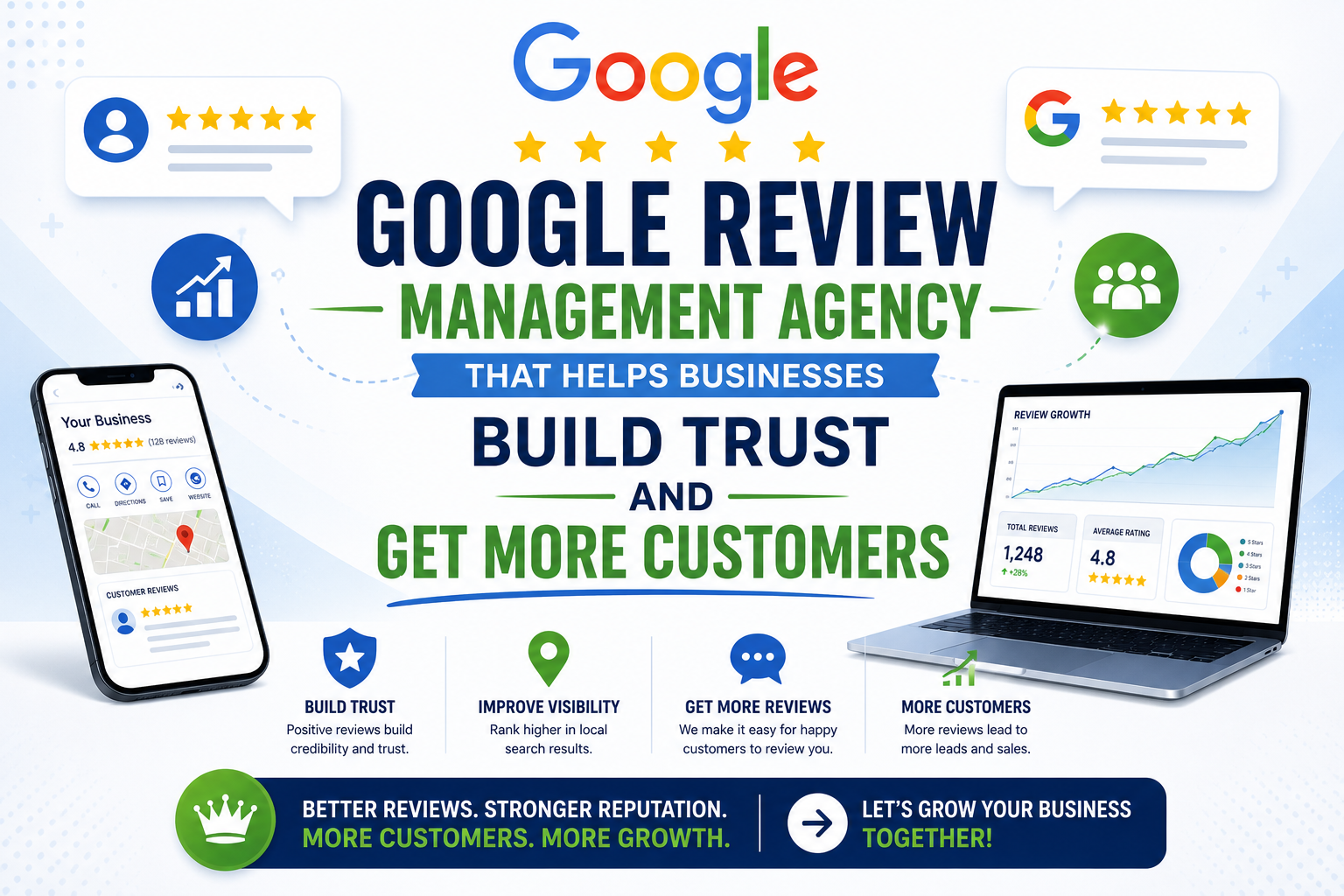
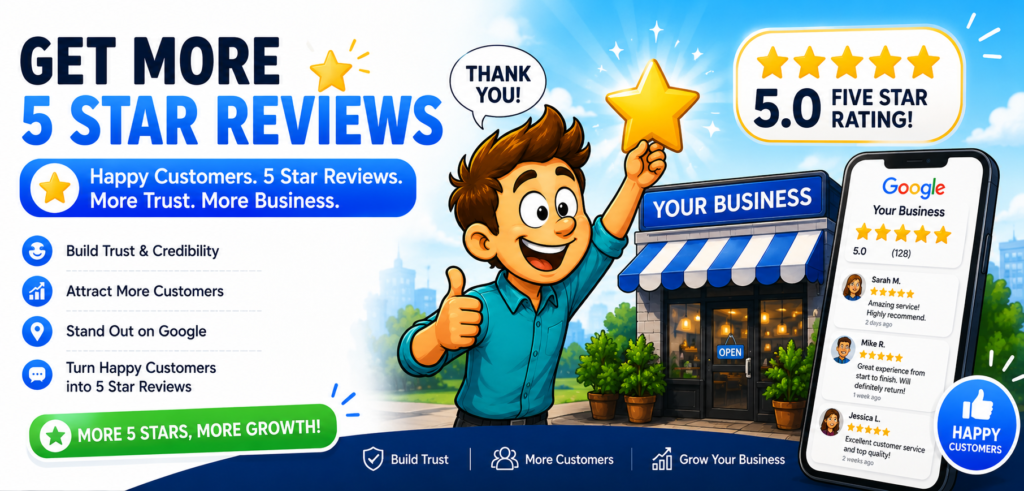
Google review management is the process of monitoring, responding to, and generating customer reviews on your business’s listing. It ensures that feedback is handled professionally and consistently, often with the help of a google review managemnet servbice to save time and improve results.
Why It Matters for Local SEO
Reviews play a major role in how your business ranks in local search results. The quantity, quality, and frequency of reviews signal trust and relevance to search engines. Businesses with strong review activity are more likely to appear higher in results, attract more clicks, and convert more customers. Simply put, better review management = better visibility.
Where Google Business Profile Fits In
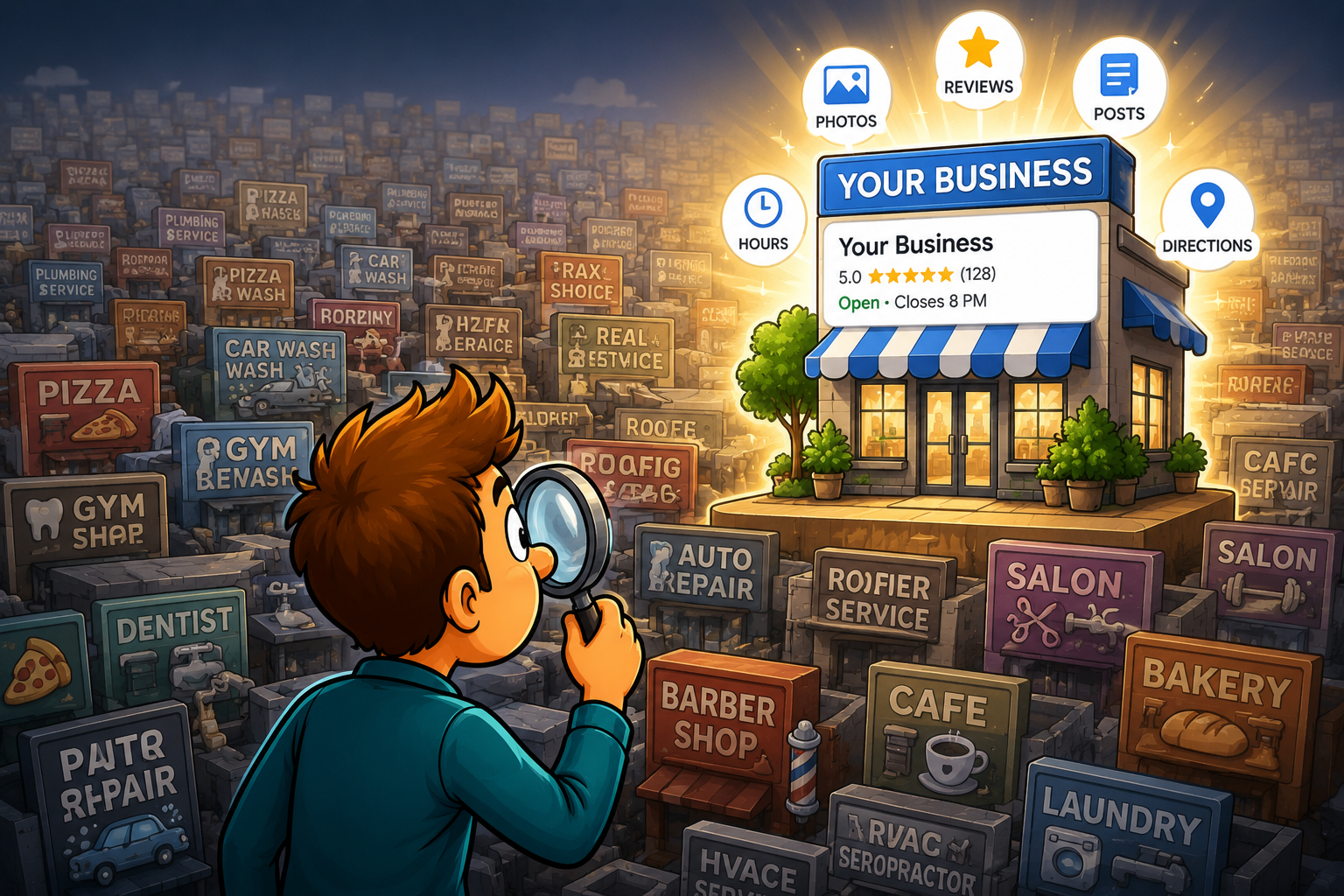
Your Google Business Profile is the central hub for your reviews. It’s where customers leave feedback and where potential buyers form their first impression. Actively managing reviews on this profile—replying, updating information, and encouraging new feedback—helps you stay competitive and build credibility in your local market.


What is Google Review Management Service?
A fully managed solution combining human expertise and automation. It helps businesses monitor, respond to, and improve customer reviews efficiently.
The service also includes reputation strategy development to strengthen brand trust, increase visibility, and improve customer engagement across Google Business Profiles.
What is Review Management Software?
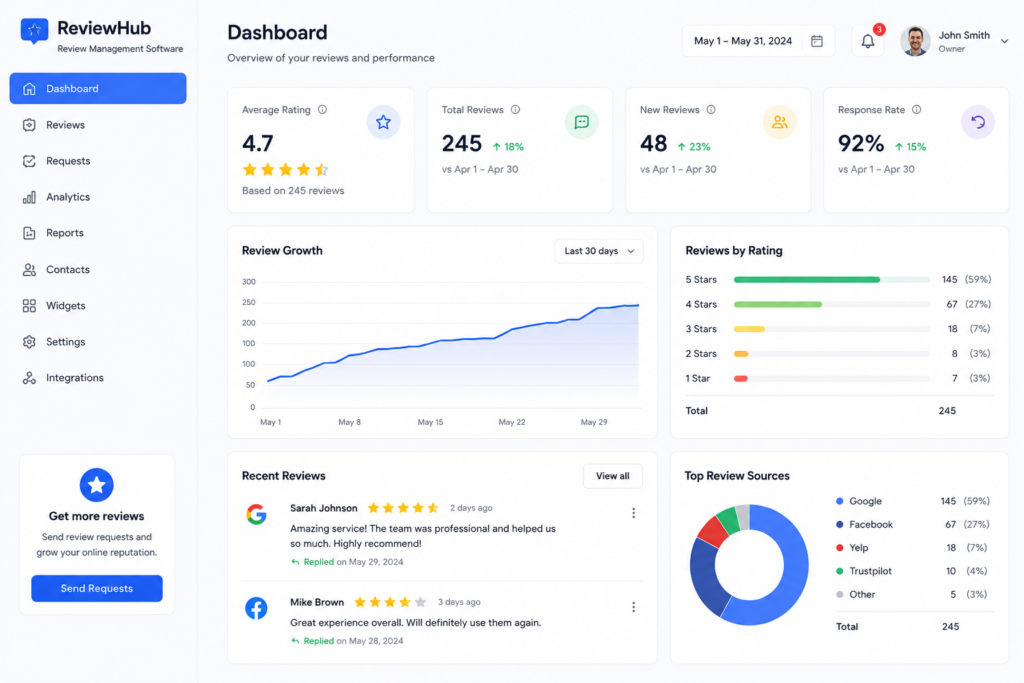
Review management software is a DIY approach that helps businesses monitor, organize, and respond to customer reviews using tools, dashboards, and automation features.
These platforms simplify review tracking by keeping all customer feedback in one place. Many also include automated review requests, alerts, and response templates.
DIY software works well for businesses wanting more control over their online reputation. It gives owners flexibility while reducing the time needed to manage reviews manually.
Key Differences: Service vs Software
Create a comparison table 👇
| Feature | Service | Software |
|---|---|---|
| Setup | Done for you | DIY |
| Time Required | Low | High |
| Expertise | Included | You learn |
| Cost | Higher | Lower |
| Results Speed | Faster | Slower |
Pros and Cons of Review Management Software
Pros:
Review management software is highly scalable, making it easier for growing businesses to manage increasing customer feedback efficiently.
Most software solutions cost less than fully managed services, making them ideal for smaller business budgets.
Business owners also maintain full control over review responses, messaging, and overall customer communication strategy.
Cons:
- Easy to misuse automation
- Time-consuming
- Learning curve


Pros and Cons of Done-for-You Services
Pros:
- Saves time by handling reviews for you
- Expert handling and better customer responses
- Helps improve your online reputation faster
- Keeps review replies consistent and professional
Cons:
Some businesses may prefer a more personal approach when replying to customer reviews. Done-for-you services also give business owners less control over how responses are written, and monthly service costs can become expensive over time.

Higher cost
Which Option is Best for Small Businesses?
Break into scenarios:
Choose Software If:
- You understand SEO
- You have time
- You’re budget-conscious
Choose Service If:
- Reputation is critical
- You want faster growth
- You lack time


Cost Comparison: Service vs Software
SaaS tools typically charge monthly subscriptions ranging from $50 to $500. Software offers scalable ROI through automation and improved efficiency.
Agencies often charge $2,000 to $10,000+ monthly. They provide hands-on expertise but at significantly higher long-term costs compared to software solutions.
SaaS tools typically charge monthly subscriptions ranging from $50 to $500. Software offers scalable ROI through automation and improved efficiency.
Agencies often charge $2,000 to $10,000+ monthly. They provide hands-on expertise but at significantly higher long-term costs compared to software solutions.

When to Upgrade from Software to a Service
👉 This is your conversion bridge
- Negative reviews increasing
- Growth plateau
- Too many reviews to manage

Why Many Small Businesses Switch to Services
Many small businesses switch to managed services because handling reviews takes time and daily effort. Services make replies easier, improve customer communication, and let business owners focus more on running and growing their business.
What I Learned Watching a Restaurant Struggle (and Then Win)
When I was first learning and researching review management for my own business, I remember watching a local restaurant try to handle everything on their own—and honestly, it showed.
At first, the owner relied on basic software to keep track of reviews. On paper, it sounded efficient. But in reality, they struggled to keep up. Reviews would sit unanswered for days, sometimes weeks. A few negative comments stood out—not because they were terrible, but because there was no response at all. It gave the impression they didn’t care.
One moment stuck with me: a customer left a detailed 3-star review about slow service but said the food was great and they’d come back. No reply. That was a missed opportunity to turn a neutral experience into a loyal customer.
Eventually, the owner switched to a dedicated service instead of trying to juggle everything manually. The difference was immediate.

- Response time dropped by nearly 80%
- Every review—good or bad—got a thoughtful reply within 24 hours
- Customers started updating their reviews after getting responses
- New reviews began coming in more consistently
What changed wasn’t just speed—it was perception. The business suddenly looked active, attentive, and trustworthy.
That experience made one thing clear to me: review management isn’t just about replying—it’s about showing up consistently. And when you do, both customers and Google notice.


Conclusion: Service vs Software
So, when it comes to Google review management software vs service, the better option really depends on your business goals, budget, and available time. If you’re comfortable managing reviews yourself and want a lower-cost solution, software can be an affordable choice starting as low as $50 per month.
However, if you don’t have the time to monitor reviews, respond consistently, and build a reputation strategy, hiring a managed service may be the better investment. Many services start around $200 per month and handle the entire process for you, combining automation with human expertise to help protect and grow your online reputation.

- How To get 5 Star Reviews