If you’re responsible for marketing or admissions at a nursing home, you already know how to generate business the traditional way.
You know the importance of hospital relationships. You know your discharge planners, case managers, physicians, community partners, and referral sources. You know what happens to census when those relationships are strong, and you know how quickly open beds become a problem when the referral pipeline slows down.

What may be less familiar is how much of that decision-making process has moved to Google.
A referral doesn’t necessarily result in a phone call anymore.
Someone recommends your facility, and the next thing that happens is often a Google search.
The prospective patient or family sees your Google Business Profile. They see your rating. They read your reviews. They compare your facility with two or three other nursing homes nearby. They look at photographs, visit your website, and decide whether your facility makes the shortlist.
That means your nursing home’s digital presence is now sitting between the referral and the admission.
For administrators accustomed to traditional nursing home marketing, that’s the important shift to understand.
Digital marketing doesn’t need to replace the referral network you’ve spent years building. It needs to make sure your online presence supports those referrals while creating another source of admissions opportunities.
Think About Google as Another Referral Source
You probably already track your major referral sources.
How many admissions came from Hospital A?
How many came from a particular physician group?
Which discharge planners consistently send appropriate patients?
Which relationships produce short-term rehab versus long-term care admissions?
Start applying some of that same thinking to Google.
Instead of treating SEO as a marketing department metric, ask:
How many admissions opportunities are we getting from people searching Google for care in our market?
That’s a much more useful question.
If you operate a nursing home in Brooklyn, there are people searching Google for nursing homes, skilled nursing, short-term rehabilitation, long-term care, and related services in Brooklyn every day.
You don’t need everyone searching.
You need your facility to be visible when the right person searches at the right time.
That is essentially what local SEO for nursing homes is trying to accomplish.
Local SEO Isn’t About Getting More Random Website Traffic
Administrators sometimes hear “SEO” and immediately think about website traffic, blogs, keywords, and Google rankings.
Those things are part of it, but they’re not the business objective.
The objective is admissions.
For a nursing home, local SEO is about increasing your facility’s visibility when someone in your market is actively looking for the type of care you provide.

That could be someone searching:
- “nursing home near me”
- “nursing homes in Brooklyn”
- “skilled nursing facility Brooklyn”
- “short-term rehab Brooklyn”
- “long-term care Brooklyn”
- “best nursing homes Brooklyn”
The difference between this traffic and a lot of traditional advertising is intent.
Someone searching for a skilled nursing facility in Brooklyn isn’t being interrupted with an advertisement about nursing homes.
They’re already looking.
Your job is to make sure your facility is one of the options they seriously consider.
Your Google Business Profile Is Part of Your Admissions Funnel
This is where nursing home administrators and healthcare administrators need to become more familiar with Google Business Profile, especially when competing for admissions across New York City’s five boroughs.
Don’t think about it as just another business listing.
Think about it as the first page of your admissions funnel.
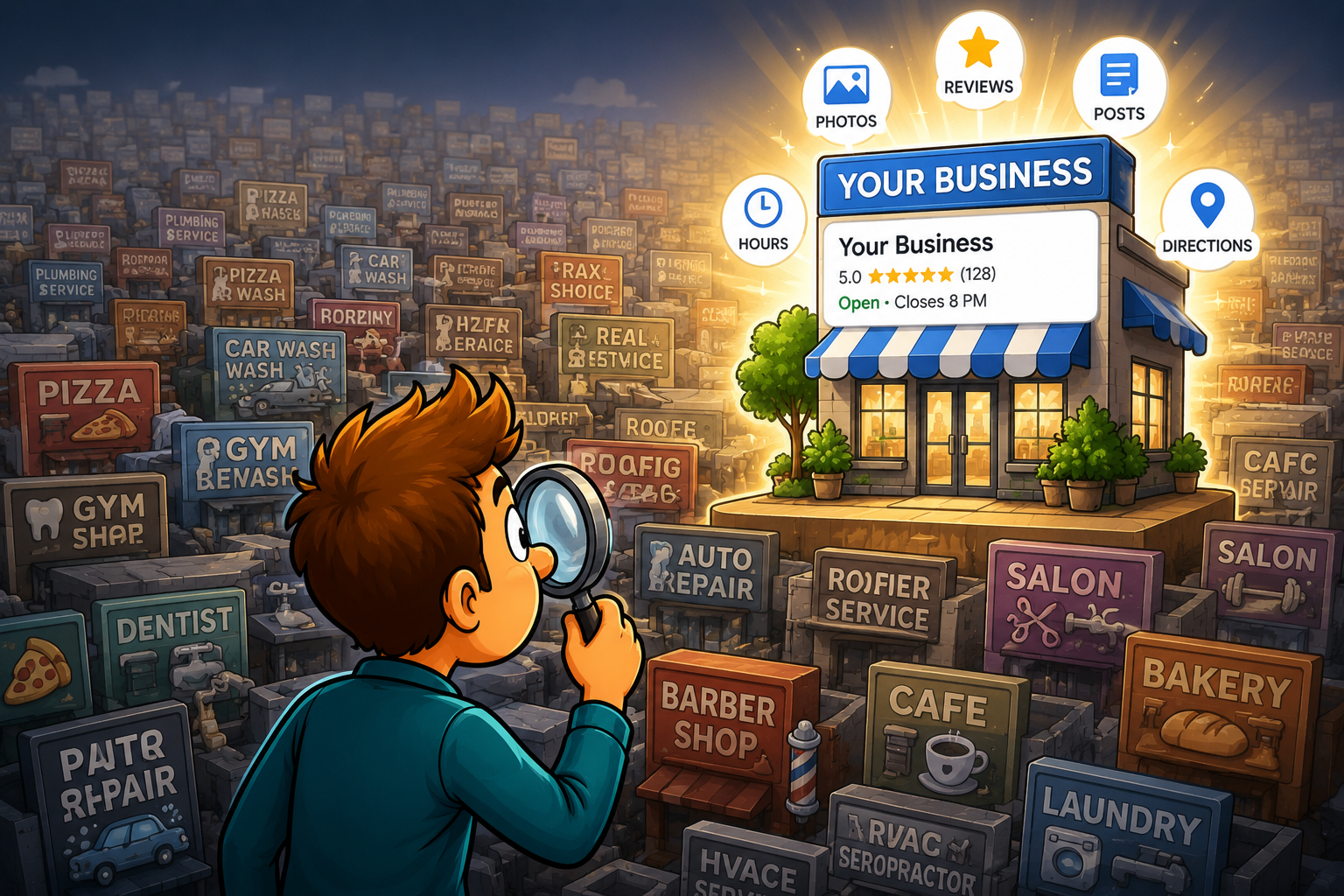
For example, someone searches for nursing home care in Brooklyn and immediately sees three competing facilities. Before visiting a single website or speaking with admissions, they can compare:
- Contact information
- Ratings
- Number of Google reviews
- Recent reviews
- Management responses
- Photographs
- Location
- Services
That’s a significant amount of information available before your admissions team ever gets involved.
If the nursing home next door has 300 Google reviews, current photographs, active management responses, and a strong rating while your facility has 42 reviews with the most recent one from six months ago, you have a marketing problem.
It doesn’t necessarily mean they provide better care.
It means they’re presenting a stronger digital case to someone who doesn’t know either facility yet.
Google Review Management Is Reputation Management at Scale
Most nursing home administrators already understand reputation management.
You’ve been doing it offline for years.
You maintain relationships with hospitals. You deal with complaints. You communicate with families. You protect the facility’s reputation in the community. You make sure referral sources understand what your facility does well.

Google review management is the digital extension of that same responsibility.
The difference is scale.
A complaint made directly to an administrator may involve a handful of people.
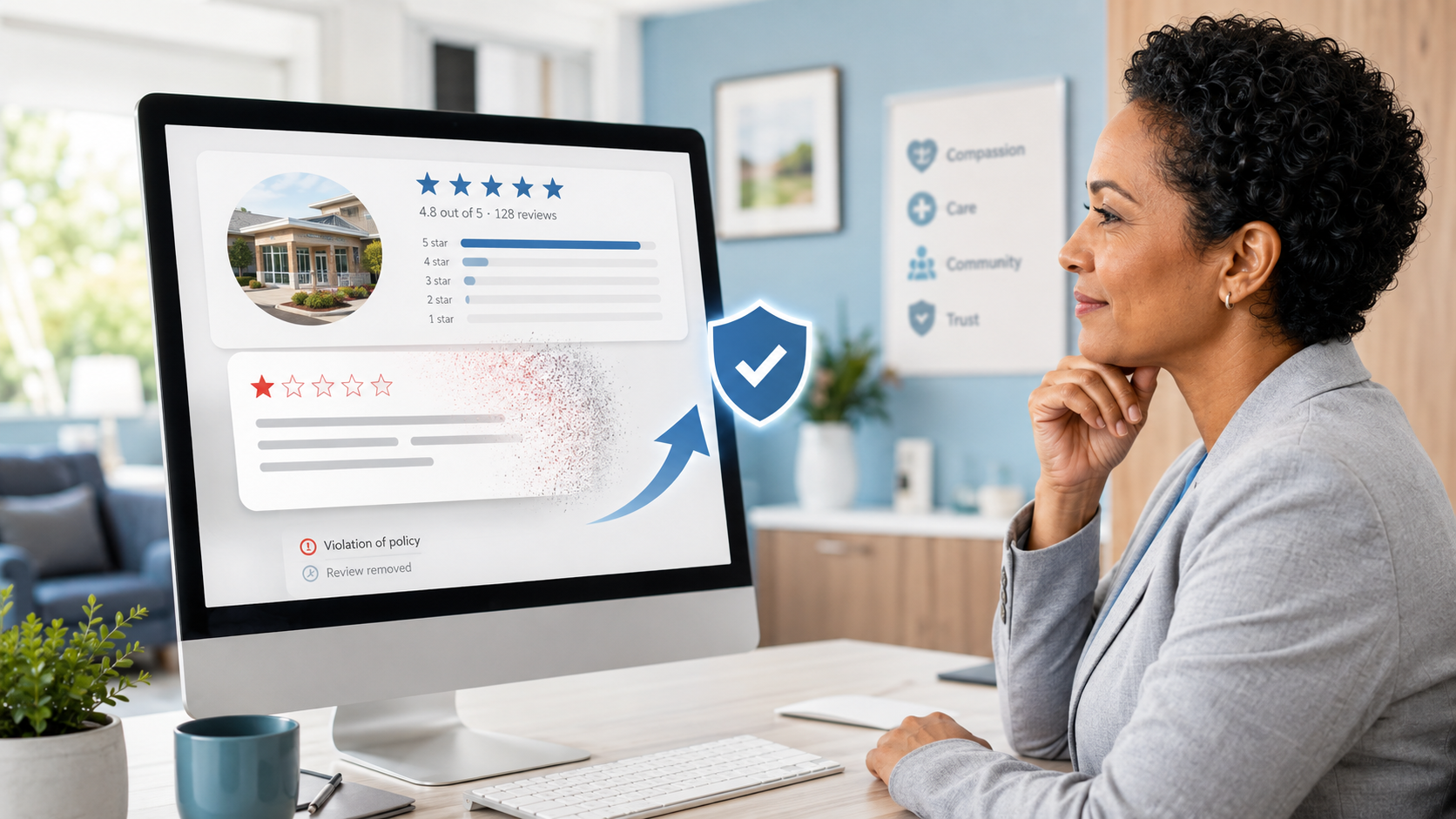
A negative Google review can be read by every prospective patient, family member, employee, referral source, or healthcare professional who searches for your facility for years afterward.
That doesn’t mean administrators should panic about every negative review.
Nursing homes are going to receive negative feedback.
The bigger issue is whether your online reputation accurately represents the total volume of people interacting with your facility.
Suppose your nursing home handles hundreds of admissions, residents, discharges, family interactions, and rehabilitation stays each year, but you generate only 15 new Google reviews.
A very small group of people is now defining your reputation for everyone else.
That’s a review-management problem.
Review Volume Matters, but So Does Review Velocity
Don’t evaluate your nursing home’s Google reputation based on star rating alone. Administrators should monitor these six review metrics:
| Google Review Metric | What to Measure | Why It Matters |
|---|---|---|
| Review Volume | Total number of Google reviews | Shows the depth of your facility’s online reputation |
| Review Velocity | Number of new reviews generated each month | Shows whether your review profile is consistently growing |
| Review Recency | How recently reviews were posted | Recent feedback gives prospects a more current picture of your facility |
| Google Rating | Overall star rating and sentiment | Can influence whether someone considers your facility |
| Management Responses | How consistently and quickly reviews are addressed | Shows that management is actively monitoring feedback |
| Competitor Gap | Your metrics compared with competing nursing homes | Shows whether your reputation is keeping pace in your local market |
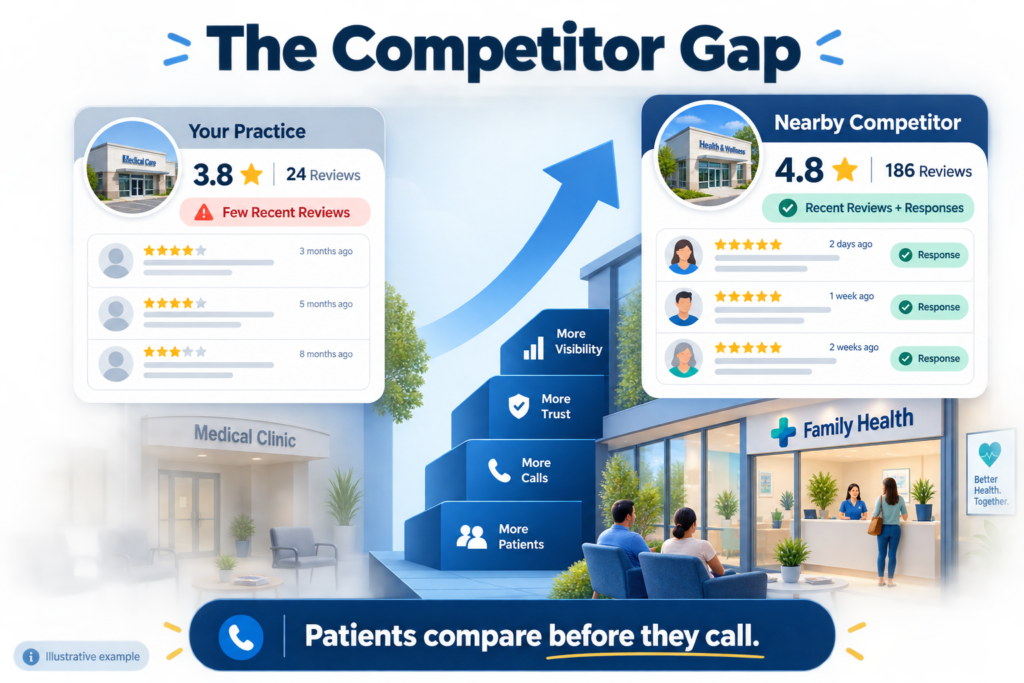
The competitor gap is especially important.
Having 100 Google reviews may sound strong until the three nursing homes competing for the same admissions have 350, 425, and 600 reviews.
For a Brooklyn nursing home administrator, Google reputation shouldn’t be evaluated in isolation. Compare your review volume, velocity, recency, rating, and management response activity against other Brooklyn nursing homes competing for the same patients and admissions.
Local SEO and Review Management Work Together
This is the part administrators should understand before spending money on SEO. Getting your nursing home to appear more frequently on Google is only half the job. For example, imagine your nursing home is located in Williamsburg, Brooklyn, and local SEO significantly increases your visibility for patients searching for nursing homes nearby.
More people now find your facility.
But your Google profile has a weak rating, outdated photographs, unanswered negative reviews, and substantially fewer reviews than nearby competitors.
You’ve increased visibility without fixing reputation.
That’s like doubling the number of people walking through the front door while leaving the lobby in poor condition.
The stronger approach is:
Get Found → Look Credible → Generate Inquiry → Convert Admission
Local SEO handles much of the first step.
Google review management strengthens the second.
Your website and Google Business Profile help with the third.
Your admissions team handles the fourth.
Now digital marketing becomes something administrators can understand in operational terms.
Start Measuring Google Like You Measure Referral Sources
You don’t need to become an SEO expert.
You do need enough understanding to know whether the people handling your digital marketing are producing anything meaningful.
Don’t accept a report filled exclusively with:
“Website traffic increased 22%.”
“We had 14,000 impressions.”
“Keyword rankings improved.”
“Our social media engagement increased.”
Those numbers can be useful, but an administrator should keep asking the next question:
Did it produce admissions opportunities?
Your digital marketing dashboard should eventually connect marketing activity with metrics such as:
- Admissions calls
- Qualified inquiries
- Website forms
- Tours
- Referral sources
- Google Business Profile activity
- New Google reviews
- Review velocity
- Local search visibility
- Admissions
- Cost per qualified lead
- Cost per admission
- Occupancy
Now you’re speaking the same language you already use to operate the facility.
What This Means for Brooklyn Nursing Homes
Brooklyn is an especially important market for this approach because you’re not competing against one or two facilities.
You’re competing for attention across a dense local healthcare market.
And Google makes that competition extremely visible.
A prospective patient can compare multiple Brooklyn nursing homes in minutes.
Your referral relationships still matter.
Your clinical programs still matter.
Your outcomes matter.
Your staff matters.
Your reputation in the healthcare community matters.
But increasingly, your Google reputation is the first version of that reputation many people encounter.
That’s why nursing home administrators should stop thinking about digital marketing as something separate from census development.
Local SEO, Google Business Profile optimization, Google review management, website conversion, and admissions tracking are becoming part of the same patient acquisition process.


Where Should a Nursing Home Administrator Start With Digital Marketing?
If you’re already comfortable with traditional nursing home marketing but haven’t built a serious digital strategy, don’t try to implement 20 different marketing tactics at once.
Start with the part closest to an admissions decision:
Google.
Search for your facility.
Then search for the services you provide the way a prospective patient might search for them.
Compare what you see with the nursing homes competing against you.
Look at:
- Where your facility appears.
- Which competitors appear above you.
- Your Google rating.
- Your total number of reviews.
- How recently you’re receiving reviews.
- Whether management is responding.
- How your photographs compare.
- Whether your services are accurately represented.
- What happens when someone clicks through to your website.
- How quickly they can reach admissions.
That exercise will tell you a lot about where your digital marketing needs attention.
The Digital Side of Nursing Home Census Growth
Nursing home marketing hasn’t stopped being a relationship business.
What’s changed is what happens around those relationships.
A discharge planner can recommend you.
A physician can know your facility.
A former patient’s family can mention your name.
Your liaison can build a strong hospital relationship.
But the person making the final decision can still pull out a phone, search your facility, read three negative reviews, compare you with another nursing home, and call the competitor instead.
That’s the gap digital marketing needs to close.
For nursing home administrators, the goal isn’t to become digital marketers.
It’s to make sure the reputation you’ve built offline is represented properly online and that people searching for care in your market can actually find you.
That’s why I would prioritize local SEO and Google review management before chasing every new digital marketing tactic.
Get the facility found.
Make sure what people find accurately represents it.
Turn that visibility into admissions opportunities.
Then measure whether those opportunities are helping fill beds.
Google Review Management for Nursing Homes
If your facility has a strong real-world reputation but your Google presence doesn’t reflect it, that’s a problem you can address systematically.
A nursing home review management program should help administrators monitor reviews, generate a consistent flow of legitimate feedback, respond appropriately, identify reputation issues, compare the facility against local competitors, and measure improvement over time.
For nursing homes in Brooklyn and throughout New York City, that can become an important part of a larger local SEO and census-growth strategy.
See how Google Review Management can improve your nursing home’s local visibility and online reputation.

- Google Review Removal Service That Protects Your Reputation and Builds TrustCan Negative Google Reviews Damage a Healthcare Organization? A sudden wave of negative Google reviews can seriously damage the reputation of a nursing home or medical practice. Families researching nursing homes often compare ratings, recent reviews, management responses, photographs, and overall review activity before scheduling…
- Google Review Management Agency That Helps Businesses Build Trust and Get More CustomersPeople trust Google reviews before they trust advertisements. Before contacting your business, potential customers usually search your company online and ask themselves one important question: “Can I trust this business?” That answer often comes from your reviews. Customers look at: If your business has weak…
- How to Get New Patients in New York With Google ReviewsYour next patient in New York may decide whether to call your practice before ever speaking to your staff. Today, patients search, compare, and read reviews before choosing care. A 2025 survey found 84% of patients check online reviews before choosing a new healthcare provider.…
- How Accepted Insurance Plans Can Strengthen Medical Local SEOWhen patients search for a doctor, they are not only looking for the right specialty or the closest medical office. Many also need to know whether the practice accepts their insurance. A patient might search Google for: If your website does not clearly list the…
- Brooklyn Nursing Home Marketing in 2026: How to Turn Google Searches Into More AdmissionsIf you’re responsible for marketing or admissions at a nursing home, you already know how to generate business the traditional way. You know the importance of hospital relationships. You know your discharge planners, case managers, physicians, community partners, and referral sources. You know what happens…