
So, you’ve got your golden list of keywords—now what? 🎯 If you’re wondering what to do after keyword research, you’re not alone! When I first started, I thought the hard part was over, but let me tell you—that list is just the beginning of your journey to dominating search rankings and driving traffic. Let’s dive into the actionable steps that transform your keywords into real results! 🚀
My Step-by-Step Guide to Maximizing Keyword Research

When I first started diving into the world of digital marketing, I quickly realized that keyword research wasn’t the finish line—it was just the starting point. Sure, finding high-value keywords felt like a win, but the real magic happened when I figured out what to do with them. It’s not enough to have a list of trendy terms; knowing how to use them effectively can transform your strategy from “meh” to “wow!”
Let me take you through the exact steps I follow to turn keyword research into a traffic-driving, lead-generating machine.

Why Keyword Research Is Just the Beginning
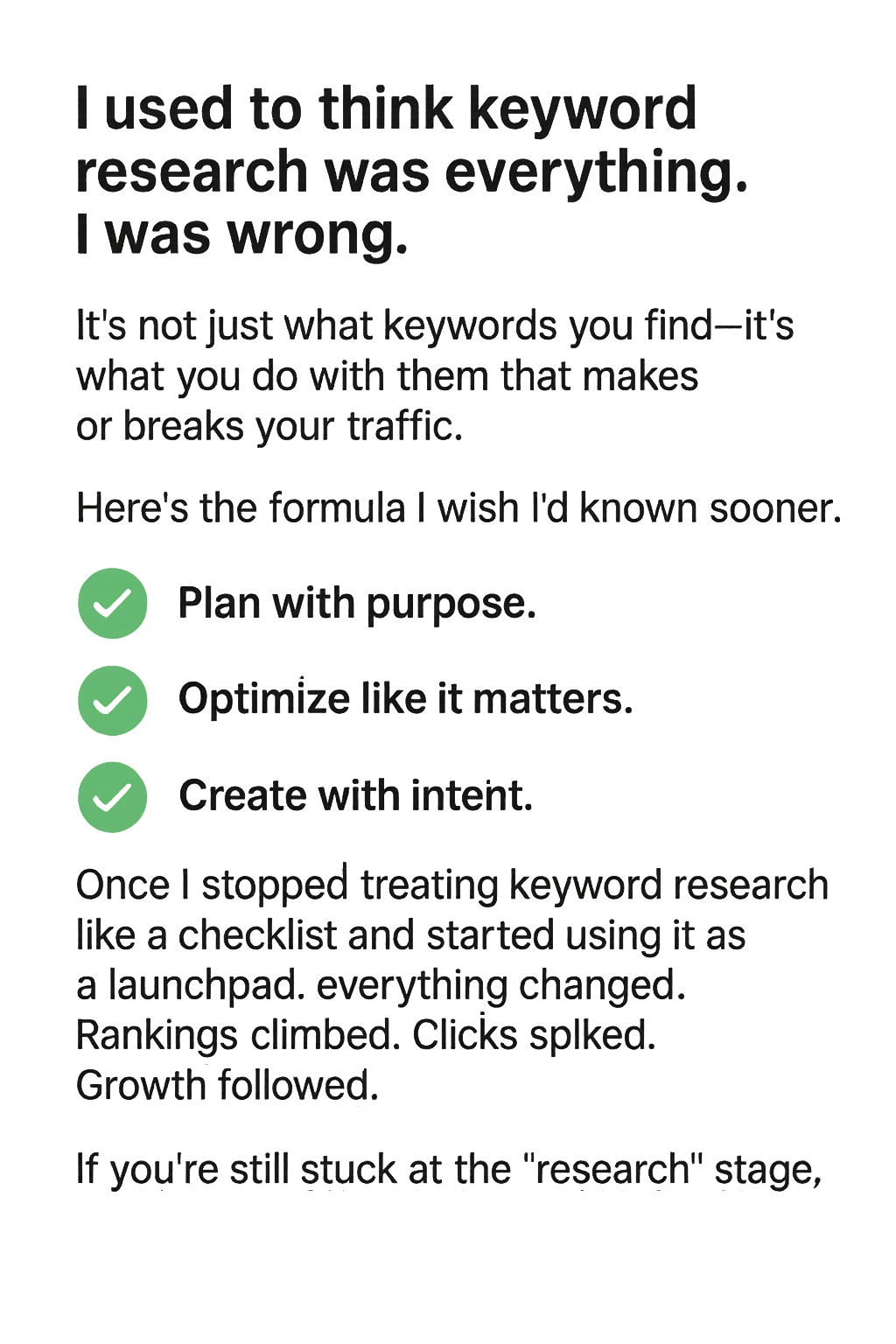
I used to think keyword research was everything. I was wrong.
It’s not just what keywords you find—it’s what you do with them that makes or breaks your traffic.
Here’s the formula I wish I’d known sooner:
- Plan with purpose.
- Optimize like it matters.
- Create with intent.
Once I stopped treating keyword research like a checklist and started using it as a launchpad, everything changed. Rankings climbed. Clicks spiked. Growth followed.
If you’re still stuck at the “research” stage, you’re already behind.

Step 1: Prioritize Your Keywords Like a Pro
When I finished my first keyword research session, my list was huge! But not every keyword deserved my attention. Here’s how I sorted through the noise:
- High Search Volume: I focused on keywords that lots of people were searching for.
- Low Competition: I found the sweet spot with less competitive terms.
- Relevance: Keywords that aligned with my audience’s needs stayed on the list.
- Conversion Potential: If it could lead to sales or sign-ups, it got priority.
💡 Pro Tip: Tools like SEMrush and Ahrefs became my secret weapons for assessing keyword difficulty and ranking potential.
Step 2: Group Keywords Into Clusters
Grouping my keywords into themes was a game-changer. It helped me stay organized and create focused, high-value content. Here’s what I did:
- Primary Keywords: The star of each piece of content.
- Secondary Keywords: Supportive terms that enhance the main idea.
- LSI Keywords: Fancy term for related phrases that enriched my content naturally.
This approach gave me a clear roadmap for creating content that covered topics comprehensively.
Step 3: Plan Content Like a Boss
With my keyword clusters ready, it was time to create a content calendar. Here’s how I matched content types with keyword intent:
- Informational Keywords: Perfect for blog posts and guides.
- Transactional Keywords: Ideal for product pages and landing pages.
- Navigational Keywords: Best for “About Us” or branded content.
💡 Pro Tip: I integrated my keywords into a content creation checklist to ensure I was ticking all the SEO boxes.
How to Use Different Types of Keywords to Boost Your SEO
Step 4: Revamp Old Content
Here’s a confession: I initially thought keyword research was only for new content. Spoiler alert—it’s not! I revisited older blog posts and product pages to give them an SEO boost:
- Updated titles and headings with primary keywords.
- Refreshed meta descriptions for better click-through rates.
- Added internal links using keywords as anchor text.
Result? Quick SEO wins that made my traffic graphs look amazing!
Step 5: Create Content That Delivers
Now, the fun part—writing! I took my keywords and turned them into content that provided real value to my audience. Here’s my secret sauce:
- Natural Integration: No keyword stuffing here! I made sure my content flowed while including keywords seamlessly.
- Engaging Structure: I broke up the text with headings, bullet points, and visuals.
- Audience Value: I solved problems and answered questions, keeping readers hooked.
💡 Pro Tip: Long-tail keywords like “what to do after keyword research for beginners” helped me reach niche audiences that were ready to convert.
Stop Hiding on Page 2 — Let’s Get You Found.
Work with an SEO Consultant Who Knows How to Rank.
👉 Book Your Free Strategy Call Now

Step 6: Nail On-Page SEO
I couldn’t stop at just good content—it had to be optimized for search engines. Here’s how I made every piece of content SEO-friendly:
- Title Tags: Primary keyword front and center within 60 characters.
- Headers: Structured with keyword-rich H1, H2, and H3 tags.
- Alt Text: Descriptive keywords for every image.
This step ensured my content wasn’t just valuable to readers but also loved by search engines.
Step 7: Share, Share, Share!
Publishing content is only half the battle. Here’s how I promoted it to make sure it reached the right people:
- Social Media: I posted everywhere my audience hung out—LinkedIn, Instagram, you name it.
- Email Marketing: My subscribers got the first look at my latest blog posts.
- Backlink Outreach: I reached out to relevant sites, offering to collaborate or guest post.
💡 Pro Tip: Repurposing content into infographics, videos, and podcasts helped me reach even more audiences.
Step 8: Track and Refine
Once my content was out in the wild, I didn’t just sit back. I kept an eye on performance metrics to see what worked and what needed tweaking:
- Traffic: How many visitors did each keyword bring in?
- Engagement: Were readers staying on the page or bouncing off?
- Conversions: Did the content drive sales, sign-ups, or other actions?
🛠 Tool Tip: Google Analytics and Search Console became my best friends for tracking these insights.
Step 9: Refine and Repeat
Here’s the thing—SEO isn’t a one-and-done deal. I used my performance data to refine my strategy:
- Doubled down on high-performing keywords.
- Adjusted content for changing trends.
- Updated older posts to keep them relevant.
My Key Takeaway
The biggest lesson I’ve learned? Keyword research is only as good as what you do with it. By prioritizing, optimizing, and promoting effectively, I turned a simple list of keywords into a powerhouse strategy that keeps delivering results.

Related Articles
How to Automate Keyword Research for Smarter Content Creation
The Best Keyword Tools for Digital Marketing Agencies in 2025