\
Choosing the right internet plan for your business can feel confusing.
There are so many options. Different speeds. Different prices. Different providers.
And if you pick the wrong one, it can slow down your work, frustrate your team, and even affect your customers.
That’s why knowing how to choose the right business internet plan is so important.
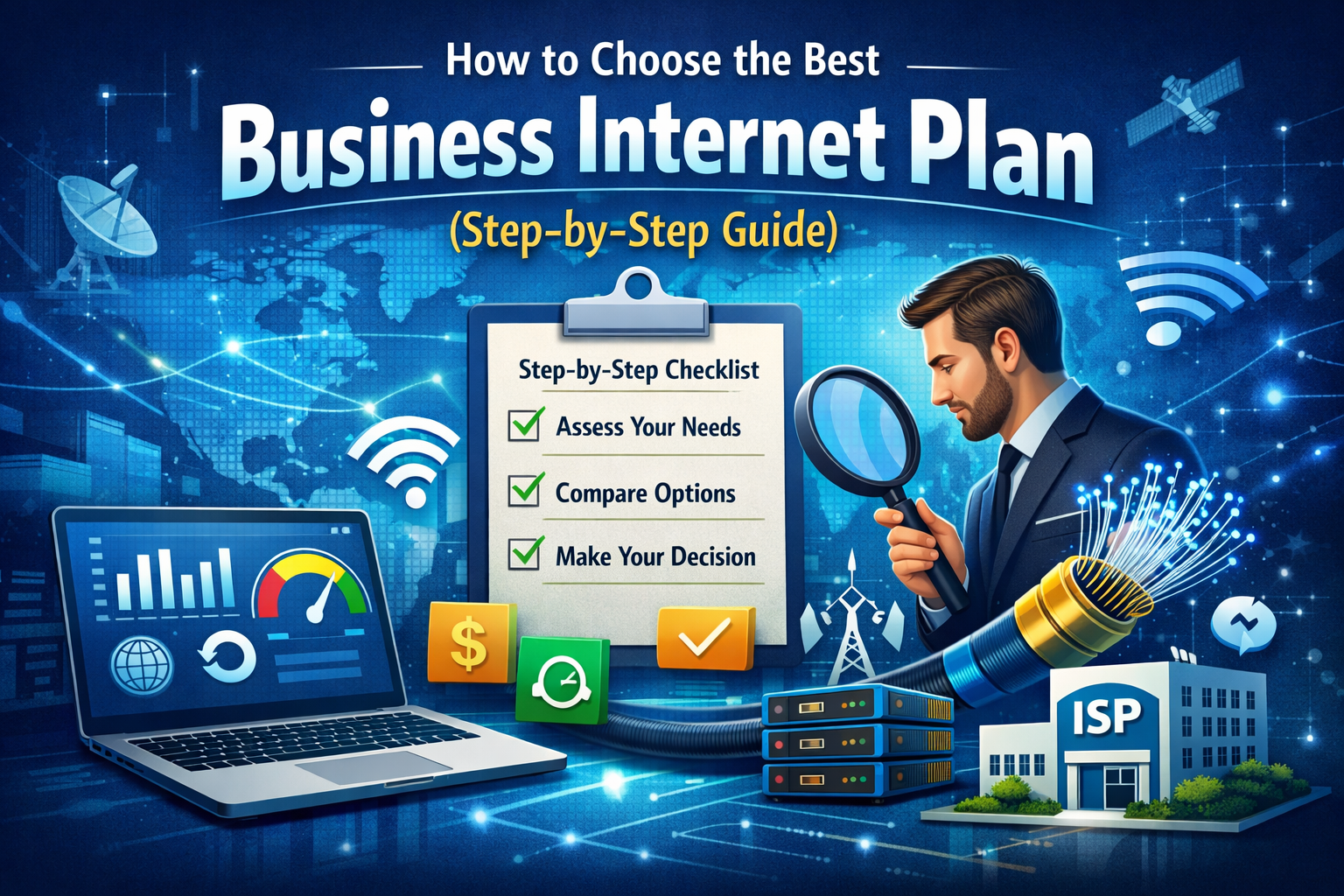
In this guide, we’ll walk through it step by step in a simple way so you can make the right choice without overthinking it.
Why choosing the right plan matters
Your internet plan affects your entire business.
It impacts:
- your team’s productivity
- your website performance
- your communication with customers
- your daily operations
If your plan is too slow, everything slows down.
If it’s too expensive, you waste money.
The goal is to find the balance.

**
Step 1: Know how your business uses the internet
Start with this question:
What do you actually use the internet for?
Common uses include:
- email and browsing
- video calls
- cloud tools
- customer communication
- managing orders or bookings
If your business handles:
- email support
- live chat support
- online customer service help
you’ll need a more reliable plan.

Step 2: Choose the right speed
Speed is one of the most important parts.
Table 1: Recommended Speeds
| Business Size | Speed Needed |
|---|---|
| 1–2 people | 50–100 Mbps |
| 3–10 people | 100–300 Mbps |
| 10+ people | 300–500 Mbps |
If your business is growing, choose a slightly higher plan.
Step 3: Don’t ignore upload speed
Upload speed is just as important.
You need it for:
- sending emails
- uploading files
- video calls
- customer replies
This is key for:
- remote customer support
- customer follow-up
- managing systems
Slow upload speeds can create delays.
**

**
Step 4: Compare connection types
You’ll usually choose between:
Fiber
- fastest
- most reliable
- more expensive
Cable
- good balance
- widely available
- affordable
DSL
- cheapest
- slower
- limited use
Most businesses choose cable or fiber.

Step 5: Check reliability and uptime
Speed is important, but reliability matters more.
Ask:
- does the provider offer uptime guarantees?
- do they have strong reviews?
- how often do outages happen?
Unreliable internet can hurt your business.
Table 2: What to Look for in a Plan
| Feature | Why It Matters |
|---|---|
| Speed | Keeps work fast |
| Upload speed | Supports communication |
| Reliability | Prevents downtime |
| Support | Fixes problems fast |
| Scalability | Grows with your business |
Step 6: Think about your budget (but not only price)
It’s tempting to choose the cheapest option.
But that can backfire.
A slow connection can:
- delay work
- frustrate customers
- reduce efficiency
Sometimes paying a little more saves time and stress.
Step 7: Plan for growth
Your business will grow.
Your internet should grow with it.
Choose a plan that:
- can be upgraded easily
- supports more users
- handles more traffic
This prevents problems later.
How your internet affects your customer experience
This is where everything connects.
Your internet affects:
- how fast you reply
- how smooth your systems run
- how reliable your service feels
If your connection is slow:
- responses get delayed
- messages get missed
- customers lose patience
This impacts:
- support ticket management
- ecommerce customer support
- overall customer trust
And over time, that affects your reputation.
Even small things like replying quickly to a review or message can make a big difference.
Common mistakes to avoid
- choosing based only on price
- ignoring upload speed
- not planning for growth
- skipping reliability checks
- underestimating usage
Avoiding these can save you a lot of trouble.
Real-world examples
Example 1: Small startup
Basic needs → chooses cable
→ works well and saves money
Example 2: Growing business
More team members → upgrades speed
→ improves productivity
Example 3: Online store
Needs fast response times → chooses fiber
→ improves customer experience
Example 4: Service business
Handles bookings and messages
→ chooses reliable plan
→ responds faster to customers

FAQs
1. What is the best internet plan for a small business?
It depends on your needs, but most businesses use cable or fiber.
2. How much speed do I need?
Usually 100–300 Mbps for small businesses.
3. Is fiber worth it?
Yes, if you need speed and reliability.
4. Can I start with a cheaper plan?
Yes, but make sure it can scale as you grow.
5. Does internet affect customer experience?
Yes. Speed and reliability impact response time and service.
6. How often should I upgrade my plan?
When your current plan slows down your business.
Conclusion
Choosing the right business internet plan doesn’t have to be some complicated, overthought process.
Just keep it real—look at what you actually need, how big your team is, and how your business runs day to day.
Don’t get sold on hype. Get something that’s fast enough, reliable when it matters, and won’t fall apart the second your business starts growing.
Because let’s be honest—your internet isn’t just “a service.” It’s part of how you make money.
And if your connection is slow, dropping, or inconsistent… that’s not just annoying—that’s lost time, lost customers, and lost opportunities.
So yeah, choose smart.
Because when your internet is solid, everything else just flows better.
Related Articles
Latest Articles