
Introduction to Keyword Research & Placement
Keyword research & placement is the foundation of any successful SEO strategy—especially for faceless marketing, where your brand must speak for itself without a personal image. By targeting the right words and strategically placing them, you can increase visibility, build authority, and connect with your ideal audience organically.

Why Keyword Research Matters in Faceless Marketing
Building Authority Without Showing Your Face
Faceless marketing thrives on the power of content. Without personal branding or a face to connect with, your keywords become your digital handshake—helping people find, trust, and engage with your message.
Driving Organic Traffic with Targeted Keywords
Ranking for relevant keywords means your content shows up when potential customers search for exactly what you offer. This leads to more qualified traffic and higher conversion rates.
Understanding Long-Tail Keywords
What Are Long-Tail Keywords?
Long-tail keywords are specific search phrases that usually have lower competition but higher conversion potential.
Example: Instead of targeting “yoga mat,” you could target “best eco-friendly yoga mat under $50.”
Benefits of Long-Tail Keywords for Niche Markets
- Less competition → Easier to rank
- Higher relevance → Attracts the right audience
- Better conversions → Matches user intent
Long-Tail Keywords That Actually Rank Perfectly For Dropshipping

How to Find the Right Keywords for Your Niche
Step 1: Identify Your Niche & Target Audience
If your niche is eco-friendly products, your audience may care about sustainability, affordability, and durability.
Step 2: Use Keyword Research Tools
Tools like Google Keyword Planner, Ahrefs, or Ubersuggest can help uncover hidden keyword opportunities.
Step 3: Analyze Search Intent
Ask yourself: Is the searcher looking for information, a product, or a service? Your keyword choice should match their goal.
LSI Keywords: Boosting Relevance & Rankings
What Are LSI Keywords?
LSI (Latent Semantic Indexing) keywords are related terms that give context to your primary keyword. For “eco-friendly yoga mat,” LSI terms might include “non-toxic,” “PVC-free,” and “organic material.”
How to Naturally Place LSI Keywords
Use them in:
- Product descriptions
- Blog headings
- FAQs

Keyword Placement Strategies for SEO
Title Tag & H1 Heading
Place your primary keyword here for maximum search engine visibility.
Example: Keyword Research & Placement: Boost Your SEO Strategy
First Paragraph & Introduction
Mention your keyword naturally within the first 100 words.
Subheadings & Body Content
Use variations of your keyword in subheadings to improve topic depth.
Meta Descriptions & Image Alt Tags
Incorporate keywords in image descriptions and summaries for extra indexing power.

Common Mistakes to Avoid in Keyword Placement
I’ve been there—you’re excited about a keyword, and you want to make sure Google really knows what your page is about. So, you put it everywhere. And then… your rankings don’t move—or worse, they drop. Let’s talk about why that happens and how you can avoid it.
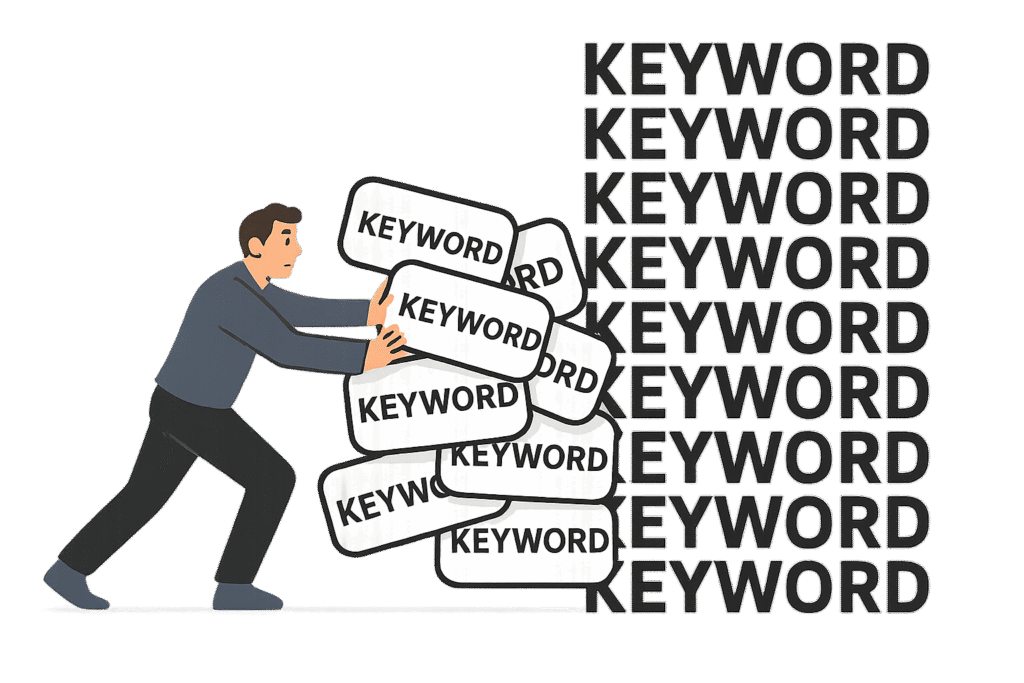
1. Keyword Stuffing
Keyword stuffing is when you use your keyword way too many times, hoping it will make your page rank higher. Instead, Google sees it as spammy. The result? You lose trust with both the search engine and your readers.
Here’s what I do instead: I focus on writing naturally. I put my main keyword in the title, H1, first paragraph, and meta description, and then I sprinkle it where it fits in the flow. Google is smart enough to understand your topic if you write for humans first.
If you want to see what Google says about keyword stuffing, check out their official search guidelines. It’s worth the read—it’s short and eye-opening.
2. Ignoring Search Intent
Search intent is basically the “why” behind a search. Are people looking for information, trying to buy something, or just browsing? If your content doesn’t match that intent, even perfect keyword placement won’t help.
I learned this the hard way. I once targeted a keyword that sounded great but was actually used by people looking for free tools—while my post was about a paid product. My bounce rate went up, and my conversions went down.
Here’s how I fix that: before I use any keyword, I Google it myself. I look at the top results and ask, “What do people expect to find here?” Then I create content that matches that expectation. If you want a deep dive on this, Ahrefs has a fantastic guide on search intent that explains it step-by-step.

💡 My golden rule: Place your keywords with purpose, not pressure. Write for your reader first, and the rankings will follow.

FAQs About Keyword Research & Placement
Q1: What is the difference between short-tail and long-tail keywords?
A: Short-tail keywords are broad and competitive, while long-tail keywords are specific and easier to rank for.
Q2: How often should I update my keyword list?
A: At least every 3-6 months to stay relevant.
Q3: Can I use the same keyword in multiple blog posts?
A: Yes, but focus on unique angles to avoid content cannibalization.
Q4: Do LSI keywords help SEO?
A: Yes, they improve context and help search engines better understand your content.
Q5: Should I prioritize search volume or competition?
A: A balance is best—choose keywords with decent search volume and low competition.
Q6: Where should I place my primary keyword?
A: In the title, H1 tag, first paragraph, and meta description.
Conclusion: Let’s Make Your Keywords Work for You
If there’s one thing I want you to walk away with, it’s this: your keywords are only powerful if they’re in the right places. I’m talking about your title, your H1 heading, your first paragraph, and yes—even in your meta description. That’s where Google looks first, and it’s where your audience decides if they’ve found the right page.
I know keyword research can feel like a technical chore, but when you and I approach it as a strategic conversation with your audience, everything changes. You’re no longer just adding words to a page—you’re building trust, guiding search engines, and showing up exactly when someone needs you.
So here’s my challenge for you:
Before you hit publish on your next piece, ask yourself—
“Have I put my primary keyword where it matters most, and does it flow naturally?”
If the answer is yes, you’re not just doing SEO. You’re building a brand that speaks for itself, even without a face. And in faceless marketing, that’s exactly how you win.

Faceless Marketing for eCommerce: How to Increase Conversions
Optimized Title Tags for Faceless Marketing: 7 Secrets to Success
Meta Descriptions That Sell: How to Get Clicks Without Clickbait
Image & Video Alt Text: How to Optimize for SEO and Accessibility
Page Speed Optimization: How to Make Your Website Lightning Fast
Internal Linking Strategy: How to Boost SEO and Keep Readers Engaged