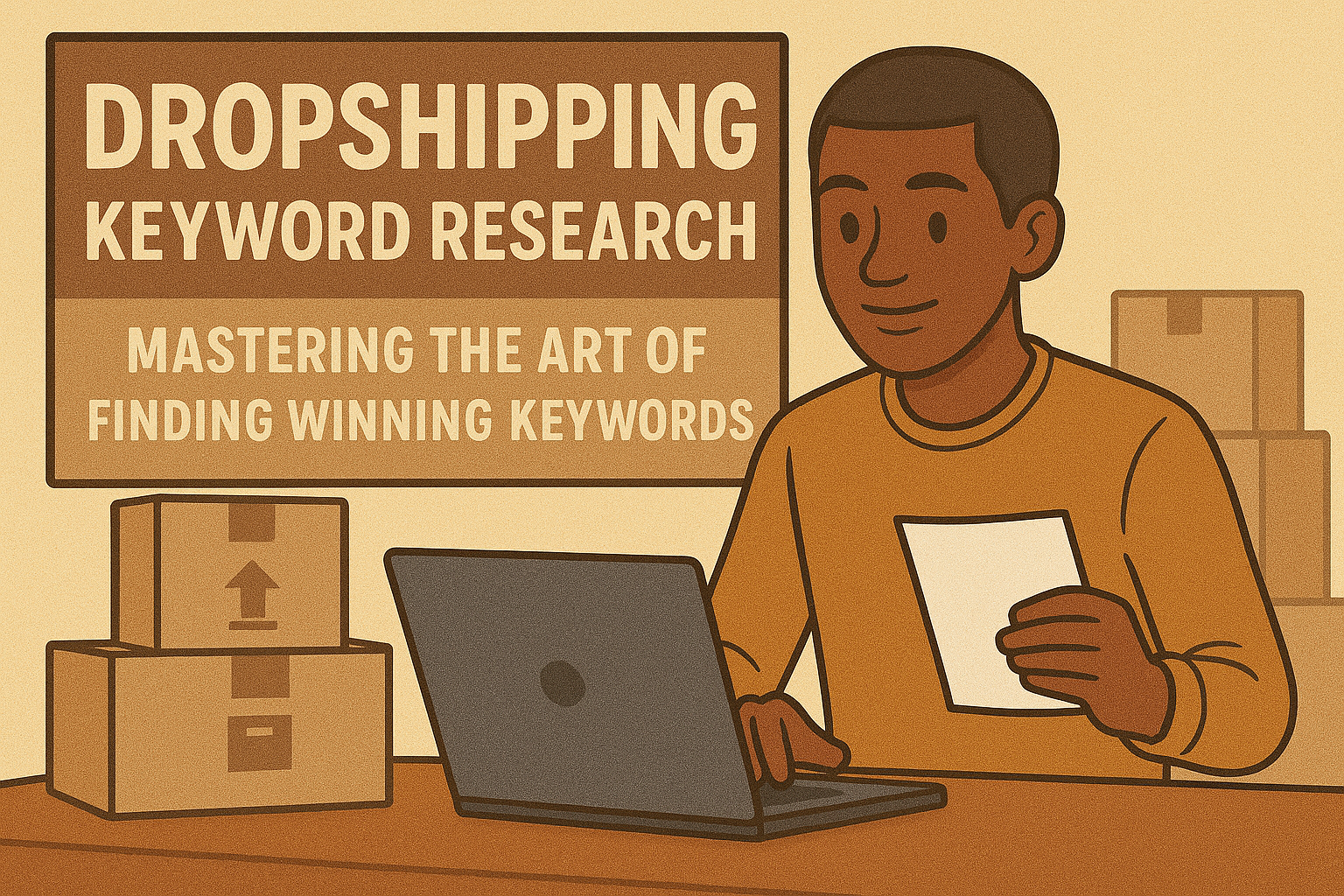
Ever wonder how some online stores seem to know exactly what people want to buy?
It’s not magic—it’s smart keyword research.
So what is keyword research, and why does it matter for your dropshipping store?
Keyword research helps you figure out what people are typing into Google or Amazon when they’re shopping. It shows you what’s popular, what’s trending, and what your target customers are looking for right now.
Want more people to visit your store and actually buy something?
Then you need to use the right keywords. In this guide, we’ll break down the basics of dropshipping keyword research, show you simple tools you can use, and share easy strategies to help your store show up in search results—and make more sales.

Why Keyword Research Matters in Dropshipping
Here’s why it’s critical for dropshipping:
- Discover Trending Products: Identify what people are searching for to stock high-demand items.
- Boost SEO: Optimize your product pages and blogs to rank higher in search engines.
- Attract Targeted Traffic: Drive shoppers actively looking for your products to your store.
- Improve Ad Performance: Use the right keywords in paid campaigns for better ROI.
Keyword Research helps you align your marketing efforts with customer demand. Here’s why it’s critical for dropshipping:

Step 1: Understand the Types of Keywords
Before diving into tools and strategies, familiarize yourself with the types of keywords used in dropshipping:
- Product Keywords: Specific items people search for, like “ergonomic office chair” or “custom phone cases.”
- Transactional Keywords: Indicate purchase intent, such as “buy,” “cheap,” or “best.” Example: “buy wireless headphones.”
- Long-Tail Keywords: Longer, more specific phrases, like “best waterproof Bluetooth speaker under $50.”
- Branded Keywords: Searches that include brand names, e.g., “Nike running shoes.”
- Informational Keywords: Queries for learning or research, like “how to set up a dropshipping store.”
Why It Matters: Using a mix of these keywords ensures you target every stage of the buyer’s journey.
💡 Pro Tip: Use multiple tools to cross-validate data and find untapped opportunities.
Step 2: Use Keyword Research Tools for Dropshipping
Several tools can help you uncover profitable keywords for your dropshipping business. Here are the best ones:
- Google Keyword Planner
- Ideal for identifying search volume, competition, and CPC (cost-per-click).
- Provides keyword suggestions based on your products or niche.
- SEMrush
- Offers advanced features for analyzing competitors’ keywords.
- Tracks trends and provides keyword difficulty scores.
- Ahrefs
- Excellent for uncovering long-tail keywords and analyzing competitor rankings.
- Provides data on backlink opportunities for your store.
- Ubersuggest
- Free tool for discovering keyword ideas and search trends.
- Includes traffic estimations and content suggestions.
- SpyFu
- Focused on competitor analysis, showing which keywords your rivals rank for and their ad spend.
- Helps you refine your paid keyword strategy.
Step 3: Analyze Competitors’ Keywords
Understanding what works for competitors can save you time and effort. Here’s how to conduct a competitor keyword analysis:
- Identify your top competitors using tools like SEMrush or SpyFu.
- Analyze their product pages, blogs, and paid ads to extract high-performing keywords.
- Look for gaps in their strategy—keywords they’re missing that you can target.
Why It Matters: Competitor analysis gives you a roadmap to outrank rivals in search engines and attract their audience.
Step 4: Find Niche and Long-Tail Keywords
Long-tail keywords are goldmines for dropshipping businesses. They often have lower competition but higher intent.
Steps to find long-tail keywords:
Focus on specific attributes, such as “eco-friendly yoga mats” or “lightweight hiking backpacks.”
Use tools like AnswerThePublic or Ubersuggest to generate question-based queries.
Check Google’s “People Also Ask” and “Related Searches” sections for inspiration.
💡 Pro Tip: Long-tail keywords often convert better because they reflect precise user intent.
Step 5: Organize Keywords by Intent
Categorize your keywords based on intent to streamline your marketing strategy:
- Informational: Use for blog posts and guides, e.g., “how to choose the best gaming mouse.”
- Navigational: Direct users to specific pages, e.g., “Amazon wireless speakers.”
- Transactional: Optimize product pages, e.g., “buy ergonomic office chair online.”
Why It Matters: Mapping keywords to intent ensures your content aligns with what your audience is looking for.
Step 6: Optimize Your Store and Content
Once you have a list of keywords, use them strategically to optimize your dropshipping store:
- Product Titles and Descriptions: Include primary keywords naturally to improve rankings.
- Category Pages: Target broader terms, like “home office essentials.”
- Blog Content: Write informative articles targeting informational keywords, like “best fitness gadgets for 2024.”
- Meta Tags: Optimize meta titles, descriptions, and alt text with relevant keywords.
💡 Pro Tip: Ensure keywords are used naturally to avoid keyword stuffing, which can harm your SEO.
Step 7: Use Keywords in Paid Ads
For paid campaigns on platforms like Google Ads or Facebook, use your researched keywords to:
- Target high-intent transactional phrases for better ROI.
- Experiment with dynamic ads that adjust keywords based on user searches.
- Optimize headlines and ad copy for relevance and engagement.
Why It Matters: Using keywords effectively in ads can drive targeted traffic to your store and boost sales.
Related Article
Website Optimization Tips To Increase Bottom Line
Step 8: Track and Refine Your Keyword Strategy
Keyword research is an ongoing process. Regularly analyze your performance to refine your strategy:
- Use Google Analytics to track traffic, conversions, and bounce rates for keyword-targeted pages.
- Monitor rankings and keyword performance in SEMrush or Ahrefs.
- Adjust your list to include emerging trends or seasonal keywords.
Why It Matters: Continuous improvement ensures your dropshipping store stays competitive in a dynamic market.

How to Identify Seasonal Keywords for Dropshipping Success

Seasonal keywords are a dropshipping goldmine—when used correctly, they can drive a massive influx of traffic and boost sales during peak shopping periods. But here’s the catch: success with seasonal keywords requires planning months in advance. To ensure your pages rank high on Google when the holiday rush begins, you need to start early, understand your audience, and target their specific needs.
Why Seasonal Keywords Matter for Dropshipping
Seasonal products often dominate consumer searches during certain times of the year. Keywords like “Christmas decorations,” “Valentine’s Day gifts,” or “back-to-school supplies” explode in popularity during their respective seasons. By aligning your dropshipping strategy with these trends, you can:
- Capitalize on High Demand: Attract shoppers actively searching for seasonal items.
- Gain a Competitive Edge: Outrank competitors by publishing optimized content early.
- Boost Conversion Rates: Target users with high purchase intent during peak seasons.
💡 Pro Tip: Seasonal keywords aren’t limited to holidays. Think about other yearly events like summer vacations, wedding seasons, or Black Friday.
Plan Months in Advance for Seasonal SEO Success
If you wait until December to optimize your pages for Christmas items, you’re already too late. SEO takes time to gain traction, so it’s essential to plan your seasonal strategy months in advance. Here’s why:
Competition Increases Closer to the Season: By preparing early, you can secure prime rankings before others jump on the trend.
Search Engines Need Time: Google takes weeks or even months to fully index and rank new pages.

🛒 Example Timeline for Dropshipping Christmas Products (with Keyword Tips)
August: Start doing keyword research. Look for terms like best Christmas gifts 2025, hot holiday products, or dropshipping Christmas items. Use tools like Google Trends or Ubersuggest.
September: Update your product pages with SEO-friendly keywords like affordable holiday gifts, gifts under $25, or dropship Christmas decor. Write blog posts with phrases like holiday gift guide for parents or top trending Christmas toys.
October–November: Share your content. Build links and post on social media using hashtags like #ChristmasDeals or #DropshippingStore. Target keywords like fast shipping Christmas gifts, Black Friday dropshipping deals, or top-selling holiday products.
December: Get ready for high traffic. With the right keywords in place, your store can rank for searches like last-minute Christmas gifts, free shipping holiday items, or best gift ideas for 2025.
💡 Pro Tip: Use SEO tools to track when keywords get popular—so you can plan early and get ahead of the competition.

Research Seasonal Keywords with Tools and Trends
To find the best seasonal keywords, use a combination of tools and data sources. Here are some strategies:
Google Trends:
Analyze keyword popularity over time.
Spot the rise and fall of search interest for terms like “Christmas tree decorations” or “Black Friday deals.”
Ubersuggest and SEMrush:
Generate related keyword ideas based on your seasonal niche.
Analyze search volume, keyword difficulty, and CPC for high-demand terms.
Amazon and Etsy:
Browse trending products to discover popular seasonal items.
Use product titles and descriptions for keyword inspiration.
Competitor Research:
Check how competitors rank for seasonal keywords using tools like Ahrefs or SpyFu.
Identify gaps in their content strategy to capitalize on untapped opportunities.
“Clicks don’t lie—keywords are the map.”

Know Your Audience and Anticipate Their Needs
Understanding your target audience is crucial for seasonal keyword success. Ask yourself:
- What Are They Searching For?
Identify the products, services, or information your audience needs during specific seasons.- Example: During the holiday season, parents might search for “educational toys for kids” or “family-friendly Christmas gifts.”
- When Are They Searching?
Use tools like Google Trends to determine when interest in a keyword begins to rise.- Example: Searches for “Halloween costumes” typically peak in late September to early October.
- What Influences Their Buying Decisions?
Create content that addresses their pain points, like affordability (“cheap Christmas gifts”) or convenience (“last-minute Valentine’s Day ideas”).
💡 Pro Tip: Segment your audience by demographics (age, location, interests) to create tailored content for each group.
Optimize Your Dropshipping Store for Seasonal Keywords
Once you’ve identified your seasonal keywords, it’s time to optimize your store and content to maximize their impact. Here’s how:
- Product Pages:
- Use primary seasonal keywords in product titles, descriptions, and meta tags.
- Example: Instead of “Red Sweater,” use “Cozy Red Christmas Sweater for Winter.”
- Category Pages:
- Create dedicated pages for seasonal collections, like “Holiday Gifts for Him” or “Valentine’s Day Specials.”
- Optimize these pages with long-tail keywords to target niche audiences.
- Blog Content:
- Write blog posts targeting informational keywords, such as:
- “Top 10 Christmas Gifts for Kids in 2024.”
- “How to Decorate Your Home for Thanksgiving.”
- Write blog posts targeting informational keywords, such as:
- Visual Content:
- Add high-quality, seasonal product images with keyword-rich alt text.
- Example Alt Text: “Rustic Christmas tree decorations for a cozy holiday vibe.”
- Landing Pages for Paid Campaigns:
- Design landing pages targeting transactional seasonal keywords like “buy Christmas ornaments online” or “best Black Friday deals 2024.”
Monitor and Adjust Your Strategy
Seasonal keywords aren’t a one-and-done effort. Continuously monitor performance and refine your approach:
- Track Rankings: Use tools like Ahrefs or SEMrush to see how your pages rank for seasonal keywords.
- Analyze Traffic Data: Use Google Analytics to measure which keywords drive the most traffic and conversions.
- Update Content: Revise seasonal pages each year to keep them relevant and maintain rankings.
💡 Pro Tip: Repurpose high-performing seasonal content for future campaigns. For example, update last year’s “Top Christmas Gifts” post with fresh products and trends.
Examples for Dropshipping Keyword Research
Example 1: Seasonal Keyword Optimization
- Keyword: “Christmas gifts for teachers”
- Action: Use this keyword to create a holiday-specific landing page showcasing products like customized mugs, planners, or tote bags for teachers.
- Result: Ranking early helps capture traffic before the holiday rush.
Example 2: Long-Tail Keywords for Niche Products
Result: Increased conversions due to highly targeted search intent.
Keyword: “eco-friendly yoga mats for beginners”
Action: Optimize product descriptions and blog content targeting eco-conscious buyers.

Example 3: Competitor Keyword Analysis
- Competitor: A popular dropshipping store ranks for “affordable Bluetooth earbuds.”
- Action: Use tools like SEMrush to analyze the competitor’s pages, then create unique product listings and blogs targeting “best Bluetooth earbuds under $30.”
- Result: Attract their audience by offering competitive pricing and additional value.
Example 4: Informational Content for Traffic
- Keyword: “how to choose the best gaming chair”
- Action: Write a blog post comparing gaming chairs and include links to your products.
- Result: Build authority and drive organic traffic to your store.
Lists for Dropshipping Keyword Research
List 1:
Types of Keywords to Target
Informational Keywords (“how to start dropshipping in 2024”)
Product Keywords (“ergonomic office chairs”)
Transactional Keywords (“buy affordable headphones”)
Long-Tail Keywords (“best pet toys for small dogs”)
Branded Keywords (“Nike running shoes deals”)
List 2:
Tools for Keyword Research
SpyFu
Google Keyword Planner
SEMrush
Ahrefs
Ubersuggest

Continued
List 3:
Steps to Optimize for Keywords
Regularly update content to include new trending keywords.
Add primary keywords to product titles and descriptions.
Use keywords naturally in blog posts and meta tags.
Optimize images with keyword-rich alt text.
Build backlinks for seasonal and niche pages.
List 4:
Benefits of Effective Keyword Research
Build authority in your niche with relevant, keyword-targeted content.
Drive targeted traffic to your store.
Rank higher on search engines with optimized SEO.
Improve ad campaign ROI by using high-intent keywords.
Stay ahead of competitors by identifying untapped opportunities.
Conclusion
Keyword research isn’t just a one-time task—it’s the backbone of a successful dropshipping business. From discovering trending products and uncovering niche opportunities to optimizing your store and refining paid ads, the right keywords can make all the difference. With tools like Google Trends, SEMrush, and Ubersuggest, you’ll have everything you need to dominate seasonal markets and attract high-intent shoppers. Remember, success in dropshipping is about staying proactive, planning ahead, and continuously refining your strategy. So, dive into the data, embrace the trends, and let your keywords do the heavy lifting.
Related Articles
How to Start Freelance with No Experience