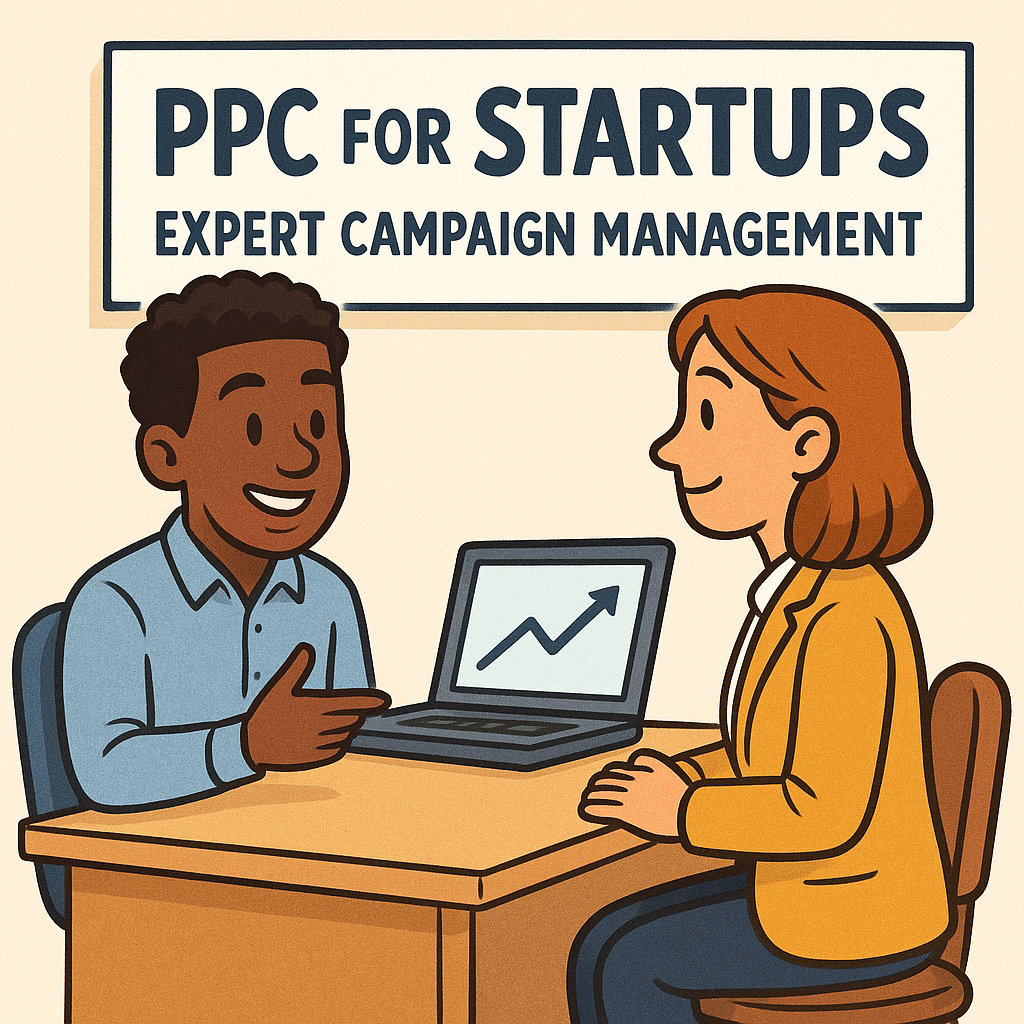
PPC consultant campaign management isn’t just about running ads—it’s about making every click count. In your first 30 days with a dedicated PPC consultant, you’ll go from guessing to knowing exactly where your ad budget should go, what’s working, and what’s not.
You’ll get a full campaign audit, a tailored action plan, keyword research, and performance-based optimizations designed to stretch your spend and increase your ROI—fast.
In this guide, we’ll walk you through what happens during the first month of working with a PPC expert, what you’ll gain, and how the right strategy can start transforming your results immediately.
Week 1: Discovery & Campaign Audit
🔍 Initial Consultation & Business Understanding
- Discuss your business goals, target audience, and budget.
- Review past and current marketing strategies.
- Identify key performance indicators (KPIs) for measuring success.
📊 Comprehensive Campaign Audit
- Analyze existing PPC campaigns (Google Ads, Bing Ads, social media ads).
- Identify what’s working and what’s not—budget distribution, ad copy, keywords, and targeting.
- Review landing pages for relevance and conversion potential.
🎯 Competitor Analysis
- Research competitor ads, keywords, and strategies.
- Identify gaps and opportunities to outperform the competition.

Week 2: Strategy Development
📝 Custom PPC Strategy Plan
- Define clear objectives (brand awareness, lead generation, sales).
- Select the right PPC platforms (Google Ads, Facebook Ads, Instagram, LinkedIn).
- Outline targeting strategies based on audience behavior and demographics.
Keyword Research & Audience Targeting
- Perform in-depth keyword research to find high-intent search terms.
- Build segmented audience lists for precise ad targeting.
✍️ Ad Copy & Creative Development
- Write compelling ad copy that resonates with your audience.
- Develop high-quality visuals and videos for display and social media ads.
Week 3: Campaign Setup & Launch
⚙️ Campaign Structure & Setup
- Set up campaigns with proper ad groups, keywords, and match types.
- Implement negative keywords to eliminate irrelevant traffic.
- Design and link optimized landing pages for better conversions.

💸 Budget Allocation & Bidding Strategies
- Allocate budget effectively across campaigns and platforms.
- Choose the right bidding strategy (manual, automated, CPC, CPA).
🚀 Campaign Launch
- Launch the initial campaigns with a focus on gathering data.
- Set up tracking tools like Google Analytics and conversion tracking.
Week 4: Performance Monitoring & Initial Optimization
📈 Data Analysis & Monitoring
- Monitor impressions, clicks, conversions, and ROI.
- Identify underperforming keywords or ads.
🔄 Initial Optimization
- Adjust bids, targeting, and ad placements.
- A/B test ad copy and creatives to find the best performers.
- Refine keyword targeting based on search terms report.
📝 Reporting & Next Steps
- Provide a detailed performance report with key metrics.
- Discuss initial results and planned optimizations.
- Set goals for the next month based on the first round of data.
Key Takeaways:
- Week 1: Deep dive into your business, audit existing campaigns, and competitor research.
- Week 2: Develop a custom PPC strategy, conduct keyword research, and create ad content.
- Week 3: Set up, launch, and start collecting data from campaigns.
- Week 4: Begin optimizing campaigns based on early performance data.PPC Consultant vs. In-House Team: Which Is Better for Your Business?Choosing between hiring a PPC consultant or building an in-house advertising team depends on your business goals, budget, and resources. Here’s a detailed comparison of both options:PPC Consultant✅ Pros:
- Expertise & Experience
- Specialized in Google Ads, Bing Ads, and paid social platforms.
- Brings proven strategies from working with diverse industries.
- Cost-Effective
- No costs for employee benefits, training, or overhead.
- Flexible pricing (hourly, project-based, or retainer).
- Faster Results
- Quickly implements and optimizes campaigns with minimal ramp-up time.
- Access to Premium Tools
- Uses advanced tools for keyword research, competitor analysis, and automation.
- Scalability
- Easily scales campaigns up or down based on business needs.
- Limited Availability
- May manage multiple clients, reducing focus on your business.
- Less Control
- Limited day-to-day oversight and slower communication compared to in-house teams.
- Knowledge Transfer Gaps
- Insights and strategies may not fully integrate into your internal processes.
- Full Control & Alignment
- Direct oversight of campaigns with alignment to brand goals.
- Quick communication and decision-making.
- Deep Product & Audience Knowledge
- Better understanding of products/services and customer pain points.
- Long-Term Investment
- Builds internal knowledge and marketing assets over time.
- Dedicated Focus
- Fully committed to your business without external client distractions.
- Higher Costs
- Salary, benefits, training, and software expenses can add up.
- Slower Ramp-Up
- Requires time for hiring, onboarding, and skill development.
- Limited Expertise
- Might lack specialized skills or exposure to diverse PPC strategies.
- Tool Expenses
- Must invest in premium PPC tools and software licenses.
- Small Businesses & Startups: A PPC consultant is ideal for quick, cost-effective campaigns without long-term commitments.
- Medium to Large Businesses: An in-house team offers better control and deeper brand integration for long-term marketing growth.
- Hybrid Approach: Many companies combine both—using consultants for strategy and internal teams for execution.
- Expertise & Experience
🚫 Stop Bad Reviews Today —
Get Only 4★ to 5★ Ratings!
Negative reviews are costing you customers.
We’ll help you:

In-Depth Market and Competitor Research for Google Ads Campaigns
Effective Google Ads campaigns begin with thorough market and competitor research. This foundational step helps identify opportunities, refine targeting, and craft compelling offers. Here’s how PPC consultants approach this process:
1. Competitor Ad Analysis
Tools Used:
- SEMrush – Provides insights into competitors’ paid search strategies, top-performing ads, and budget allocation.
- SpyFu – Reveals competitors’ keywords, ad variations, and historical performance.
- Google Ads Transparency Center – Offers a look at live and past ads from competitors.
Key Focus Areas:
- Ad Copy: Analyze headlines, descriptions, CTAs, and unique selling points.
- Ad Formats: Identify if competitors are using text ads, responsive search ads, or display ads.
- Offers & Promotions: Understand what deals, discounts, or value propositions they highlight.
- Ad Extensions: See how they use sitelinks, callouts, and structured snippets to enhance ads.
Actionable Insight:
- Identify messaging gaps where your business can stand out.
- Replicate successful ad structures while differentiating your offer.
2. Keyword Research and Gap Analysis
Tools Used:
- Ahrefs and Ubersuggest for keyword volume, competition, and trends.
- Google Keyword Planner for accurate CPC estimates and search intent.
Key Focus Areas:
- High-Intent Keywords: Focus on terms indicating purchase or action intent (e.g., “buy,” “get,” “quote”).
- Competitor Keywords: Analyze which keywords drive traffic to competitors.
- Keyword Gaps: Find relevant, low-competition keywords competitors may be missing.
- Negative Keywords: Identify irrelevant or costly terms to exclude from campaigns.
Actionable Insight:
- Target high-converting keywords competitors are underutilizing.
- Avoid bidding wars on overly competitive, expensive terms.
3. Audience and Search Intent Analysis
Methods:
- Analyze customer reviews, forums, and social media comments for pain points.
- Use Google Trends to track keyword popularity and seasonality.
- Explore AnswerThePublic to discover related search queries and questions.
Key Focus Areas:
- Pain Points: What problems are customers trying to solve?
- Search Intent: Are users looking to buy, compare, or learn?
- Behavioral Patterns: Which devices, locations, or times do audiences prefer?
Actionable Insight:
- Align ad copy and landing pages with user intent (informational vs. transactional).
- Personalize ads for specific demographics or regions.
4. Competitor Landing Page Analysis
Tools Used:
- SimilarWeb for traffic insights and user behavior.
- BuiltWith to uncover competitor tech stacks and tools.
Key Focus Areas:
- Design & UX: Analyze layout, CTAs, and navigation.
- Content & Messaging: Identify how competitors highlight benefits and handle objections.
- Load Speed & Responsiveness: Evaluate site performance across devices.
Actionable Insight:
- Optimize your landing pages for speed and conversions.
- Craft stronger value propositions to outperform competitors.
5. Offer and Pricing Analysis
Research Methods:
- Visit competitor websites to evaluate pricing models and service packages.
- Review promotional strategies during peak seasons or holidays.
Key Focus Areas:
- Value Propositions: What makes their offer appealing?
- Pricing Strategies: Are they using bundles, discounts, or tiered pricing?
- Guarantees/Bonuses: Free trials, money-back guarantees, or exclusive bonuses?
Actionable Insight:
- Position your offer as more valuable or flexible.
- Use urgency (limited-time deals) or scarcity (limited spots) in ads.

A thorough market and competitor analysis allows PPC consultants to:
- Identify keyword opportunities.
- Craft compelling and differentiated ad copy.
- Design high-converting landing pages.
- Position offers effectively against competitors.
This strategic groundwork ensures campaigns are data-driven and laser-focused on winning in competitive markets.
How I Manage My Ad Campaigns for Maximum Results
Managing ad campaigns can feel like a puzzle, but with the right approach, it’s easier than you think to get great results. Over time, I’ve figured out how to pick the best bidding strategies and make the most of my budget. Let me share my tips on how I do it, step by step.
Step 1: Choosing the Right Bidding Strategy
Picking the right bidding strategy depends on what I’m trying to achieve. Here’s what works for me:
Manual CPC (Cost-Per-Click):
- I use this when I want complete control. If I’m testing new ideas or targeting specific keywords, manual CPC lets me tweak things as I go.
- It’s time-consuming, but I like it for smaller campaigns where every click counts.
Target CPA (Cost-Per-Acquisition):
- When I want to focus on getting conversions (like people signing up or buying something), I switch to target CPA.
- This strategy uses data to help me hit my cost-per-acquisition goal, so I don’t have to guess.
Target ROAS (Return on Ad Spend):
- For campaigns that are all about making money, this is my go-to. It helps me get a specific return for every dollar I spend.
- It’s amazing for e-commerce campaigns where I can track exactly how much I’m earning from each sale.
Step 2: Allocating My Budget Smartly
Spending my budget wisely is key. I’ve learned that pouring money into the wrong campaigns is a waste. Here’s what I do instead:
Focus on What’s Working
- I always check which campaigns are performing well. If something is driving lots of clicks, conversions, or sales, I give it a bigger share of the budget.
- For campaigns that aren’t doing well, I try to fix them. If that doesn’t work, I pause them.
Look at the Data
- Numbers don’t lie. I check things like click-through rates (CTR), cost-per-click (CPC), and return on ad spend (ROAS). This helps me see what’s worth the money.
Experiment in Small Doses
- I save part of my budget to test new ideas. This might be trying a new audience, a fresh ad design, or a different bidding strategy. If something works, I scale it up.
Step 3: Adjusting on the Fly
One thing I’ve learned is that you can’t just “set it and forget it.” Ads need constant attention, and sometimes I have to make quick changes. For example:
- During the holidays, I increase budgets for high-performing campaigns because people are shopping more.
- If a campaign starts to slow down, I’ll change the ad copy or adjust the bid to see if it helps.
How I Keep It Simple
Honestly, this all sounds like a lot, but I’ve found ways to make it easier:
- I let automated bidding (like target CPA or ROAS) handle most of the heavy lifting.
- I check my campaigns regularly—just a few minutes every day—to stay on top of things.
- I use tools like Google Ads or Facebook Ads Manager to track everything in one place.
Why It Works for Me
By choosing the right bidding strategy and focusing my budget on what’s working, I’ve been able to get better results without wasting money. Whether you’re just starting out or looking to improve, these steps can help you make your campaigns more successful.
So, what are you waiting for? Dive into your campaigns, test out some strategies, and start seeing better results today!
Budget Allocation for PPC and Cost-Per-Click Optimization
Why Budget Allocation Matters in PPC Campaigns
Budget allocation ensures your advertising dollars are spent where they’ll have the most impact. Without a solid strategy, it’s easy to overspend on low-performing ads or miss opportunities to scale high-performing campaigns. PPC consultant campaign management focuses on:
- Aligning budget with business goals.
- Identifying high-value keywords and audiences.
- Avoiding overspending on underperforming placements.
Steps to Allocate Your PPC Budget Effectively
Define Your Goals
Before diving into your campaigns, establish clear objectives. Are you aiming to increase traffic, generate leads, or boost sales? Your goals will guide how you allocate your budget. For example:
- Brand awareness campaigns require more funds for display ads.
- Lead generation campaigns focus on high-intent keywords in search ads.
Analyze Historical Data
Historical data helps determine how to allocate your PPC budget effectively. Look at metrics such as:
- Click-through rate (CTR): To identify high-engagement ads.
- Conversion rate: To focus on campaigns with the best ROI.
- Cost-per-acquisition (CPA): To understand the true cost of gaining a new customer.
PPC consultant campaign management professionals analyze this data to identify trends and optimize spending.
Segment Your Budget
Divide your budget based on campaign priorities, such as:
- Search campaigns: Focus on high-performing keywords.
- Display campaigns: Retargeting and building visibility.
- Social media ads: Engage users on platforms where your audience is active.
Optimizing Cost-Per-Click (CPC)
CPC optimization is about reducing the amount you pay per click while maintaining performance. This maximizes the number of clicks you get for the same budget.
Keyword Research and Targeting
Using the right keywords directly impacts CPC. Focus on:
- High-intent keywords: These drive conversions but may have higher CPC.
- Long-tail keywords: Often less competitive and more affordable.
- Negative keywords: Filter out irrelevant searches to avoid wasted spend.
Improve Quality Score
Google Ads assigns a Quality Score to your ads based on relevance, expected CTR, and landing page experience. A higher Quality Score reduces CPC. Improve it by:
- Writing compelling, targeted ad copy.
- Aligning landing pages with ad messaging.
- Targeting specific audience segments for higher engagement.
Use Bid Adjustments
Adjust bids based on performance factors such as location, device, or time of day. For example:
- Increase bids for high-performing locations.
- Lower bids during low-conversion hours to reduce costs.
Monitor and Adjust Regularly
CPC optimization isn’t a one-time activity. Regularly track metrics and adjust bids to remain competitive. PPC consultant campaign management experts continuously refine campaigns to keep CPC low.
Benefits of Hiring a PPC Consultant
Save Time
A PPC consultant handles complex tasks like keyword research, bid management, and performance monitoring, freeing up your time for other priorities.
Maximize ROI
By strategically allocating your budget and optimizing campaigns, a consultant ensures every dollar works harder.
Reduce Costs
Expertise in cost-per-click optimization helps reduce ad spend without compromising results.
Access Advanced Tools
Consultants leverage cutting-edge analytics platforms to uncover insights and opportunities for growth.
🚨Free SEO Consultation — Find Out Why You’re Not Ranking
Real-World Example: PPC Budget Success
Case Study: Local Retail Business
A retail business allocated $10,000 for PPC across Google and social media. With PPC consultant campaign management, they:
- Focused 70% of their budget on high-intent search keywords.
- Allocated 20% for retargeting campaigns to boost repeat customers.
- Used 10% for experimental campaigns to test new audiences.
Results: A 40% increase in conversions and a 25% reduction in CPC within three months.
Effective budget allocation for PPC and cost-per-click optimization are essential for successful advertising. Partnering with a PPC consultant campaign management expert helps businesses make data-driven decisions, optimize spend, and achieve scalable growth.
Conclusion:
Your first month with a PPC consultant is all about setting the stage for long-term success. Through detailed campaign audits, tailored strategies, and early optimizations, they ensure you’re on the path to achieving your business goals. Whether it’s refining budget allocation for PPC or mastering cost-per-click optimization, their expertise ensures every dollar works harder for you.Related Articles
Related Articles
Chicago SEO Tips: How To Rank #1