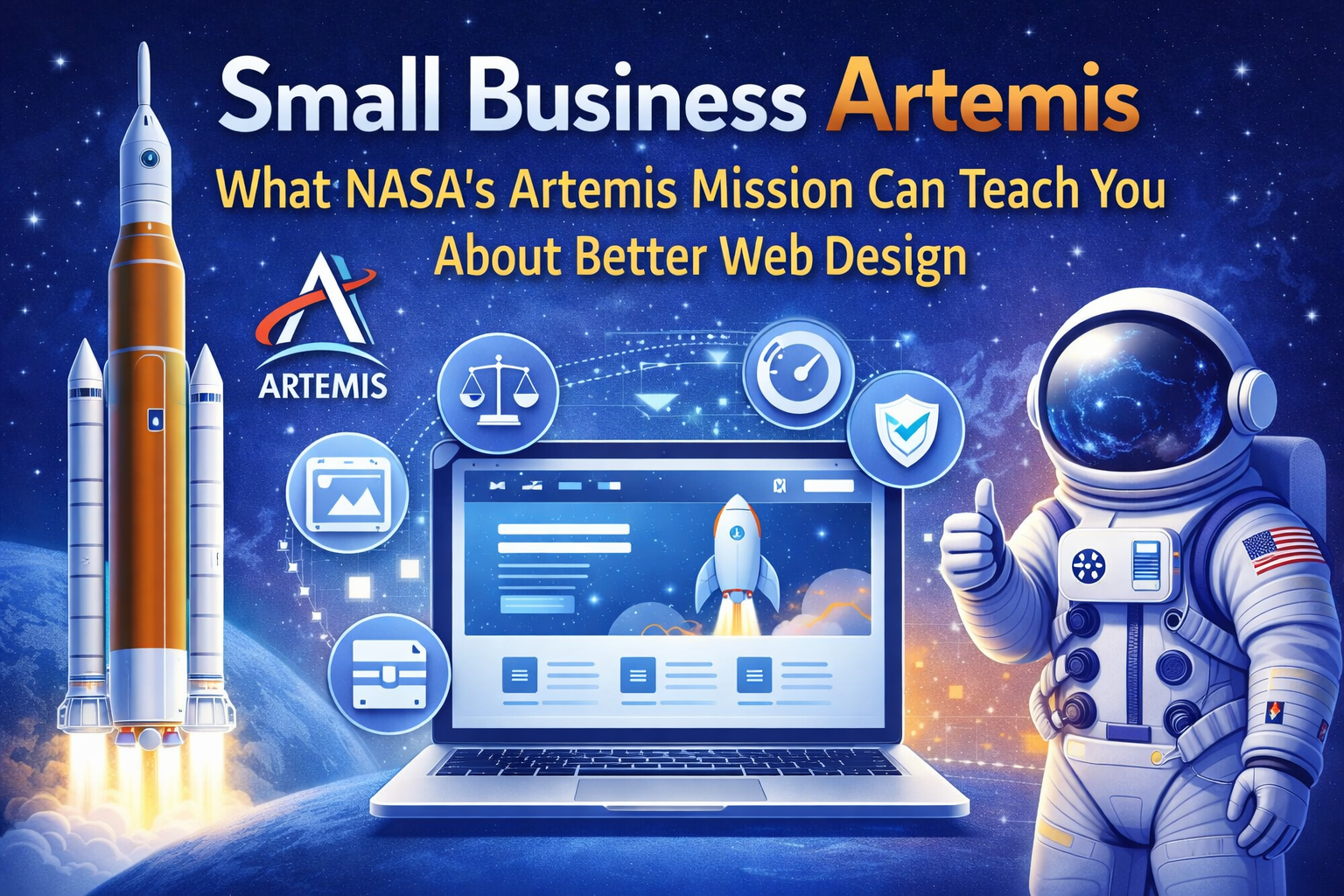
The concept of Small Business Artemis draws inspiration from one of the most ambitious space programs in history—NASA’s Artemis mission. While it may seem like space exploration and web design have little in common, the truth is quite the opposite.
Both require careful planning, precise execution, and constant improvement. If small businesses approached web design the same way NASA approaches space missions, their websites would perform far better.
Why NASA’s Artemis Mission Matters to Small Businesses
NASA doesn’t rush launches. Every step is carefully planned, tested, and reviewed. The Artemis program, designed to return humans to the Moon, involves years of preparation before a single launch.
Small businesses often skip these steps when building websites. They rush to launch without strategy, which leads to poor performance and wasted resources.
The Connection Between Space Missions and Web Design
Think of your website as a rocket. If one part fails, the entire mission can collapse.
Just like Artemis, your website needs:
- A clear mission
- Strong systems
- Rigorous testing
- Continuous updates
Understanding NASA’s Artemis Mission
To understand Small Business Artemis, we first need to look at what makes the Artemis mission so successful.
Goals of the Artemis Program
NASA’s Artemis mission aims to:
- Return humans to the Moon
- Build sustainable exploration systems
- Prepare for future missions to Mars
These goals require long-term thinking and flawless execution.
Key Phases of the Mission
The Artemis program includes multiple phases:
- Planning and design
- Testing and simulations
- Launch and monitoring
- Post-mission analysis
This structured approach is exactly what small businesses need in web design.
Lesson 1: Strategic Planning Before Launch
One of the biggest lessons from Small Business Artemis is the importance of planning.
Importance of Clear Goals in Web Design
Before building a website, ask:
- What is the purpose of the site?
- Who is the target audience?
- What actions should users take?
Without clear goals, your website becomes directionless.
Mapping User Journeys
Just like NASA maps mission paths, you should map user journeys.
This includes:
- Landing pages
- Navigation flow
- Conversion points
A well-planned journey leads to better results.
Lesson 2: Build Strong Foundations First
NASA doesn’t build rockets on weak foundations—and neither should you.
Infrastructure and Backend Systems
Your website’s backend is like the engine of a rocket. It must be reliable and fast.
Key elements include:
- Hosting quality
- Site speed
- Database performance
Choosing the Right Platform
Selecting the right platform (like WordPress, Shopify, or custom builds) is critical. A poor choice can limit growth and functionality.
Lesson 3: Testing Everything Before Going Live
NASA runs countless tests before launch. Small businesses should do the same.
Importance of Website Testing
Testing helps identify issues before users encounter them.
Without testing, you risk:
- Broken pages
- Slow load times
- Poor user experience
Types of Testing (UX, Speed, Mobile)
Important tests include:
- User experience testing
- Mobile responsiveness
- Page speed optimization
Each test ensures your site performs under real conditions.
Lesson 4: Iteration and Continuous Improvement
The Artemis mission evolves constantly. Your website should too.
Learning from Feedback
Customer feedback is invaluable. It helps you understand what works and what doesn’t.
Updating Your Website Regularly
Websites are never “finished.” Regular updates keep them relevant and effective.
Lesson 5: Risk Management and Backup Plans
NASA always prepares for failure scenarios.
Handling Website Failures
Your website should have:
- Backup systems
- Error monitoring
- Recovery plans
Security and Data Protection
Cybersecurity is essential. Protect your site from:
- Hacks
- Data breaches
- Malware
Lesson 6: Team Collaboration and Expertise
The Artemis mission involves thousands of experts.
Working with Designers and Developers
A successful website requires collaboration between:
- Designers
- Developers
- Marketers
Outsourcing vs In-House Teams
Small businesses must decide whether to outsource or build internal teams based on budget and needs.
Lesson 7: User Experience Is Mission Critical
Astronaut safety is NASA’s top priority. For businesses, it’s user experience.
Designing for Simplicity
Simple designs work best. Avoid clutter and focus on clarity.
Accessibility and Usability
Ensure your site is usable for everyone, including people with disabilities.

Lesson 8: Scalability and Future Growth
NASA builds systems for long-term missions. Your website should also scale.
Preparing for Traffic Growth
As your business grows, your website should handle increased traffic without slowing down.
Flexible Design Systems
Use scalable design frameworks that allow easy updates and expansion.
Common Mistakes Small Businesses Make
Skipping Planning
Jumping straight into design without strategy leads to poor results.
Ignoring Testing
Many businesses launch websites without proper testing, causing avoidable issues.
Tools and Technologies for Better Web Design
To apply Small Business Artemis principles, consider tools like:
- Website builders
- Analytics tools
- Testing platforms
These tools help you build, monitor, and improve your site.
Real-World Examples of Artemis Thinking in Business
Businesses that follow structured planning, testing, and iteration often outperform competitors.
They:
- Launch with fewer issues
- Adapt quickly
- Provide better user experiences
FAQs About Small Business Artemis
1. What is Small Business Artemis?
It’s a concept that applies NASA’s Artemis mission principles to web design and business strategy.
2. Why is planning important in web design?
Planning ensures your website has clear goals and direction.
3. How does testing improve websites?
Testing identifies issues before users experience them, improving performance.
4. Can small businesses afford this approach?
Yes. Even simple planning and testing can make a big difference.
5. What tools help with web design?
Tools for analytics, design, and testing are essential.
6. Is continuous improvement necessary?
Absolutely. Websites must evolve to stay competitive.
Conclusion and Final Thoughts
The idea behind Small Business Artemis is simple but powerful: success comes from preparation, testing, and continuous improvement.
NASA doesn’t leave missions to chance—and neither should you leave your website’s success to luck.
By applying these principles, small businesses can build websites that are not only functional but also scalable, reliable, and high-performing.
Think like NASA. Plan like Artemis. Launch with confidence.

Related Articles
Latest Articles
-

Google Review Removal Service That Protects Your Reputation and Builds Trust
Can Negative Google Reviews Damage a Healthcare Organization? A sudden wave of negative Google reviews can seriously damage the reputation of a nursing home or medical practice. Families researching nursing homes often compare ratings, recent reviews, management responses, photographs, and overall review activity before scheduling a tour. Patients may perform the same research before choosing…
-
Google Review Management Agency That Helps Businesses Build Trust and Get More Customers
People trust Google reviews before they trust advertisements. Before contacting your business, potential customers usually search your company online and ask themselves one important question: “Can I trust this business?” That answer often comes from your reviews. Customers look at: If your business has weak reviews, outdated feedback, or unanswered complaints, customers may choose a…
-

How to Get New Patients in New York With Google Reviews
Your next patient in New York may decide whether to call your practice before ever speaking to your staff. Today, patients search, compare, and read reviews before choosing care. A 2025 survey found 84% of patients check online reviews before choosing a new healthcare provider. In 2026, 75% said they wouldn’t book with a provider…