Let me give you a real peek into my life as a Full Time Content Creator. Yep, that’s me — juggling lights, scripts, cameras, and analytics all in a day’s work. But it’s not just about pretty pictures and viral videos. It’s strategy, consistency, and a whole lot of coffee.
So grab your cup, and let’s walk through a typical day in my content-creating life. (Psst: If you’re dreaming of becoming a Full Time Content Creator, read on. It’s about to get real.)
Morning Mindset: Starting the Day with Purpose
Why Mornings Matter for a Full Time Content Creator
My day as a Full Time Content Creator starts at 6:30 AM. Not because I’m a morning person (I’m so not), but because I need those quiet hours to get mentally aligned. I’ve found that creators who nail their mornings often outperform others.
A 2022 study by Buffer showed that creators who set structured work hours reported 25% more content output compared to those who don’t.
Morning Routines That Set the Tone
Here’s what my morning usually looks like:
- 6:30 AM: Wake up, drink lemon water
- 7:00 AM: Meditate or journal (I use the Day One app)
- 7:30 AM: Check my content calendar and priorities
- 8:00 AM: Quick scroll through trending topics on Twitter and TikTok
Meditation, Journaling, and Morning Briefing
Meditation keeps my anxiety at bay, and journaling helps me stay creative. I usually jot down three things:
- What I’m grateful for
- My focus for the day
- One creative idea
Planning My Content Calendar
Using Tools Like Notion and Trello
If you’re a Full Time Content Creator, you live and breathe by your calendar. I use Notion for planning and Trello for visual task tracking.
Setting Monthly, Weekly, and Daily Goals
Each week I ask: What do I want to achieve?
- Monthly goal: Grow Instagram by 5%
- Weekly goal: Publish 3 TikToks, 1 YouTube video
- Daily goal: Write 2 scripts, film 1 video, engage on Instagram
Aligning With Brand Strategy
It’s not just about churning content. Every piece I publish aligns with my brand’s message. That’s crucial if you want to make money as a Full Time Content Creator.
Research and Ideation: Feeding the Creative Brain
Staying Trendy with Google Trends & BuzzSumo
As a Full Time Content Creator, staying ahead of trends is half the battle. I spend about 30–45 minutes every day researching using Google Trends, BuzzSumo, and Exploding Topics. These tools show me what’s bubbling up in my niche—be it content creation tips, trending hashtags, or viral sounds on TikTok.
I even keep a “trend vault” in Notion where I drop all promising ideas.
How I Find What My Audience Cares About
One thing I’ve learned as a Full Time Content Creator is that content isn’t about what I want to post—it’s about what you want to see. I read every DM and poll result. I use Instagram’s question box to ask what followers want next. Then I use that data to plan my next content piece.
Competitor Analysis
Yup, I stalk my competitors—but for good reason. I see what’s working for them and how I can do it better. Tools like Social Blade help me analyze growth rates and content patterns.

Scriptwriting and Storyboarding
Writing Scripts for YouTube, TikTok, and Instagram
You’d be surprised how scripted even a “casual” 15-second Reel can be. As a Full Time Content Creator and digital storyteller, I invest about 2 hours scripting each YouTube video and 15–20 minutes per TikTok or Instagram Reel. Each platform has its rhythm, so I write in short, punchy sentences that match my natural speaking tone.
This isn’t just about writing words—it’s about planning a viewer journey. Whether I’m acting as a video content producer or an online video strategist, I aim for one goal: high retention and engagement.
I keep my scripts in Google Docs for easy access on all devices, and I use Grammarly to maintain clarity and flow. Here’s how I format a basic TikTok script:
- Hook (0–3 sec): Question or bold statement
- Meat (4–10 sec): Main content
- CTA (11–15 sec): “Like for part 2,” or “Link in bio!”
Want a deep dive into scripting for TikTok? Check out this guide from Later that’s helped refine my flow.
Visualizing Concepts for Reels or Shorts
Storyboarding is where I let my visual content planning skills shine. I use Canva’s storyboard templates to map out visuals for Instagram Reels and YouTube Shorts. For each concept, I quickly sketch:
- The first 3 seconds (usually the hook)
- The middle scene (main content point)
- The final moment or CTA (call to action)
This helps streamline filming and ensures I capture all the B-roll I need in one go.
As a social media influencer, creating scroll-stopping visuals is everything. If you’re new, try Canva’s Free Storyboard Maker (Canva Storyboard Tool) to visualize ideas quickly.
Pro tip: I also browse Behance and Dribbble for creative inspiration before locking in a script or visual layout. It’s like a creative warm-up session before the real action.
Whether you’re a budding Full Time Content Creator or an experienced online video strategist, scripting and storyboarding are crucial foundations that turn raw ideas into binge-worthy content.
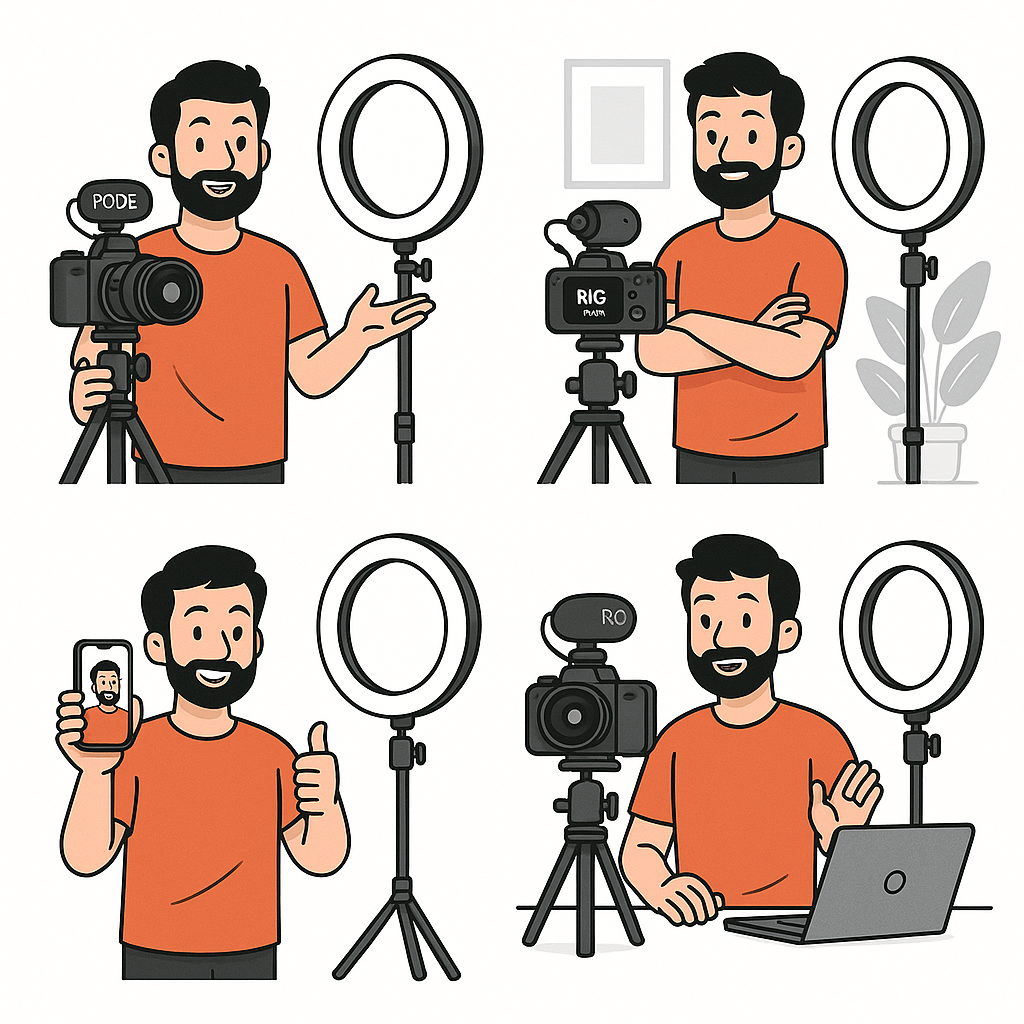
Scriptwriting and Storyboarding
Writing Scripts for YouTube, TikTok, and Instagram
You’d be surprised how scripted even a “casual” 15-second Reel can be. As a Full Time Content Creator and digital storyteller, I invest about 2 hours scripting each YouTube video and 15–20 minutes per TikTok or Instagram Reel. Each platform has its rhythm, so I write in short, punchy sentences that match my natural speaking tone.
This isn’t just about writing words—it’s about planning a viewer journey. Whether I’m acting as a video content producer or an online video strategist, I aim for one goal: high retention and engagement.
I keep my scripts in Google Docs for easy access on all devices, and I use Grammarly to maintain clarity and flow. Here’s how I format a basic TikTok script:
- Hook (0–3 sec): Question or bold statement
- Meat (4–10 sec): Main content
- CTA (11–15 sec): “Like for part 2,” or “Link in bio!”
Want a deep dive into scripting for TikTok? Check out this guide from Later that’s helped refine my flow.
Visualizing Concepts for Reels or Shorts
Storyboarding is where I let my visual content planning skills shine. I use Canva’s storyboard templates to map out visuals for Instagram Reels and YouTube Shorts. For each concept, I quickly sketch:
- The first 3 seconds (usually the hook)
- The middle scene (main content point)
- The final moment or CTA (call to action)
This helps streamline filming and ensures I capture all the B-roll I need in one go.
As a social media influencer, creating scroll-stopping visuals is everything. If you’re new, try Canva’s Free Storyboard Maker (Canva Storyboard Tool) to visualize ideas quickly.
Pro tip: I also browse Behance and Dribbble for creative inspiration before locking in a script or visual layout. It’s like a creative warm-up session before the real action.
Whether you’re a budding Full Time Content Creator or an experienced online video strategist, scripting and storyboarding are crucial foundations that turn raw ideas into binge-worthy content.
Editing Workflow: The Real Grind
Tools I Use: Final Cut, CapCut, and Adobe Suite
Here’s my editing stack:
- YouTube: Final Cut Pro
- Reels & TikToks: CapCut or InShot
- Graphics: Canva or Adobe Express
Editing is where 40% of my time goes. As a Full Time Content Creator, this is non-negotiable. Clean cuts, great pacing, and music are everything.
Editing for Style and Retention
My goal? Keep people watching. I use jump cuts, zooms, memes, and captions. Data from HubSpot shows that videos under 60 seconds have the highest engagement on mobile.
Working with Freelancers or VAs
When I get swamped, I hire editors on Upwork or Fiverr. Delegating has helped me scale faster without burning out.
Engagement and Community Building
Replying to Comments and DMs
I spend 30 minutes daily just replying. As a Full Time Content Creator, engagement isn’t a chore—it’s strategy. Platforms reward creators who engage.
Hosting Lives and Q&A Sessions
I go live once a week. It boosts reach and builds trust. I answer questions like “how to become a Full Time Content Creator” or “which camera to buy”.
Growing with Your Community
Growth happens when your followers feel heard. I create polls, respond to stories, and shout out followers often.
Posting and Scheduling Across Platforms
Why I Use Scheduling Tools Like Later & Hootsuite
I post 2-3 times daily across 4 platforms. Manually? Impossible. I use Later for Instagram and Hootsuite for LinkedIn and Twitter.
Best Times to Post for Engagement
According to Sprout Social, best posting times for Instagram are:
- Weekdays: 11 AM – 1 PM
- Evenings: 7 – 9 PM
I test and tweak constantly, but these slots work well.
Analyzing Performance with Metrics
Tracking KPIs on Instagram, TikTok, and YouTube
Every Friday, I check:
- Engagement Rate
- Watch Time
- CTR
- Audience Retention
As a Full Time Content Creator, knowing what works helps you replicate success.
Using Data to Improve Future Content
Underperforming post? I dissect it. Great-performing video? I double down on that format or hook.

Dealing with Burnout and Creative Blocks
How I Recharge and Stay Inspired
Walks, reading, and travel. I also block “off days” where I don’t post or create. This helps me stay in love with the craft.
Importance of Mental Health for a Full Time Content Creator
A recent Hootsuite report revealed that 59% of creators experience burnout. I’ve been there. Therapy, journaling, and boundaries saved me.Monetization Strategies Throughout the Day
Managing Brand Deals and Negotiations
One of the best perks of being a Full Time Content Creator is monetizing your passion. Most mornings, I check my email for brand deal inquiries. I usually get 2–5 offers weekly, but I only accept those that align with my audience.
Negotiating rates is a skill. According to Influencer Marketing Hub, the average mid-tier influencer charges around $500 per Instagram post. I use a rate card and media kit to simplify talks.
Ad Revenue, Affiliate Links, and Digital Products
Here’s a breakdown of how I make money:
- Brand partnerships: 50%
- Ad revenue (YouTube, TikTok Creator Fund): 20%
- Affiliate links (Amazon, RewardStyle): 15%
- Digital products (eBooks, courses): 15%
Having multiple income streams helps with stability—a must for a Full Time Content Creator.
Collaborating with Other Creators
Building Partnerships That Help You Grow
I DM creators weekly for collabs. Sometimes we co-host a Live, other times we swap posts or film a joint Reel. These cross-promotions help both of us grow.
Collab Projects: How I Plan and Execute Them
We usually brainstorm on Zoom, write a joint script, and shoot separately or together if we’re local. Tools like Frame.io help with feedback and syncing edits.
Collaborating has led to real friendships—and a few viral hits.
The Business Side: Admin, Emails, and Taxes
Outsourcing vs. Doing It All
I used to do everything: invoices, contracts, accounting. Now, I outsource admin tasks to a virtual assistant and work with a CPA for taxes.
If you’re serious about being a Full Time Content Creator, treat it like a business from day one.
Setting Office Hours to Stay Productive
Yes, I work from home—but I still keep “office hours”: 9 AM to 6 PM. After that, I unplug. Boundaries help me avoid burnout and keep content fresh.
Wrapping Up the Day with Reflection
Evening Routine for a Full Time Content Creator
Evenings are for winding down. Around 7 PM, I:
- Review performance metrics
- Save ideas from TikTok/IG
- Plan the next day’s top 3 tasks
Journaling and Reviewing Analytics
I use a Google Sheet to log stats: follower count, engagement, video views. It’s motivating to see growth—and where to improve.
This practice keeps me focused and consistent as a Full Time Content Creator.
Tools I Can’t Live Without as a Full Time Content Creator
My Daily Toolkit: From Planning to Posting
Here’s my must-have toolkit:
TaskToolPlanning & IdeationNotion, TrelloScriptwritingGoogle Docs, GrammarlyFilmingSony ZV-E10, iPhone 15EditingCapCut, Final Cut ProSchedulingLater, HootsuiteAnalyticsYouTube Studio, TikTok Pro
Budget-Friendly Tools for Beginners
Just starting? Use these:
- Canva (free version)
- VN Editor (free mobile video editor)
- Instagram Insights (built-in analytics)
Remember, you don’t need fancy tools to start. Just start.
FAQs About Being a Full Time Content Creator
1. How many hours do you work a day?
On average, 8–10 hours. Content creation includes planning, editing, marketing, and admin work.
2. Can you really make a living as a Full Time Content Creator?
Yes! According to Statista, the influencer marketing industry is expected to hit $22.2 billion by 2025. Diversify income streams and be strategic.
3. Do you need expensive equipment?
Nope. Many creators start with just a smartphone and natural light. Upgrade gradually.
4. How do you deal with creative blocks?
Breaks, reading, and walking help. Also, consuming content in other niches sparks fresh ideas.
5. What’s the hardest part of being a Full Time Content Creator?
Consistency. Staying visible without burning out is a tough balance.
6. How do you find brand deals?
I use influencer platforms like AspireIQ, Famebit, and Collabstr. Brands also find me through hashtags and past sponsored posts.
Conclusion: Living the Dream, One Video at a Time
Being a Full Time Content Creator isn’t just a job—it’s a lifestyle. From brainstorming scripts to editing late into the night, every moment is a mix of art and hustle. It’s not always glamorous, and it’s definitely not easy. But it’s fulfilling beyond measure.
If you’re thinking about going full-time—start now. Post that video. Pitch that brand. Build your community. You’ve got this.
👉 Want to learn more about becoming a Full Time Content Creator? Check out this great resource from Later Blog.